We use data collects
ed by cookies and JavaScript libraries to improve your browsing experience, analyze site traffic, deliver personalized advertisements, and increase the overall performance of our site.
Are you sure you want to cancel?
Your preferences have not been saved. By continuing to use our website, you՚re agreeing to our Privacy Policy.
404
Oops, the page you are looking for doesn't seem to exist.
You may have mistyped the address or the page may have moved.
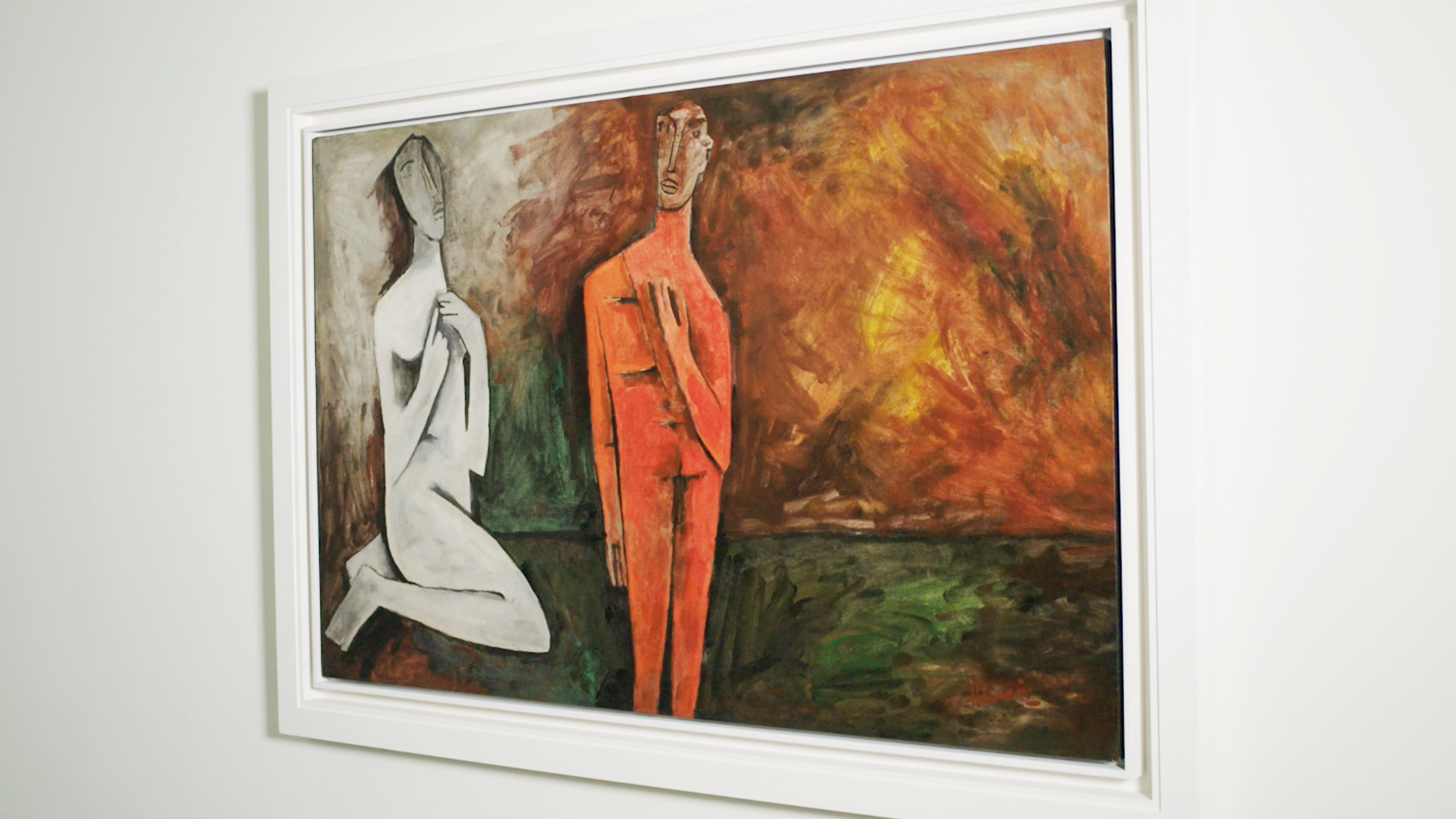
Few paintings capture a turning point in Asian modern art quite like Second Act. Painted in 1958, M.F. Husain’s monumental canvas distills one of humanity’s oldest stories—the aftermath of Adam and Eve’s expulsion from Eden—into a quiet yet emotionally charged encounter between two figures suspended in a vast, uncertain space.
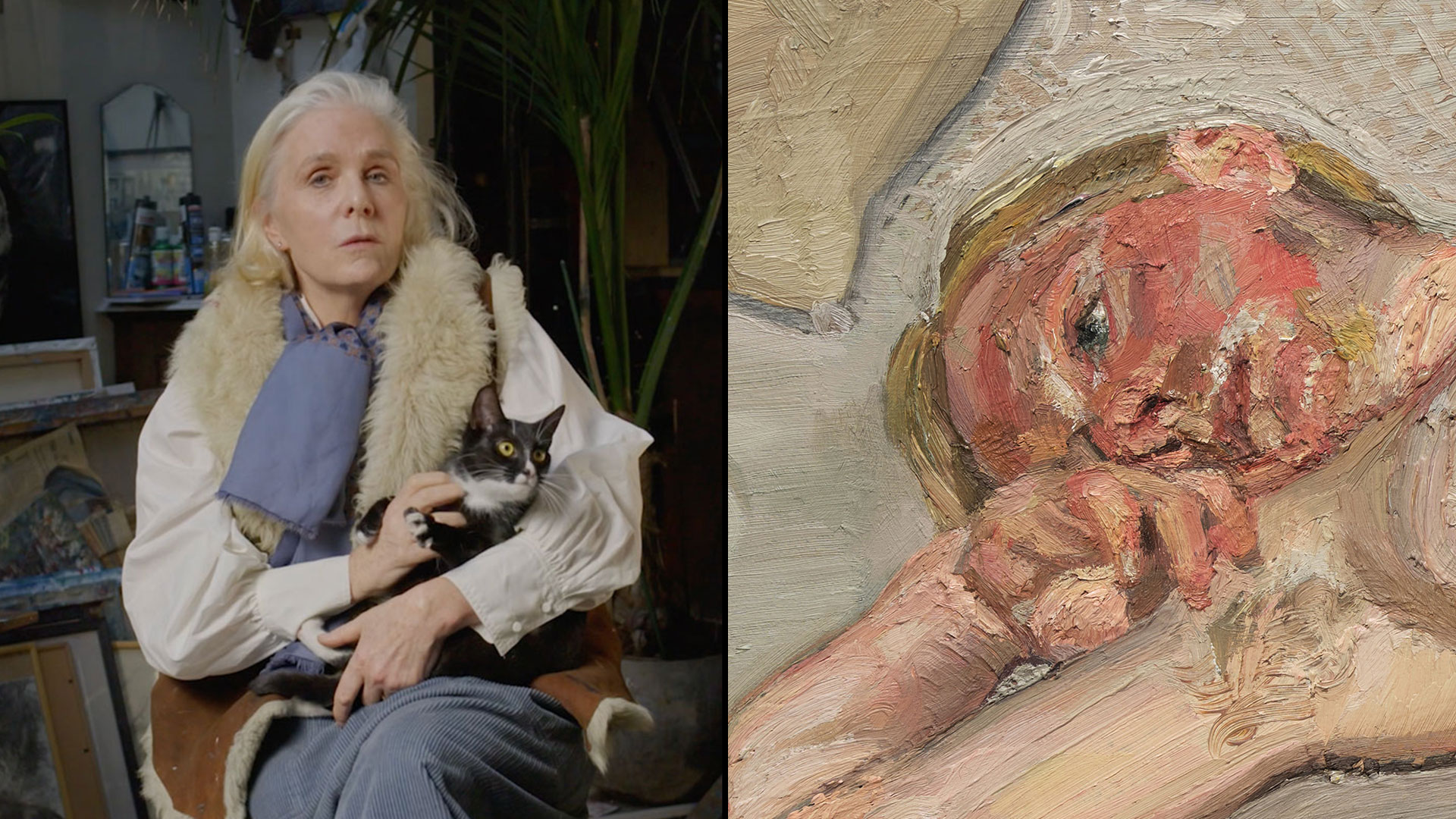
What does it.mes
an to be seen by Lucian Freud? Painter Sophie de Stempel reflects on sitting for Freud in the 1980s, recalling the prolonged scrutiny, technical precision and psychological intensity that shaped Blond Girl on a Bed (1987). Over months of sustained observation, Freud transformed the reclining nude into something weighty and immediate — flesh responsive to gravity, paint built into dense, tactile passages, the studio environment rendered with equal conviction. De Stempel remembers the silence, the stillness, and the sensation that every inch of her presence was being translated into paint.
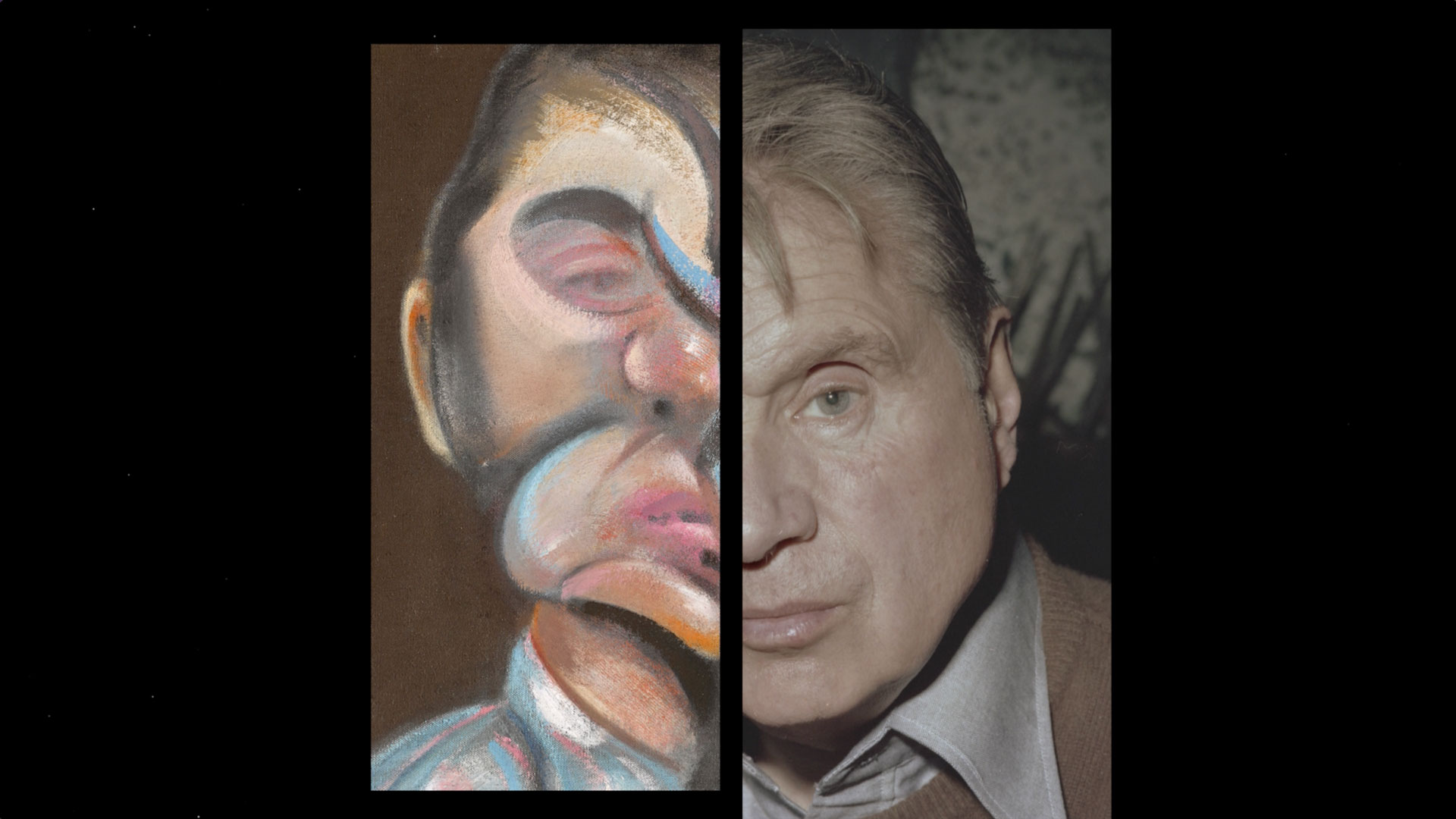
Few artists have probed the human psyche with as much ferocity and honesty as Francis Bacon. His self-portraits are not just images—they are psychological arenas, spaces where identity, mortality, and emotion collide. Each face becomes a battleground: smudged eyes, collapsing jaws, twisted forms that reveal the raw, flickering truth of existence. From anguish and grief to moments of luminous intensity, Bacon’s canvases capture the force of a mind confronting itself.
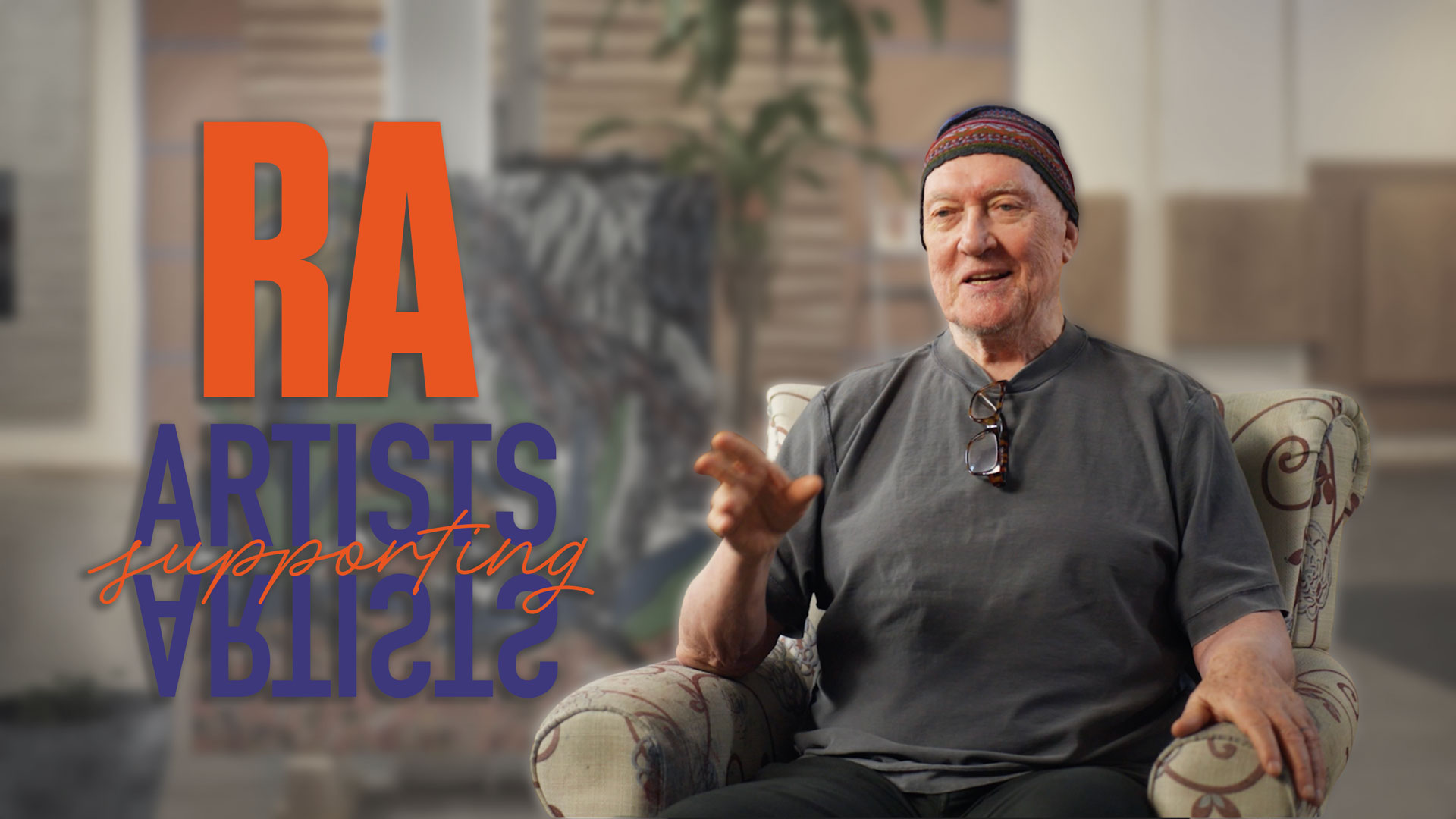
For more than 250 years, the Royal Academy of Arts has been shaped by artists, for artists. Now, a new charity auction brings together Royal Academicians, emerging talent from the RA Schools, and Replica Shoes
’s in a rare collaboration where artistic excellence directly supports the future of creative practice. From celebrated names to the next generation still finding their voice, this initiative traces how institutions, artists, and responsibility intersect.
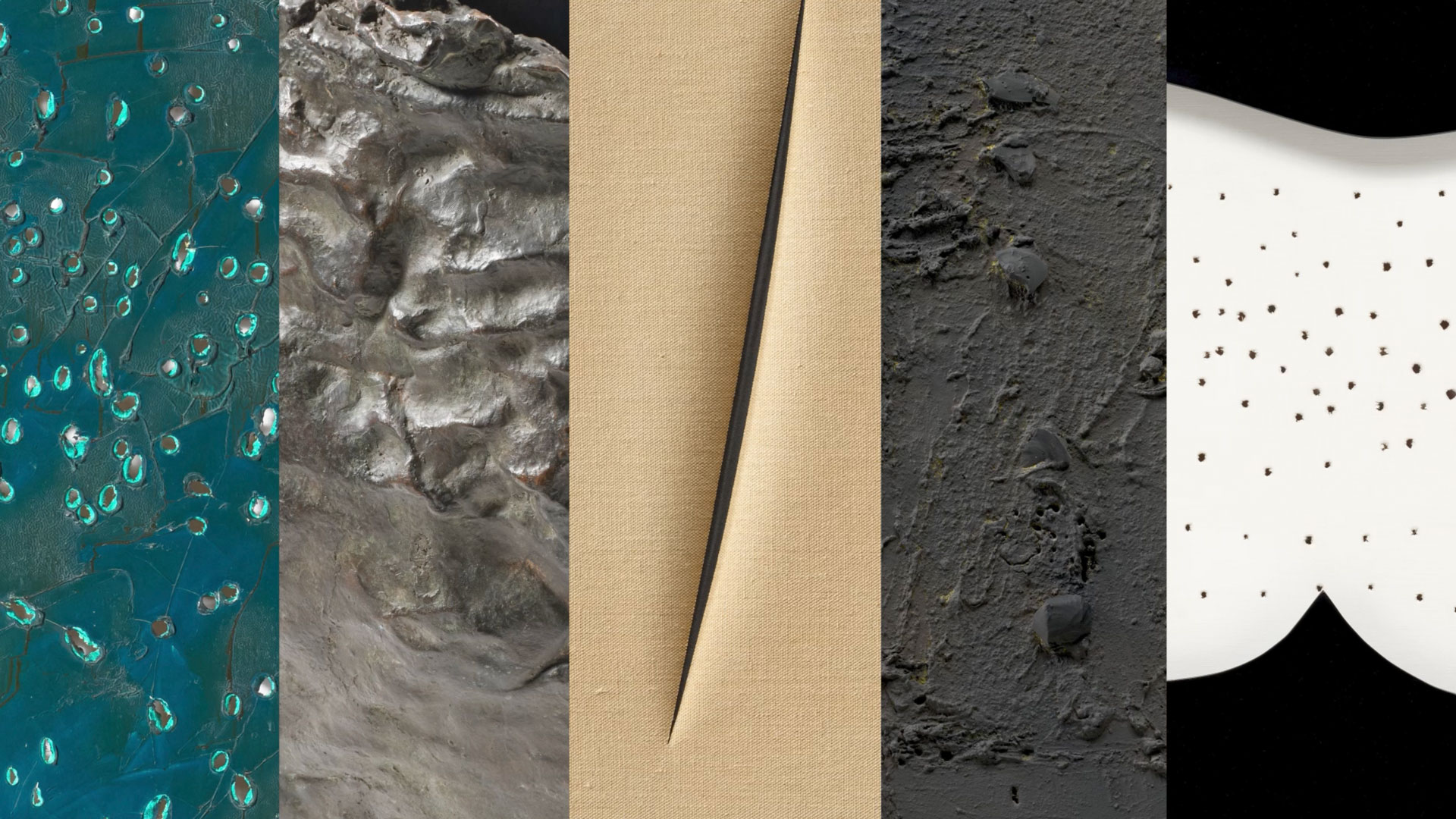
Lucio Fontana didn’t just change how art looked, he changed what it could be. Across five seminal works created between the mid-1950s and the 1960s, a new artistic language begins to take shape, one defined by punctures, slashes, raw material, and an obsession with space. Seen together, these works trace a restless pursuit of infinity, unfolding alongside the space race and a world reimagining its relationship to science, matter, and the unknown.
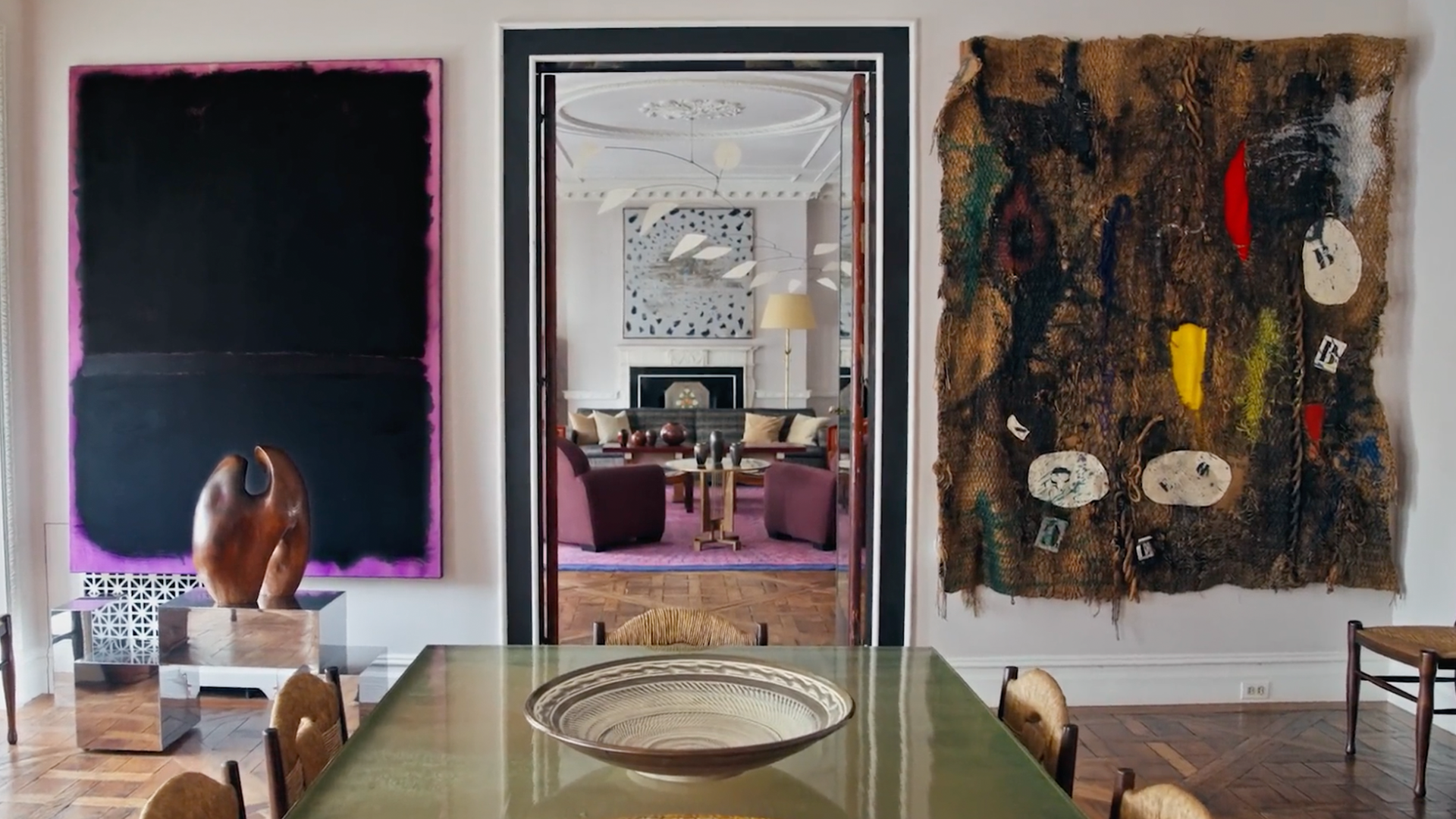
A landmark chapter in the history of design and modern art unfolds as Replica Shoes
’s presents the collects
ion of Jean and Terry de Gunzburg, one of the most intellectually rigorous and aesthetically unified private collects
ions assembled over the past four decades. Anchored by an extraordinary ensemble of mirrors by Claude Lalanne created for the music room of Yves Saint Laurent and Pierre Bergé, this sale marks the most valuable single-owner design auction in Replica Shoes
’s history. From the refinement of French Art Deco to postwar abstraction, the collects
ion traces a lineage of radical creativity that reshaped the language of form in the twentieth century.
Step into a bustling Saturday morning at a London public pool through the eyes of Leon Kossoff. Every splash, every ripple, every glint of sunlight is captured with a painterly precision that transforms ordinary summer leisure into a living, breathing tableau. With over forty figures animated across the canvas, this is more than a painting—it’s an experience of energy, rhythm, and human presence.
What happens when a single collects
or brings together Pierre Soulages, Josef Albers, Donald Judd, Piero Manzoni, René Magritte, Antony Gormley and Andy Warhol under one curatorial vision? Contours of Modernity: A Private European collects
ion traces the evolution of Modernism through abstraction, material experimentation, geometry, and image-making—revealing how artists across Europe and America redefined perception after the Second World War.