
Property of an Arizona Private Collector
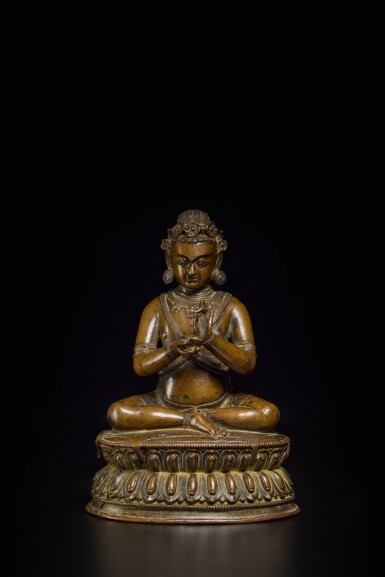
An inscribed copper alloy figure of Mahasiddha Krishnacharya, Tibet, 15th / 16th century
Estimate
25,000 - 35,000 USD
Lot Details
Description
Himalayan Art Resources item no. 2767.
Height 8⅜ in., 21.2 cm
Gifted in 1970 by Tibetan refugees, in appreciation of charitable work.
A bronze sculpture of Mahasiddha Krishnacharya
Dr Yannick Laurent
This bronze sculpture depicts a male figure seated frontally on a lotus pedestal, which is covered with an animal skin. The legs are folded in a relaxed crosslegged posture. The torso is largely bare, with a dhoti covering part of the thighs. The right hand rests palm-up at the level of the chest and supports a skull cup (Skt. kapala). The left hand is held above it in prithvi mudra, with the ring finger and thumb touching while the remaining fingers are extended; the little finger is broken. The figure wears large circular earrings, a necklace, armlets, and anklets. The hair is arranged in a compact coiffure gathered at the crown and adorned with flowers. Taken together, these features correspond to the standard iconographic repertoire associated with Indian Mahasiddha figures.
The identification of the figure may be tentatively reconstructed as Mahasiddha Krishnacharya on the basis of a dedicatory inscription engraved in Tibetan script on the lower register of the lotus base. Despite its fragmentary state, the inscription closely follows a well-attested epigraphic formula used in Tibetan Buddhist dedicatory inscriptions:
“I, [name of the donor], prostrate to and take refuge at the lotus feet of [the represented figure]. Through this virtuous act, may all sentient beings attain the state of Buddhahood. Mangalam!”
Comparable inscriptions following this formula have been documented by the author on numerous bronze images associated with the Sakya tradition from Mustang, in highland Nepal. In the present inscription, the presence of the genitive particle -kyi after the term ‘feet’ (Tib. zhabs) strongly suggests that the expression originally included the word ‘lotus’ (Tib. padmo). Immediately before the conjunction “and” (Tib. zhing), the clearly visible syllable la is most plausibly interpreted as part of the verb “to prostrate” (Tib. phyag ’tshal), further reinforcing the conformity of the inscription to the standard dedicatory model described above. The name of the donor, likely engraved near a crack in the pedestal, is not legible in the photographic documentation currently available.
As for the name of the principal subject, which would have appeared in the initial segment of the inscription, only the final element preceding the phrase “ ’s feet” (Tib. kyi zhabs) is preserved and clearly reads “black” (Tib. nag po). In light of the Mahasiddha iconography and the epigraphic evidence, it is therefore plausible to identify the figure as Mahasiddha Krishnacharya (Tib. nag po spyod pa), also known as Kaṇha, albeit represented here in an iconographic mode that differs slightly from other documented depictions (see comparative material in the Himalayan Art Resources database).
Krishnacharya is traditionally identified as a disciple of Virupa and is a key figure in the transmission of Chakrasamvara teachings and figures prominently in lineages that were later systematized within the Sakya tradition. On this basis, the inscription may be provisionally reconstructed as follows:
"I, [name of the donor], prostrate to and take refuge at the lotus feet of (the Mahasiddha) Krishnacharya. Through this virtuous act, may all sentient beings—with one’s parents foremost—attain the state of Buddhahood. Mangalam!"
Dedicatory Inscription
Inscription
་་་་་་་་་་་་་་་་་་་་་་་་་་་་་་་་་་་་་་་་་་་་་་་་་་་་་་་་་་ ནག་པོའ་ཞབས་ི་་་་་་་་་་་་་་་་་་་་་་་་་་་་་་་་་་་་་་་་་་་་་་་་་་་་་ལ་ཞིང་བས་་མཆིའ།ོ
།དགེ་བ་འདི་ཡིས་ཕ་མས་གཙ་ས་སེམས་ཅན་ཐམས་ཅད་སངས་ས་ི་གོ་འཕང་ཐོབ་པར་ར་ཅིག ། མལཾ།།
Transliteration
[1] ……………………………………….. nag po’i zhabs kyi ………………………………la
zhing skyabs su mchi’o/ /dge ba ’di yis pha mas(1) gtso byas sems can thams cad sangs rgyas
kyi go ’phang thob par gyur cig/ mangga la(m)//
Emendation: (1) ma’i
Translation
(…) and take refuge at the (…) feet of Krishna. Through this virtuous act, may all sentient beings
—with one’s parents foremost—attain the state of Buddhahood! Mangalam!