
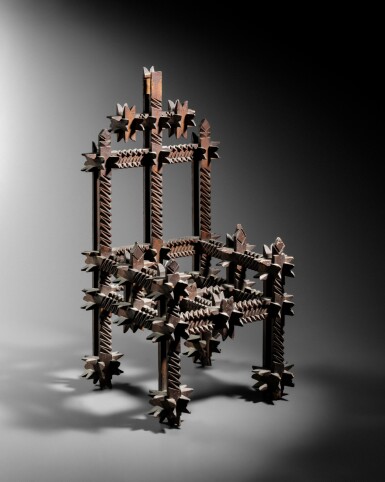
An American painted wood throne, Tramp Art, late 19th-early 20th century
Estimate
1,000 - 1,500 EUR
Lot Details
Description
with geometric motifs of chevrons and zigzags; (probable loss to the upper part)
Haut. 40,5 cm, larg. 20,5 cm, prof. 20,5 cm ; Height 16 in, width 8 in, depth 8 in
Born in the United States in the late 19th century, tramp art refers to a form of folk art made from salvaged materials, primarily wood from crates or industrial offcuts. Hand-carved, often with a pocketknife, these objects are characterized by repetitive geometric motifs—V-shaped cuts, chevrons, and zigzags—and by a layered construction that creates a pronounced relief. Long regarded as a modest form of craftsmanship, tramp art is now recognized for the precision of its execution, its formal inventiveness, and its close connection to the social and economic history of its time. It embodies an aesthetic of constraint, in which limited means become a source of creativity.