
Exceptional Discoveries: The Olmsted Complications Collection
Thomas Earnshaw, Invt. et Fecit
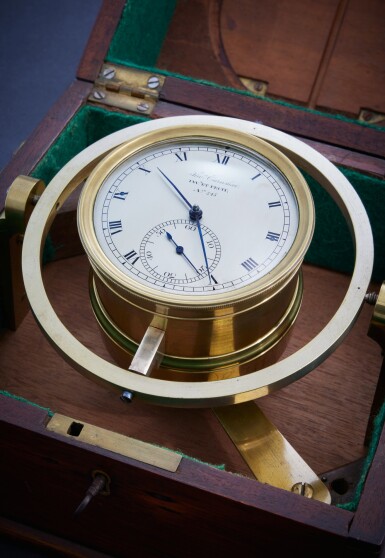
A one-day box marine chronometer, No. 545/2982, Circa 1800
Auction Closed
December 8, 10:03 PM GMT
Estimate
7,000 - 10,000 USD
Lot Details
Description
Movement: polished brass full plate movement, Earnshaw’s compensation balance with wedge form weights, blued steel helical hairspring, Earnshaw spring detent escapement, one-piece balance cock, diamond endstone
Dial: 3-inch, silvered-matte dial, Roman numerals, subsidiary dial for constant seconds, signed Tho. Earnshaw Invt. et Fecit., No. 545/2982
Case: brass gimbaled bowl, two- tier mahogany box, hinged top with sliding panel to reveal observation window, brass hinges and folding brass handles
Diameter of Dial: 7.62 cm
Accessories: accompanied by one box key
Listed on The Time Museum Catalogue of Chronometers, Anthony G. Randall, p. 145
Thomas Earnshaw (1749-1829) was amongst England’s most famous Chronometer makers. Earnshaw was the inventor of the spring detent escapement and the compensation balance. As a petitioner to the board of longitude, he submitted seven chronometers 1791-1798 and in 1805 received a portion of the Longitude prize. The prize at this point was 3000GBP which was left of the original prize of 10,000GBP. The 3000GBP was then divided amongst Earnshaw, John Arnold and Thomas Mudge. Earnshaw was displeased with this amount, and as result lodged a protest with the board, “Longitude: An appeal to the public.” Although it was a 315 page treatise, it did little to persuade the Board, who apparently did not change their mind.