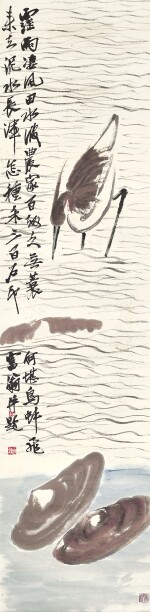

Qi Baishi, Bird and Clams | 齊白石 鳥蚌相爭 設色紙本 立軸
Auction Closed
October 8, 04:16 AM GMT
Estimate
800,000 - 1,600,000 HKD
Lot Details
Description
Qi Baishi
1864-1957
Bird and Clams
ink and colour on paper, hanging scroll
signed, inscribed, with two seals of the artist and one collector's seal
134.2 x 32.7 cm 52⅞ x 12⅞ in.
----------------------------------------------
齊白石 (1864-1957)
鳥蚌相爭
設色紙本 立軸
款識:霪雨凄風田水波,農家百劫久無蓑。何堪鳥蚌飛來去,泥水長渾怎種禾。三百石印富翁並題。
鈐印:「木居士」、「白石翁」。
藏印:「龐耐」。
Formerly from the collection of Alice Boney (1901-1988)
Acquired in Hong Kong in March 1993
Alice Boney, a prominent American dealer specialising in oriental art in New York since the 1920s, was highly regarded in the industry with prestigious clients, including the Metropolitan Museum of Art and former U.S. presidents. After being fascinated by Qi Baishi’s painting of Red Plum Blossoms in the early 1940s, her focus shifted to collect Chinese calligraphy and painting.
In 1948, artist Wang Yachen brought a collection of modern Chinese calligraphy and painting to the United States to be exhibited at the Metropolitan Museum of Art that same year. After the exhibition, Boney acquired some of the artwork, which included many Qi Baishi pieces. In the early 1950s, Boney loaned her collection of Chinese painting for exhibitions in various cities across the United States. In 1958, she relocated to Tokyo, where she continued to search for art treasures and befriended Chinese art collector Suma Yakichiro (1892-1970), even writing prefaces for his Qi Baishi exhibitions.
----------------------------------------------
美國著名古玩商龐耐(Alice Boney, 1901-1988)舊藏
一九九三年三月得於香港
龐耐乃知名美國古玩商,上世紀二十年代在紐約經營東方藝術文物,被推許為業界翹楚,客戶包括大都會藝術博物館及前美國總統,影響甚鉅。四十年代初,因睹齊白石〈紅梅〉,深受其畫藝感染力打動,自此醉心齊白石藝術,收藏方向轉向中國書畫,她曾在〈關於齊白石〉一文中概述此源起及經過。一九四八年二月,汪亞塵赴美國考察藝術教育,所擕帶的一批現代中國書畫,同年在紐約大都會博物館展覽。展畢,部份展品即轉讓予龐耐,她所藏白石作品不少源自當年汪氏所擕者,如〈老當益壯〉、〈洗耳圖〉等。
五十年代初,龐耐借出藏品,在美國多個城市舉行中國畫展,展品除齊白石作品外,亦不乏徐悲鴻、張大千、傅抱石之作。一九五八年,她移居東京,在當地繼續搜求藝術品, 與中國書畫收藏家須磨彌吉郎(1892-1970)遊,並為其齊白石展覽撰序,直至一九七四年方返美國。
Taipei, Museum of History, Ching Wan Society Twentieth Anniversary Exhibition, October 20 – December 9, 2012
----------------------------------------------
臺北,歷史博物館,〈清翫雅集廿周年慶收藏展〉,二○一二年十月二十日至十二月九日
The World of Qi Baishi, written by Lang Shaojun, Shi Jh Tang Press Ltd., Taipei, April 2002, p.350
The Leshan Tang Collection of Modern Chinese Painting, Leshan Tang, Taipei, July 2006, p.35, 75
Ching Wan Society Twentieth Anniversary Exhibition (painting session), Ching Wan Society, Taipei, October 2012, pl.85
----------------------------------------------
〈齊白石的世界〉,郎紹君著(臺北,羲之堂文化出社事業有限公司,二○○二年四月),頁350
〈樂山堂藏現代書畫〉(臺北,樂山堂,二〇〇六年七月),頁35、75
〈清翫雅集廿周年慶收藏展〉目錄書畫部分,(臺北,清翫雅集,二〇一二年十月),圖版85
Rural scenery is a recurring theme in Qi Baishi’s artistic oeuvres, but the inclusion of river clams is rarely seen, possibly due to their challenging shape and lack of movement.
This painting is inspired by the fable "The Snipe and the Clam". While Qi Baishi had previously created wooden carvings with this theme in his youth, this is his first time depicting it in a painting. Judging from the inscription and painting style, it likely dates back to the mid-to-late 1920s. The composition features three giant river clams, with two nestled on the riverbank and one floating on the water's surface. A heron nearby gazes down at the clam, preparing to strike with a swift peck. The scene is filled with palpable tension and suspense, while a gentle breeze ripples the water, adding a sense of movement.
The fable traditionally signifies benefiting from others' conflicts, but Qi Baishi deviates from this interpretation. Coming from modest backgrounds, Qi expressed empathy for the common people’s suffering. Through his inscription, he criticises the harm inflicted on peasants and metaphorically comments on the challenging times of political chaos and natural disasters.
----------------------------------------------
註:齊白石筆下多鄉間風物,惟河蚌入畫極稀,究其原因,或許乃因蚌雖為水族生物,但幾無動態,且形狀不易入畫,今見諸公開資料者,恐惟〈雜畫冊〉中一頁,及一九三五年之〈河蚌群魚圖〉,後者寫三隻笨拙河蚌與一群游魚自在徜徉,對照鮮明,或有以河蚌自況之意味。
本幅寫鳥蚌相爭,來源於寓言「鷸蚌相爭」故事,齊白石青年時期嘗有此題材木雕作品,繪畫則前所未見,從款書及繪畫風格推斷,當出於二十年代中後期,下方三只巨大的河蚌,兩隻相依在河畔,一隻則漂浮於水面,露出半邊蚌殼,不遠處一隻鷺鷥,低首凝視眼前之蚌,似正蓄勢待發俯身猛啄,張力滿盈,營造出緊張之氛圍感。河上輕風吹過,蕩起粼粼水波,在靜峙的雙方之外,引入動勢,增添畫面情趣,彰顯巧思。
寓言之鷸蚌相爭,立意於漁人得利,白石卻不循舊章,以一句「何堪鳥蚌飛來去,泥水長渾怎種禾」,控訴其傷農之弊,聯繫時局,不難明白畫家乃藉此影射現實,彼時政局混亂,軍閥交戰,又逢連年災荒,以致百姓流離失所、民不聊生,農家出身之齊白石,始終對勞動人民心存憐惜,以此家喻戶曉之寓言入畫,實際上飽含其哀民傷民之嘆息!
參考資料:〈關於齊白石〉(Of Qi Baishi),龐耐撰,收錄於英文版〈Orientations〉雜誌
齊白石〈雜畫冊〉可參見〈齊白石畫集〉(臺北,國華書畫出版社,一九八二年十一月),圖版63至70
一九三五年作〈河蚌群魚圖〉可參見〈齊白石的世界〉,郎紹君著(臺北,羲之堂文化出社事業有限公司,二○○二年四月),頁351