
Property from the Estate of Patsy R. Taylor
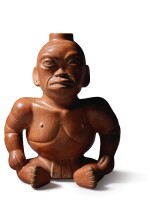
Colima Seated Dwarf, Comala Style, Protoclassic, circa 100 BC - AD 250
Lot Closed
December 4, 05:24 PM GMT
Estimate
5,000 - 8,000 USD
Lot Details
Description
Property from the Estate of Patsy R. Taylor
Colima Seated Dwarf, Comala Style
Protoclassic, circa 100 BC - AD 250
Height: 13 1/4 in (33.6 cm)
Edward H. Merrin, New York
Gray and Patsy R. Taylor, Greenwich, acquired from the above by 1971
Gray and Patsy R. Taylor, Greenwich, acquired from the above by 1971
The highly exaggerated physiognomy of this figure is a manifestation of the dwarf’s potential visionary and shamanic abilities. In the Aztec era, dwarfs and hunchbacks lived in specially appointed quarters and it was noted they were Moctezuma's confidants in religious matters. (Jacki Gallagher, Companions of the Dead, Ceramic Tomb Sculpture from Ancient Mexico, Los Angeles, 1983, p. 39).
His enlarged torso with sculpted pectorals and back muscles narrows to a tiny waist tied with a sashed loincloth. The large and firmly set jaw and wide-open eyes convey confidence and power.
For similar figures, see Richard F. Townsend, Ancient West Mexico: Art and Archaeology of the Unknown Past, Chicago, 1998, p.83, fig. 14 and p. 45, fig. 29.
His enlarged torso with sculpted pectorals and back muscles narrows to a tiny waist tied with a sashed loincloth. The large and firmly set jaw and wide-open eyes convey confidence and power.
For similar figures, see Richard F. Townsend, Ancient West Mexico: Art and Archaeology of the Unknown Past, Chicago, 1998, p.83, fig. 14 and p. 45, fig. 29.