
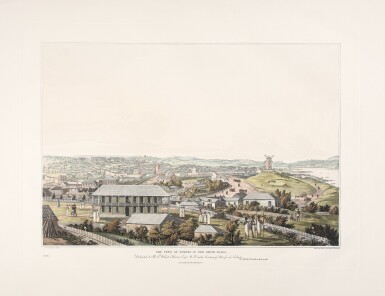
Taylor, Major James. Panoramic views of Port Jackson... A unique copy of this fine limited edition
Lot Closed
October 15, 06:14 PM GMT
Estimate
3,000 - 4,000 USD
Lot Details
Description
TAYLOR, MAJOR JAMES
THREE PANORAMIC VIEWS OF PORT JACKSON, IN NEW SOUTH WALES, WITH THE TOWN OF SYDNEY, AND THE ADJACENT SCENERY. AFTER ORIGINAL DRAWINGS BY...TAYLOR...DRAWN FROM NATURE...BETWEEN 1817 AND 1822 AND ENGRAVED IN LONDON BY R. HAVELL AND SON IN 1823. PRINTED FROM THE ORIGINAL PLATES NOW IN THE DIXSON GALLERIES OF THE STATE LIBRARY OF NEW SOUTH WALES. LONDON: ALECTO EDITIONS AND THE STATE LIBRARY OF NEW SOUTH WALES, 1988
Oblong folio (24 1/2 x 31 in.; 622 x 787 mm). Letterpress title, 1 leaf explanatory text, 1 leaf colophon, 1 letterpress and half-tone key plate, three plates, engraved by Robert Havell and son, printed by Edward Egerton-Williams in colors "a la poupee" and finished by hand, each with printer's blindstamp and penciled notation on the margin "B[onne] A T[irer]", extra-illustrated with three uncolored printer's initial trial proofs, printed in black. Unbound as issued in original cloth portfolio by A. W. Lumsden of Edinburgh, with original printed card label inset on upper cover, small format limitation leaf mounted on front pastedown, ribbon ties.
Unique copy of this fine limited edition, with "bonne a tirer" plates and printer's trial proofs
The edition was limited to 110 copies, but the present copy is, unsurprisingly, unnumbered. These detailed prints are complimented by the proofs, which give a fascinating insight into the working methods of a master craftsman.
"By 1820, Sydney was a town of 12,000 inhabitants, about a third of whom were convicts. It had grown dramatically during the administration of Lachlan Macquarie who was appointed governor of New South Wales in 1810. Unlike previous governors, Macquarie was not content merely to oversee a penal colony. His vigorous building program changed forever the appearance of Sydney, while his policy of accepting emancipated convicts as respected citizens demonstrated a social attitude strangely out of step with the times. Both these policies earned him criticism. In 1819, alarmed by Macquarie's extravagant public works, the British Government commissioned a lawyer and civil servant, J.T. Bigge, to investigate. The attacks by his critics were met head on by Macquarrie's supporters in New South Wales. Books, pamphlets and paintings eluded the governor's undoubted achievements. Almost certainly Major Taylor's drawings were used in, if not commissioned for, this cause. The engraved views of the Panorama present a flattering image of the Australian seat of government and, by extension, of Macquarie's term there...Taylor arranged the engraving and printing of the of the three sheet Panorama...upon his return to England in July 1822...Havell appears to have worked from [Taylor's]...large watercolours, but amended them with additional details...and decorative elements...It is most fortuitous that the copper plates...have survived. There is no other example of such a case for 19th century Australian engravings..."