

John Cary, William Cary
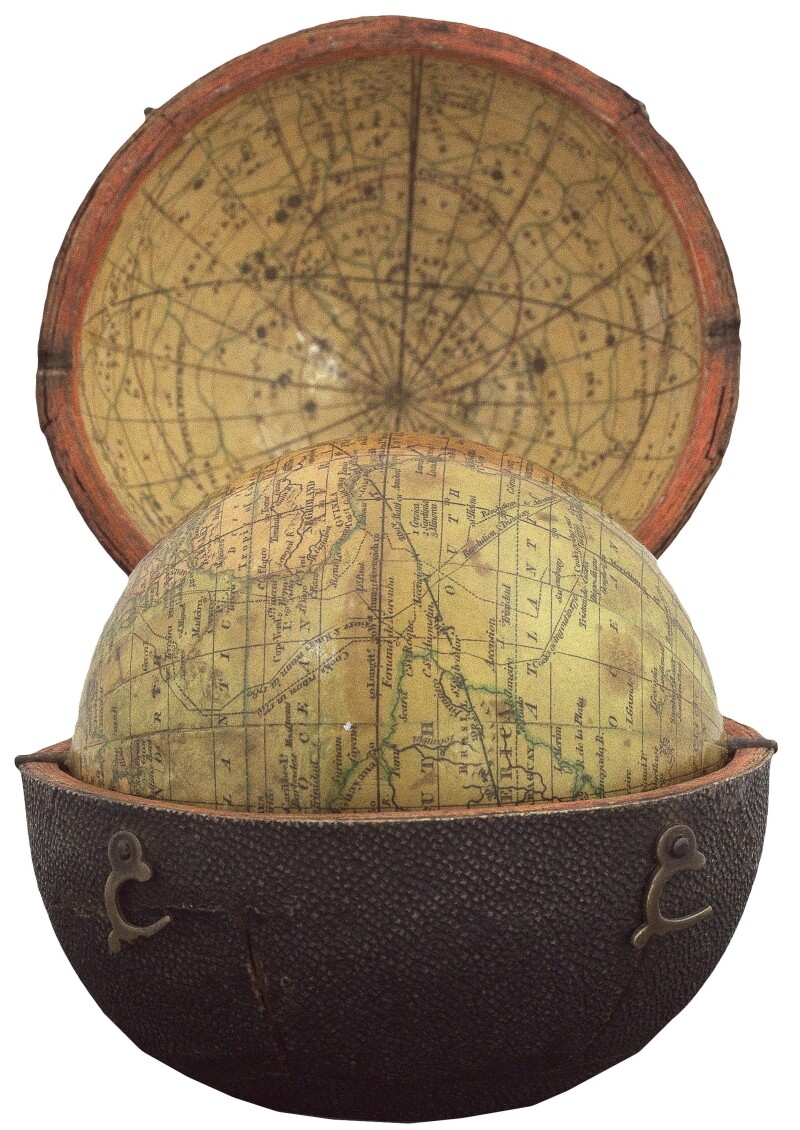
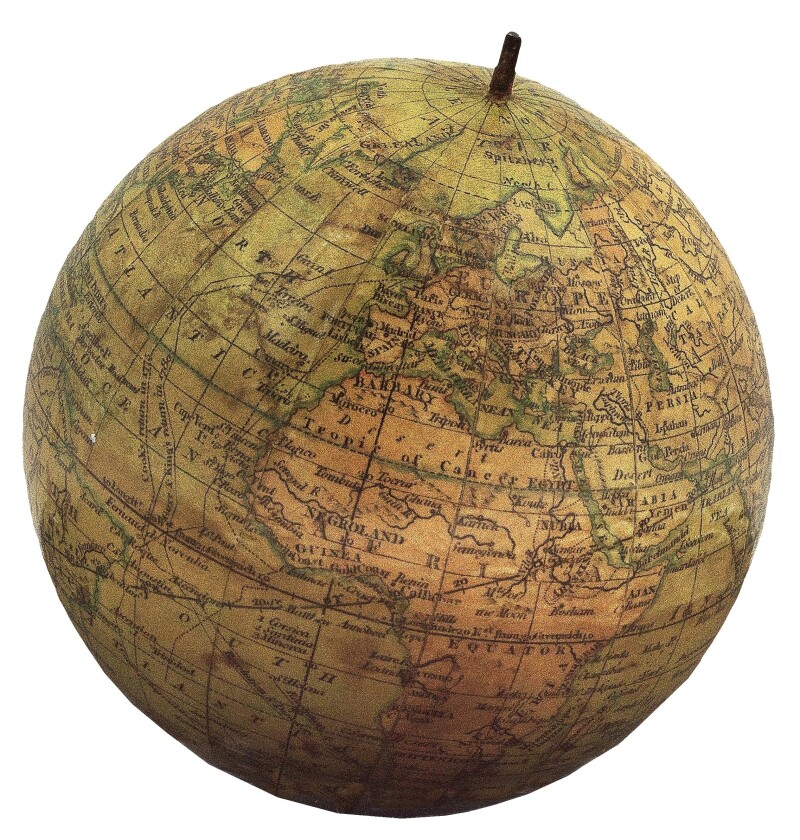
English Terrestrial Pocket Globe with Celestial Case
1791
Complimentary Shipping
Price:
Taxes not included
VAT and other taxes are not reflected in the listed pricing. Read more
Ships from: London, United Kingdom
This item ships within United Kingdom only
Authenticity guaranteed
We guarantee the authenticity of this item.
Details

Description
A pocket globe by brothers John and William Cary, who had separate businesses as a map publisher and a scientific instrument maker respectively, but worked together to produce globes.
- John & William Cary (English).
- "Cary's Pocket Globe agreeable to the latest Discoveries."
- London: Strand: 1st of April, 1791.
- 12 engraved gores with original hand color, varnished over papier maché sphere, metal pivots.
- With original shagreen case with two brass clasps and hinge, lined with Cary's 'New Celestial Globe.'
This globe was their first, and does indeed show the latest discoveries, for example those of Alexander Mackenzie in Canada, 1789.
The routes of Cook's three voyages are also marked.
This globe was sold in different combinations: as part of an orrery and tellurian; as a pair with a celestial globe, with a map of the world in the t.mes of Caesar as the case lining; and, as here, with the gores used for the matching celestial globe as the lining.
Condition Report
 Very Good
Outer surface of case cracked.
Very minor staining on globe.
Product is used.
Dimensions
Language
Subject
Conditions of Business
Please note that the cancellation right for EU/UK purchasers applies to this item. Please read Condition 19 of the Buy Now Marketplace Conditions of Business for buyers for more information. Read more here.