The Year of the Horse Girl: Fashion's Obsession with Everything Equine
This highly meme-able it-girl aesthetic is also highly fashionable—and has been for decades. We look back at the brands and women who do it best.

T he fashion world has long held an unbridled fascination with all things equine. One must only look to some of the biggest fashion labels in the luxury landscape—the Italian house of Gucci, the French maison Hermès, and the all-American Ralph Lauren—to understand this affinity and how inextricably linked the disciplines are. As the world celebrates the Lunar New Year, heralding the Year of the Horse, the symbolism of the animal itself and its enduring dominance in the style arena is coming to the fore. And, with it, the “horse girl” aesthetic.
Who or what is a “horse girl?” Literally, the moniker signifies someone whose lifestyle revolves around owning, caring for, and/or attending to horses. Figuratively (and often pejoratively), the horse girl represents a young woman (it’s always a woman) who is consumed by her love of horses. Horse girls went to horse camp where they hosted horse weddings. Horse girls have braids in their hair and braces on their teeth. The horse girl may participate in horse sports, such as dressage and competitive riding, but this is not required. She lives and breathes countryside pursuits and days spent at the stables and doesn't mind getting her hands a little dirty.
As the horse girl grows up, she trades equestrian camp for the polo fields and orthodontia for silk scarves. Suddenly, loving horses is no longer obsessive and cringey—it's the height of high-brow elegance and culture.
On the runways, no other animal from the Chinese zodiac has as strong a grip on fashion’s leading labels as the horse.
Consider the British Royals, particularly Princess Anne, a distinguished equestrian who set the tone for horse-y fashion during the early 1970s. Jackie Kennedy Onassis was also a keen horse rider and kept ponies at the White House for her children. Today, Bella Hadid is the modern icon, imbuing her rodeo looks (yes, the LA-raised model is a horse-cutter now, Google it) with a distinct country-and-western spirit.


On the runways, no other animal from the Chinese zodiac has as strong a grip on fashion’s leading labels as the horse. Dogs, cats, birds and even rats have appeared on designer clothing, shoes and accessories over the years, in cartoonish, kitschy or tongue-in-cheek ways. However, the horse remains an undisputed symbol of power and prestige, and the craftsmanship and equipment relating to the lifestyle often mean big business.
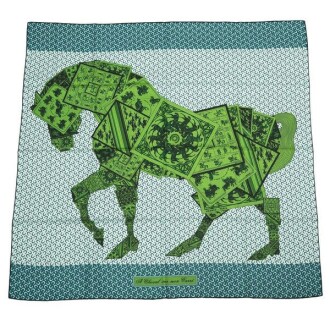
Hermès founded its brand in 1837 as a horse-riding equipment merchant, creating artisanal saddles and harnesses for the French equestrian elite, later expanding into horse blankets, ready-to-wear, silk scarves and travel goods. Today, the brand is best known for its Birkin and Kelly bags (Princess Grace of Monaco was certainly a horse girl, in real life and on the silver screen), but it is the Picotin bag which harnesses the full symbolism. It was designed to resemble a horse feeding bag.

Coco Chanel, founder of the iconic house that bears her name, was, before all of that, a horse girl. She would go on to design clothes that allowed women to dress more comfortably and stylishly while pursuing equestrian sports, chiefly by creating trousers (breeches), shirting, and jackets more tailored to the female form. Her successors followed suit; Karl Lagerfeld presented the Spring 2010 collection in a bucolic-themed barn and featured models who looked like they'd rolled around in hay, while Virgine Viard's Spring 2020 show presented a tweed jacket-clad Charlotte Casiraghi—Monégasque royal, keen equestrian, and brand ambassador—strutting down the runway for the finale on her trusty steed.
Stateside, Ralph Lauren and its many subsidiaries have long been associated with horse and sporting endeavours, outfitting polo players, city slickers and movie stars alike. The polo shirt, of course, is a fundamental part of the Polo Ralph Lauren style, available in a vibrant range of preppy colours and shades, all featuring a distinctive polo player logo on the chest. It is undoubtedly an item that suits the boyfriend of the preppy horse girl, best partnered with chinos, loafers and a quilted jacket.

Examining the Ralph Lauren AW26 ready-to-wear womenswear line, one can see how the white poplin shirt, cable-knit sweater, jodhpurs and riding boots look is still a go, and, perhaps ‘borrowed from the boys,' but possesses a grown-up glamour and charm, with glittering brooches fastening shoulder-skimming wool cloaks, tweed-y two-pieces and shimmering velvet gowns, all befitting for a lady of the manor.
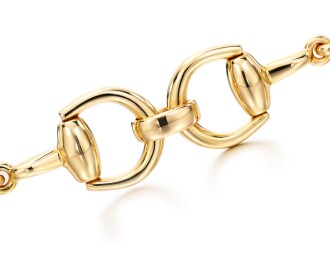
For Gucci, equestrian motifs have been at the core of the brand since the mid-1950s. The Gucci Horsebit loafer serves as an instantly recognizable calling card for the house and is reimagined season after season across both the menswear and womenswear collections.
The horsebit is an essential part of a horse’s tack and saddlery, and is also a nod to its domesticity and long-standing symbiotic relationship with humans. Now, as we enter the Demna Gvasalia era of Gucci, we are witnessing a volte-face return to such house codes; this time, the horsebits are bigger, the racing stripes take center stage on garments and accessories, and silk headscarves are tied under the chin, à la Princess Anne.
One does not need to own a stallion to align oneself with this trend; the thoroughbred look can be bought, obtained and dipped into at leisure. And this is exactly how the fashion system works: designers and brands look to the posh pursuits of the elite for inspiration, it trickles down to the masses, then works its way back up again.