
Paul Dupré-Lafon
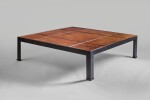
An Important Coffee Table
Auction Closed
December 6, 07:17 PM GMT
Estimate
220,000 - 280,000 USD
Lot Details
Description
Paul Dupré-Lafon
An Important Coffee Table
circa 1937
original Hermès leather, patinated steel, oak
18½ x 71 x 71 inches (47 x 180.3 x 180.3 cm)
Rainbow Replica Handbags , New York
Acquired from the above by the present owner, 1998
Thierry Couvrat Desvergnes, Paul Dupré-Lafon Décorateur des Millionnaires, Paris, 1990, pp. 72 (for the model in a variant size) and 171
Alastair Duncan, Art Deco Complete, London, 2009, p. 40 (for the model with a variant tabletop)
This lot is offered together with a certificate of authenticity from the artist’s rightsholder.
“Dupré-Lafon understood the profound essence of luxury. No ornamentation besides what is absolutely needed. All of his furniture pieces are imbued with a lucid serenity that commands respect,” said Michel Dufet about one of Dupré-Lafon’s first large-scale and career-defining commission, rue Rembrandt in Paris. Early on, the designer and ensemblier showed a predilection for noble materials—raw stones, woods barely polished, natural leathers, metals—creating a concentration of chromatic and sensual values, evocative of an untouched natural environment. Dupré-Lafon’s interior architecture provided a concise response to the dichotomy separating the rigor of modernism with the decorative spirit of Art Deco, setting him apart from many of his contemporaries. The essence of his oeuvre relies on a definition of luxury based on pure necessity and functionality, concepts that are present in every single detail of his work.
The present low table, the most significant and sizable piece by Paul Dupré-Lafon in the Perelman Collection, represents exactly that. This exceptional tour-de-force in proportions and volumes makes use of very few materials—original Hermès leather, patinated steel and oak— yet captivates by its impeccable construction and stunning design. Every detail of the piece was meticulously executed, from the intersection of square leather panels on the tabletop to the placement of the bolts on the legs. This low table is a well-known piece by the designer, having once belonged to his long-term doctor, Dr. Acquaviva.
Though the exact timeline of provenance is not known, one should remember that Dupré-Lafon worked in very closed circles and kept his activity to a limited number of privileged clients and collaborators. As a rather discreet and independent creator, he never founded a workshop, a boutique or a business under his name in the way that many of his counterparts like Ruhlmann or Frank did. He instead worked at home, surrounded by long-term and faithful cabinetmakers and assistants—and was always credited for the drawing and design of his furniture pieces. He was most often absent from any salon or group exhibition. Dupré-Lafon met new clients primarily through word of mouth as well as existing patrons.
Documented pre-war pieces of such caliber are incredibly rare, making the present low table all the more important. This is a triumphant statement-making piece that beautifully embodies the essence of its maker’s timeless style.


