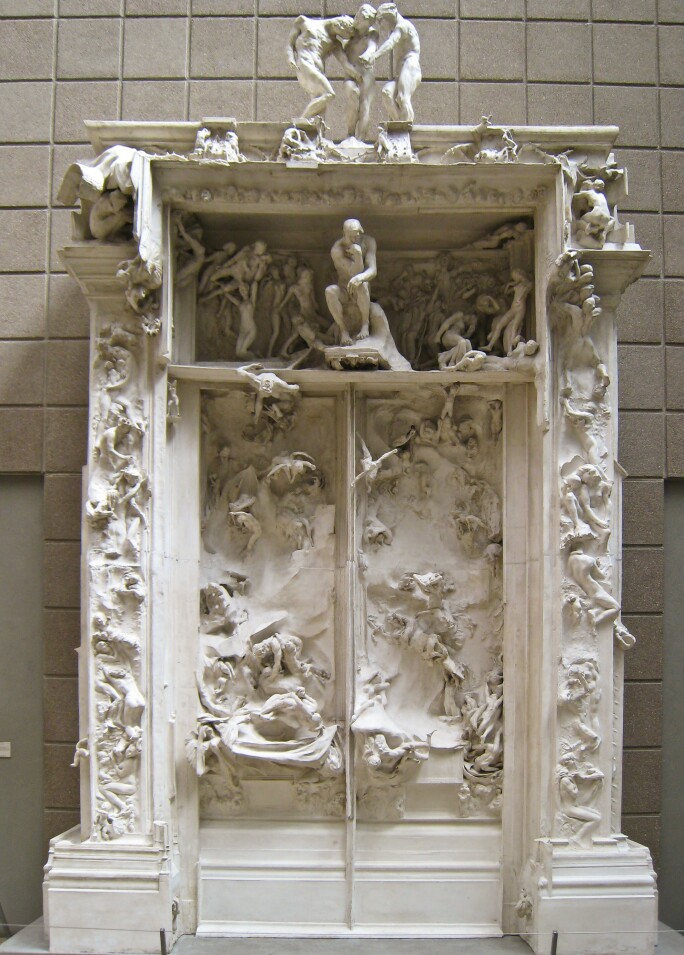
Cariatide à la pierre, petit modèle is a rare early cast of Rodin’s famous composition, whose original form the artist first brought to life as part of his lifelong opus La Porte de l'Enfer, the visual embodiment of Dante Alighieri’s Inferno (fig. 1). La Porte de l'Enfer started as a commission for a door in the planned Musée des arts décoratifs in Paris, although neither the door nor the museum were ever completed. Measuring over six meters in height, La Porte de l'Enfer incorporates hundreds of figures, including many of the artist’s most celebrated works: Le Penseur, Le Baiser, Adam and Ève. Cariatide was placed in the upper left corner of the portal, partially shrouded by scrolling decoration. Her form was created within the first year or so of this commission and was exhibited as an independent sculpture as early as 1883.
The first marble version of this work, titled L'Âge de pierre and now lost, was shown together with a bronze cast of Ève at the exhibition of the Cercle de la rue Vivienne in 1883. In his review of the exhibition, the journalist Charles Frémine wrote, "I saw [...] at the exhibition of the Cercle de la Rue Vivienne, two new works by this artist whose talent made me tremble. They were two statuettes, one in marble, L'Âge de pierre, I think; the other in bronze […] and both were twisted, tormented, demonstrating excessive and violent effort, the first as if crushed by a block of stone she carries on her back" (C. Frémine, Le Rappel, 28 November 1883, translated from French). After seeing the work at the same exhibition, the art critic Gustave Geffroy described the large stone which the figure carries as "rounded, worn, immovable, and heavy like Unhappiness" (G. Geffroy, “Chronique,” La Justice, 3 March 1883, translated from French).
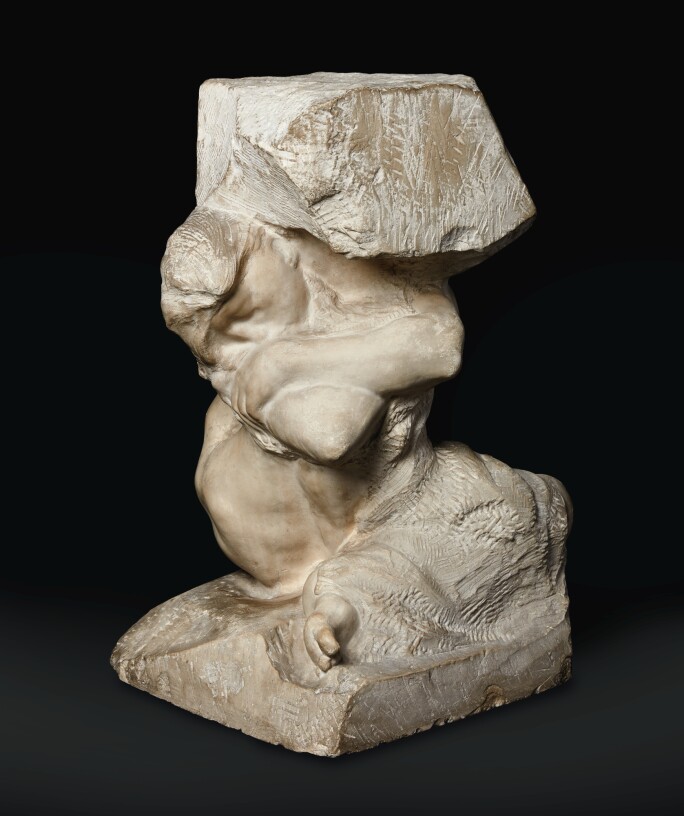
The German poet Rainer Marie Rilke, at the t.mes living in Paris and writing the first biographical account of Rodin’s life, similarly remarked: “The figure bears its burden as we bear the impossible in dreams from which we can find no escape” (quoted in Albert E. Elsen and Rosalyn Frankel Jamison, op. cit., p. 233).
Albert Elsen describes the psychological effect of the composition on a viewer as expressed through its formal structure in the following terms: "She is one among the damned whose inner torment is reflected by her twisted posture and by the burden that she bears, which suggest a moral more than a physical oppression. Rodin has achieved this effect through the torsion of the figure's volumes which seem simultaneously energized and equilibrated. The figure is composed in opposing planes that move from side to side and front to back, as in the counterbalance of the knees, hips, and shoulders, or of the head and stony mass that the figure supports. This torsion conveys the Caryatid's physical oppression, and at the same t.mes evokes her struggle against it; the sculpture's drama and vitality emerge from this conflict" (A. Elsen, op. cit., p. 89).
The present cast of Cariatide à la pierre, petit modèle is notable for its rarity, as it is one of only five known casts of this model and variation executed during the artist's lifet.mes . At least two casts are known to have been executed by the prestigious Griffoul et Lorge foundry between 1889 and 1893, including the present work. A further two casts were made by the Hébrand foundry in 1904, of which one was acquired by the French State and is currently in the collects ion of the Musée Rodin. A further cast was made by Alexis Rudier just before the artist’s death in 1917.
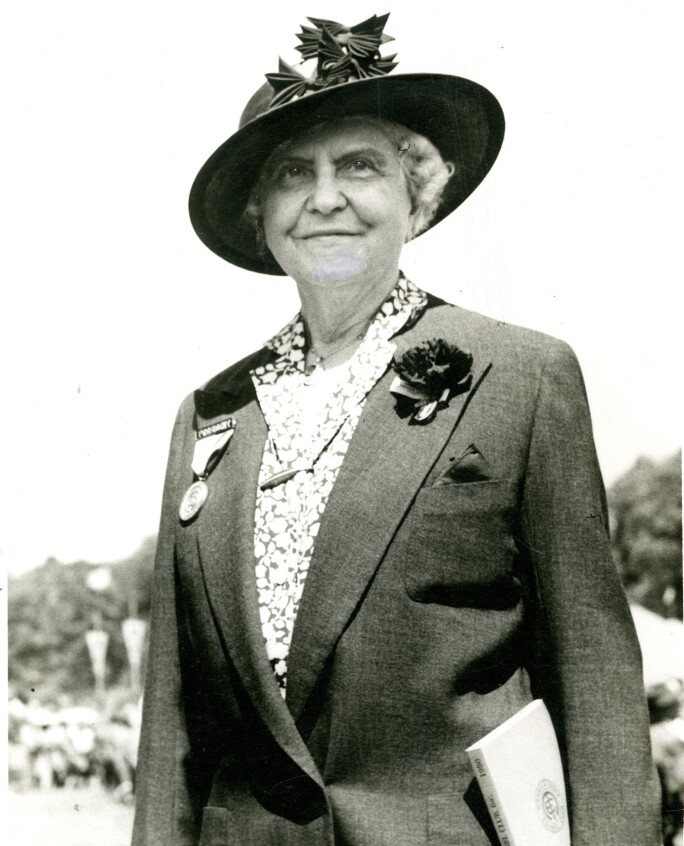
Together with another three bronzes by Rodin offered in our March 2025 London Sales, Cariatide à la pierre, petit modèle historically formed part of the collects ion of Geraldine Rockefeller Dodge (1882-1973), an eminent American philanthropist and benefactor to a wide number of causes including the visual arts, charity and natural resources conservation. Mrs Dodge was also passionate about animal welfare and founded the Morris and Essex Kennel Club and its internationally recognised annual dog show, which for decades was considered among the most prestigious in the United States and lauded for promoting responsible dog breeding and ownership.
In 1961, Mrs Dodge gifted her large collects ion of paintings and sculptures, including the four Rodin bronzes, to an important American institution – with whom the works have remained until present day – in the hopes that its visitors and staff would “receive the same benefit and enjoyment from these objects” as she had “been privileged to receive”.