EXCLUSIVITY IN TEA BOWLS
Regina Krahl
Black glazes are considered particularly effective to set in scene the white foam of a traditionally prepared, whisked tea. Black wares became popular in the Northern Song period (960-1127) when Chan Buddhist monasteries in south China served their tea in the rustic black bowls from the Jian kilns in Fujian, which were rather thickly potted from dark clay and made no pretences to delicacy and refinement. To hide the fine white ceramic body of the Ding kilns – a rare asset within reach of only very few potteries – under a pitch-black glaze must have seemed an almost frivolous extravagance, the ultimate understat.mes nt. To add a gold design to this glossy lacquer-black surface was Song sophistication in the extreme. It was rarely done and remained highly exclusive. The present bowl has been listed as an ‘Important Art Object’ (Jūyō bijutsuhin) in Japan.
The astonishing black-and-white contrast between the Ding body and this glaze was of course duly noted by connoisseurs, such as Cao Zhao, who in 1388 remarked in his collects ors’ handbook Gegu yaolun [The essential criteria of antiquities], “there are also purple Ting [Ding] and ink Ting wares, the latter as black as lacquer. Their paste, however, is white. Like white Ting pieces, they were also produced at Ting-chou [Dingzhou], but are more expensive.” (Sir Percival David, Chinese Connoisseurship: The Ko Ku Yao Lun. The Essential Criteria of Antiquities, London, 1971, p. 141 and p. 306 folios 39a and b). The cost of such bowls was undoubtedly high.

Black Ding was made at the same kilns as white Ding, and sherds have been discovered at the Jiancicun sites in Quyang and the Yanshancun sites in Dongxi, Hebei province, see Ding ci ya ji. Gugong Bowuyuan zhencang ji chutu Dingyao ciqi huicui/Selection of Ding Ware. The Palace Museum’s collects ion and Archaeological Excavation, Palace Museum, Beijing, 2012, pls 96, 97 and 122; Zhongguo gu ciyao daxi. Zhongguo Dingyao/Series of China’s Ancient Porcelain Kiln Sites: Ding Kiln of China, Beijing, 2012, pls 126-9; and p. 265, fig. 17; and Gugong Bowuyuan cang Zhongguo gudai yaozhi biaoben [Specimens from ancient Chinese kiln sites in the collects ion of the Palace Museum], vol. 2: Hebei juan [Hebei volume], Beijing, 2006, pls 202-208, the latter including a fragment of a conical bowl with flat circular centre like the present piece. Most of these fragments, however, are not plain black but show areas of brown. The quantity of black wares represents only a minute fraction of the vast numbers of white wares turned out by these manufactories. When the Japanese scholar and accomplished potter Koyama Fujiō explored the Ding kiln sites in 1941, he collects ed 1,100 sherds at Jiancicun, over 1,000 of them white and five black glazed (G. St G. M. Gompertz, ‘Gilded Wares of Sung and Koryo’, The Burlington Magazine, vol. 98, no. 642, September 1956, p. 307).
Nigel Wood, who called black Ding ware “ultra-rare”, writes “… ‘Black Ding wares’ of Hebei province [were] described in their own t.mes (the Northern Song dynasty) as being as ‘rare as black swans’. Today they are rarer still with perhaps less than a dozen examples in the West and Japan, while China has only sherds of this ware, excavated from the Ding kiln site at Quyangxian.” (Nigel Wood, Chinese Glazes. Their Origins, Chemistry and Recreation, London, 1999, pp. 137 and 155).
No black Ding bowl appears to be preserved in Chinese museums. A small black dish excavated in Beijing is in the Beijing Cultural Relics Research Institute (Zhongguo gu ciyao daxi. Zhongguo Dingyao/Series of China’s Ancient Porcelain Kiln Sites: Ding Kiln of China, Beijing, 2012, p. 435, top); and a much-published brown-glazed bottle with a ‘ghost’ of a lotus-pond design, excavated in Lijia village, Feixi county, Anhui province, is in the Anhui Provincial Museum, Hefei (e.g. Zhang Bai, ed., Zhongguo chutu ciqi quanji/Complete collects ion of Ceramic Art Unearthed in China, Beijing, 2008, vol. 8, pl. 115).
Among the few black Ding tea bowls in Japanese and Western collects ions, examples with the glossy, plain black glaze that would have been suitable for the application of gold, are also hard to find. Wood illustrates a fine black Ding bowl without gilding from the Sir Percival David collects ion (op.cit., p. 155); others are in the Museum of Far Eastern Antiquities, Stockholm, from the collects ion of King Gustaf VI Adolf, illustrated in Oriental Ceramics. The World’s Great collects ions, vol. 8, Tokyo, New York, and San Francisco, 1982, col. pl. 33; in the Kempe collects ion, published in Bo Gyllensvärd, Chinese Ceramics in the Carl Kempe collects ion, Stockholm, 1964, no. 419; and in a private Japanese collects ion, illustrated in Basil Gray, Sung Porcelain and Stoneware, London, 1984, pl. 51.
More often, the black glaze turned reddish-brown around the rim or in uneven areas, is interspersed with rust-red highlights, or took on a ‘tea dust’ appearance, see the bowls in Robert D. Mowry, Hare's Fur, Tortoiseshell and Partridge Feathers. Chinese Brown- and Black-Glazed Ceramics, 400-1400, Harvard University Art Museums, Cambridge, Mass., 1996, cat. nos 16 and 18. While these bowls are beautiful in their own right, they did not provide a surface that could have been ornamented with gold.

圖一 定窰黑釉描金天目茶盌(尺寸不詳)© 首爾國立中央博物館
It is not surprising, therefore, that black Ding tea bowls with gold designs are so elusive. Song connoisseurs, however, had certainly noticed them. The Chinese envoy Xu Jing, who visited Korea in 1123 and reported succinctly on what he saw there, especially Korean ceramics, mentioned among other tea vessels also a black bowl (or bowls) ornamented with gold, modelled after Chinese wares (Xuanhe fenshi Gaoli tujing [Illustrated account of an official mission to Korea during the Xuanhe period], juan 32). His observations in general are very astute, so he may well have been able to distinguish Korean from Chinese wares, even though no gold-decorated Korean pieces seem to be known today, but black-glazed Korean tea bowls without gilding are preserved (see G. St G. M. Gompertz, ‘Gilded Wares of Sung and Koryo’, The Burlington Magazine, vol. 98, no. 644, November 1956, p. 402, fig. 13). In any case, Xu Jing obviously knew Chinese gold-decorated black tea bowls, such as the present piece.
In Korea, such pieces seem to have been highly regarded. A surprisingly large proportion of the few gilt-decorated black and brown Ding bowls that are preserved, including the present piece, can be traced to excavations from Goryeo tombs on the island of Ryongmae, Hwanghae province, Korea or islands nearby. Gompertz believes “It is improbable that the islands were actually used as places of residence or trading posts … The presence of so many [at least 100] tombs is rather attributable to the superstitious practices of the t.mes , which caused the islands to be used as cemeteries.” (Gompertz, September 1956, p. 303). Thus, the tombs are likely to have belonged the families or monks living elsewhere on the Korean peninsula.
Another Song writer and official, Zhou Mi (1232 – 1298), reports in his Zhiyatang zachao [Miscellany from the Hall of Elegant Aspiration] to have seen Ding bowls decorated in gilding in elegant homes at the end of the thirteenth century. He even claimed to know something about their manufacturing technique, asserting that the gold was applied with the help of garlic juice (or oil) before being fired on; this is today considered not unlikely (Gardellin 2019, p. 12; Rose Kerr and Nigel Wood, Science and Civilisation in China, vol. 5: Chemistry and Chemical Technology, part XII: Ceramic Technology, Cambridge, 2004, p. 703).
Gold-decorated Ding bowls were, however, not only used in elite households; as Jian wares were used in temples in south China, black and brown Ding bowls appear to have been used in Buddhist monasteries in the north. The Ding kilns appear to have been the earliest stoneware kilns to decorate their vessels in gilding and this may have been inspired by earlier tea bowls with Buddhist connotations. The imperial gifts to the crypt of Famensi at Baofeng in Shaanxi, that was sealed in 874, include a pair of mise ware bowls, which are glazed in green on the inside, and on the outside are decorated with openwork roundels of parcel-gilt silver, set into a black lacquer coating, which created a rather similar effect. Foot and rim of these bowls are bound in silver, as was later also often done on Ding ware (see Famensi kaogu fajue baogao/Report of Archaeological Excavation at Famen Temple, Beijing, 2007, vol. 2, pl. 197). The three floral cartouches on the present bowl and a few companions, which mimic these openwork metal plaques, appear to have been created with applied cut-out gold leaf. The same is true for the central floret, while the insects seem to have been painted on with a brush, with a solution containing powdered gold. They lend the design a very lively aspect.
That black Ding tea bowls were used at Buddhist temples is also suggested by sherds, some with gilt decoration, collects ed in connection with restoration work at the Kaiyuansi pagoda in Dingzhou. Some of these sherds, which were not archaeologically excavated and are now in a private collects ion, were included in the exhibition Xuanse zhi mei. Zhongguo lidai heiyou ciqi zhenpin zhan [Beauty of black colour. Exhibition of treasures of black-glazed porcelain from China’s past], Shenzhen Museum, Shenzhen, 2011-12. Kobayashi Hitoshi, who illustrates a case from the exhibition containing some of these finds, also mentions sherds inscribed fangzhang, a reference to an abbot at a Buddhist monastery, and tangtou, probably referring to the head priest of a temple (see Teiyō. Yūga naru haku no sekai: Yōshi hakkutsu seika ten/Ding Ware. The World of White Elegance: Recent Archaeological Findings, Museum of Oriental Ceramics, Osaka, 2013, pp. 234f., and fig. 48).

圖三 北宋 定窰黑釉金彩盞(16.3公分),泰華古軒藏,載於《閑事與雅器: 泰華古軒藏宋元珍品》,北京,2019年,卷2,圖版92
While several other kilns, especially the Jian kilns in Fujian, later also added painted gold decoration to their vessels, the use of gold leaf seems to be peculiar to the Ding kilns. Since the gold was fired on at low temperatures, this step in the production probably involved little risk for the object; we are therefore unlikely to find misfired gilt ceramics at the kiln sites. Usage over nearly a millennium may have reduced their number considerably, both through breakage and wear, but quantities almost certainly never were large, as even when the gold is rubbed off, it still leaves a ‘ghost’ of the pattern on the black glaze from being fired on.
Koyama lists seven gold-decorated black-glazed Ding bowls including the present piece, six of them in Korean collects ions and one in Japan, but does not illustrate them (Koyama Fujiō, ‘Kinka no Tei wan [Gold-decorated Ding bowls]’, Bijutsu kenkyū 1941, p. 26). Only four other black Ding bowls with gilt decoration could be traced by this author. A phenomenally well-preserved bowl is in the National Museum of Korea in Seoul, from the Price Yi Household Museum, its design very similar to that on the present bowl (Kim Youngmi, ‘Hanguo Guoli Zhongyang Bowuguan cang Gaoli yizhi chutu zhongguo ciqi [Chinese ceramics excavated from Goryeo sites in the National Museum of Korea]’, Wenwu 2010, no. 4, p. 89, fig. 49; size unknown)(fig. 1). Also closely related to our bowl is a bowl in the MOA Museum of Art, Atami, 18.9 cm (Hasebe Gakuji, ed., Sekai tōji zenshū/Ceramic Art of the World, volume 12: Sō/Sung Dynasty, Tokyo, 1977, col. pls 17 and 18) (fig. 2). A related design is reported to be detectable on a black bowl in the Yamato Bunkakan, Nara, 13.6 cm (Yamato Bunkakan shozōhin zuhan mokuroku 7. Chūgoku tōji/Chinese Ceramics from the Museum Yamato Bunkakan collects ion, Illustrated Catalogue Series no. 7, Nara, 1977, no. 55); and traces of a very different sketchy motif, probably painted on, are visible on a bowl in the private PT collects ion, 16.3 cm (Qin Dashu, Mai Putai & Gao Xianping, eds, Xianshi yu yaqi. Taihua Guxuan cang Song Yuan zhenpin/Graces of Song Wares. Treasures from PT collects ion, Beijing, 2019, vol. 2, no. 92) (fig. 3).
Ding bowls with persimmon-coloured glaze – purple Ding – are more common than black ones and even though the contrast between the precious-metal design and the brown glaze colour would have been much less striking, more brown pieces with gilt decoration are recorded than black, ten in total, all in museum collects ions. Six of these show a basically similar design of three triangular, fan- or lozenge-shaped flower medallions between pairs of insects, around a central flower-head (Gardellin 2019, pls 15, 22, 24-6, 29; and Wenwu 2010, no. 4, p. 91, pls 57-8; for a line drawing of one such design see Mowry 1996, p. 109); two are painted with overall gilt motifs (Gardellin 2019, pls 21 and 23); on one, the design has not been identified (Gardellin 2019, pl. 27); and one bowl is of more rounded form with lobed rim, decorated with floral motifs (Wenwu 2010, no. 4, p. 91, pl. 56). Except for the last piece, both the black and brown bowls are all of the same conical douli (‘rain hat’) shape as the present bowl, with a small but distinct flat circular centre, but come in different sizes.
As far as exclusivity goes, black Ding tea bowls with gilt designs must have come very high on the list, topped perhaps only by the rarest of the rare, yōhen tenmoku bowls of the Jian kilns in Fujian.
茶盌之最
康蕊君
黑釉,向來被視為最能襯托傳統點茶之細白茶沫者。北宋時期(960-1127年),中國南方禪宗寺院以福建建窰生產的黑釉茶盌奉茶,此類茶盌胎厚色濃,簡樸自然,促使黑釉瓷器逐漸盛行。定瓷胎骨細白,乃宋代眾窰罕有之特長,定窰匠人卻施以黑釉掩蓋,幾近奢侈,低調而精絕。黑釉深濃,表面光潤如漆,綴以描金,可謂宋代美學之極致。此類作例極為罕見,珍貴非凡。本品被定為日本「重要美術品」。
定窰白胎黑釉之強烈對比,深得當朝鑒賞家之青睞。曹昭1388年《格古要論》,述「紫定色紫,墨定色黑如漆,土俱白,其價高,如白定俱出定州。」(大維德爵士,《Chinese Connoisseurship: The Ko Ku Yao Lun. The Essential Criteria of Antiquities》,倫敦,1971年,頁141、306,36a、36b)。宋時,此類黑釉定窰瓷無疑屬高價珍品。
黑釉定瓷與白釉定瓷造於同窰,河北省曲陽縣澗磁村與東西燕川村遺址,皆曾出土瓷片,見《定瓷雅集:故宮博物院珍藏及出土定窰瓷器薈萃》,故宮博物院,北京,2012年,圖版96、97、122;《中國古瓷窰大系:中國定窰》,北京,2012年,圖版126-9,頁265,圖17;以及《故宮博物院藏中國古代窰址標本:2:河北卷》,北京,2006年,圖版202-208,後者包含一件笠式盌殘片,盌心平圓近似本品。然而上述瓷片之釉色非純黑,而多帶褐斑。相較出土的大量白釉定瓷,黑釉者數量極少。1941年,日本學者、陶藝家小山富士夫走訪定窰遺址,在澗磁村蒐集了1100片瓷片,其中超過千片為白釉,僅五例黑釉(G. St G. M. Gompertz,〈Gilded Wares of Sung and Koryo〉,《The Burlington Magazine》,卷98,編號642,1956年9月,頁307)。

武德教授(Nigel Wood)曾論黑釉定窰之珍稀,「北宋時期河北省出產的黑釉定窰瓷,被形容『如同黑色天鵝一樣罕見』。時光流轉至今,綜觀日本與西方收藏,存世者不及一打,寥若晨星,中國境內則只見曲陽縣定窰遺址出土殘片。」(武德,《Chinese Glazes. Their Origins, Chemistry and Recreation》,倫敦,1999年,頁137、155)。
中國博物館收藏中,無見黑釉定窰盌。北京市文物研究所藏一件黑釉定窰小盤,出土於北京(《中國古瓷窰大系:中國定窰》,前述出處,頁435,上);安徽省肥西縣李家村出土一件柿釉定窰瓶,廣為刊載,瓶身隱約可見金彩荷塘紋飾,現藏合肥市安徽博物院(如,張柏編,《中國出土瓷器全集》,北京,2008年,卷8,圖版115)。
日本與西方收藏中的黑釉定窰盌中,釉色濃黑、釉面光潤細膩,適合描金者亦是極少。武德刊錄大維德爵士收藏一例,無描金(前述出處,頁155);他例現藏於斯德哥爾摩東亞博物館,原為瑞典國王古斯塔夫六世舊藏,載於《Oriental Ceramics. The World’s Great collects ions》,卷8,東京、紐約、舊金山,1982年,彩圖版33;出自肯普珍藏者,刊於 Bo Gyllensvärd,《Chinese Ceramics in the Carl Kempe collects ion》,斯德哥爾摩,1964年,編號419;還有一例為日本私人收藏,錄於 Basil Gray,《Sung Porcelain and Stoneware》,倫敦,1984年,圖版51。
黑釉於近口沿、不平坦處,往往色呈紅褐,其中或有紅棕色斑,或類似茶葉末釉之表現,見 Robert D. Mowry,《Hare's Fur, Tortoiseshell and Partridge Feathers. Chinese Brown- and Black-Glazed Ceramics, 400-1400》,哈佛藝術博物館,劍橋,麻州,1996年,編號16、18。此類茶盌雖精美,其釉面並不適合以金相飾。
以此推知,黑釉描金定窰盌之燒造,可謂艱難至鉅,而宋代鑑藏家無不瞭若於心。宋宣和五年(1123年),徐競出使高麗,返國後上呈見聞,鉅細靡遺,包含對於高麗陶瓷之觀察,其中述曾見「金花鳥盞」,傚仿中國作例(《宣和奉使高麗圖經》,卷32)。徐氏觀察敏銳,應能分辨異國製品,現存雖不見飾金之高麗瓷盞,但黑釉高麗盞,無描金,仍有傳世(G. St G. M. Gompertz,〈Gilded Wares of Sung and Koryo〉,《The Burlington Magazine》,卷98,編號644,1956年11月,頁402,圖13)。無論是否,徐氏顯然已知中國黑釉描金茶盌,即如本品。

圖二 定窰黑釉描金天目茶盌(18.9公分)© MOA美術館蔵
於高麗,此類茶盞深得珍崇,現存寥寥之定窰黑釉或柿釉描金盌,包括本品,竟多可溯至韓國黃海道省龍媒島或相鄰島嶼之高麗墓葬遺址。Gompertz 論及,「這些島嶼應非作為居住或商埠,如此大量的墓葬遺址,或可溯因至當時的宗教信仰,而造墓園於島上。」(Gompertz,前述出處,1956年9月,頁303)。此處墓葬或屬於居住在朝鮮半島之家族或僧侶。
另一位宋代文士周密(1232–1298年),於《志雅堂雜鈔》書及,晚年曾於他人雅藏中見過描金定窰盌,並述描金須以大蒜汁調金畫就,再入窰烘燒;今日觀之,應非屬實(Gardellin,2019年,頁12;柯玫瑰與武德,《Science and Civilisation in China》,卷5,部 XII,劍橋,2004年,頁703)。
描金定窰盌,並非僅為貴族所用,黑釉與柿釉定窰盌亦用於北方佛教寺院,一如南方佛寺使用建盞。據小林仁專文,定州開元寺塔曾發現描金黑定盞殘與建盞殘片(見《定窯・優雅なる白の世界 ―窯址発掘成果展》,大阪市立東洋陶磁美術館,2013年,頁234f,圖48)。部分曾展出於《玄色之美:中國歷代黑釉瓷器珍品展》,深圳,2011年(或頁211,圖36上)。小林氏並記述,其一黑定殘片書「方丈」,意指寺院住持,另一書「堂頭」,或指堂頭和尚。黑釉建盞廣用於南方寺院,或引領起北方佛寺運用黑釉定窰盞之風潮。
定窰應是最早將描金技法運用於陶瓷上者,此或可前溯至早期佛茶盞。陝西扶風法門寺地宮,874年封存珍貯皇家賜禮,其中一對秘色瓷盞,盌內施青釉,外壁髹黑漆,飾以局部鎏銀鏤雕紋飾,視覺效果類似本品。口沿與圈足包鑲銀扣,近似後朝定窰常見作法(《法門寺考古發掘報告》,北京,2007年,卷2,圖版197)。本品三處描金紋飾,同其他近例,風格摹傚金屬鏤雕飾牌,應以金箔精剪出而貼之,盌心花飾亦同,昆蟲紋飾則以筆沾金液細繪,更添靈動。

圖一 定窰黑釉描金天目茶盌(尺寸不詳)© 首爾國立中央博物館
其他瓷窰作坊,尤其是福建的建窰,亦逐漸開始運用描金飾瓷,貼附金箔之作法僅見於定窰。貼金須以低溫烘燒,失敗風險相對較低,或因此窰址幾無發掘作廢瓷片。歷經千年使用,損傷難免,得以完整傳世至今的數量自然更少,然而黑釉描金定窰盌本已珍稀,即使金紋隨著歲月磨損佚失,仍於黑色釉面遺留紋飾痕跡。
小山富士夫曾造冊羅列七件黑釉描金定窰盌,包括本品,六件存於韓國,一件藏於日本,無圖片(小山富士夫,〈金花の定碗〉,《美術研究》,1941年,頁26)。此外,筆者僅多蒐列另四例。首爾國立中央博物館藏一保存極好作例,出自李王家美術館收藏,紋飾與本品近似(金英美,〈韓國國立中央博物館藏高麗遺址出土中國瓷器〉,《文物》,2010年,號4,頁89,圖49;尺寸未知)(圖一)。熱海MOA美術館藏一盌,一與本品類同,18.9公分(長谷部樂爾編,《世界陶磁全集》, 巻12,東京,1977年,圖版17、18)(圖二)。奈良大和文華館藏一件黑釉盌,據稱亦見相類紋飾,13.6公分(《大和文華館所蔵品図版目録:7: 中国陶磁》,奈良,1977年,圖版55)。私人收藏一例,紋飾相異,可見筆觸,或為畫上非貼金,16.3公分(《閒事與雅器:泰華古軒藏宋元珍品》,北京,2019年,卷2,編號92)(圖三)。
柿釉定瓷,或稱「紫定」,較黑釉多見,柿釉色澤與金屬之對比雖不似黑釉強烈搶眼,著錄中前者卻較後者更多,一共十例,皆為博物館藏品。其中六件的紋飾與本品相類,三區三角形、扇形或菱形花卉紋,彼此之間綴一對草蟲紋,盌心飾圓形花頭(Gardellin,2019年,圖版15、22、24-6、29;《文物》,2010年,號4,頁91,圖版57、58;參考一線描圖,見Mowry,1996年,頁109);二例滿繪描金(Gardellin,2019年,圖版21、23);另一盌之紋飾難辨(Gardellin,2019年,圖版27);最後一例,盌壁較圓鼓,花口,綴花卉紋(《文物》,2010年,號4,頁91,圖版56)。除了最後一例深圓器形,其他作例,無論黑釉或柿釉,盌身均是斗笠式造形,一如本品,盌心細小平圓,可見不同尺寸。
論珍稀,黑釉描金定窰茶盌,無疑名列前茅,僅次於福建建窰出產的「矅變天目盌」。

Mayuyama and Replica Shoes 's
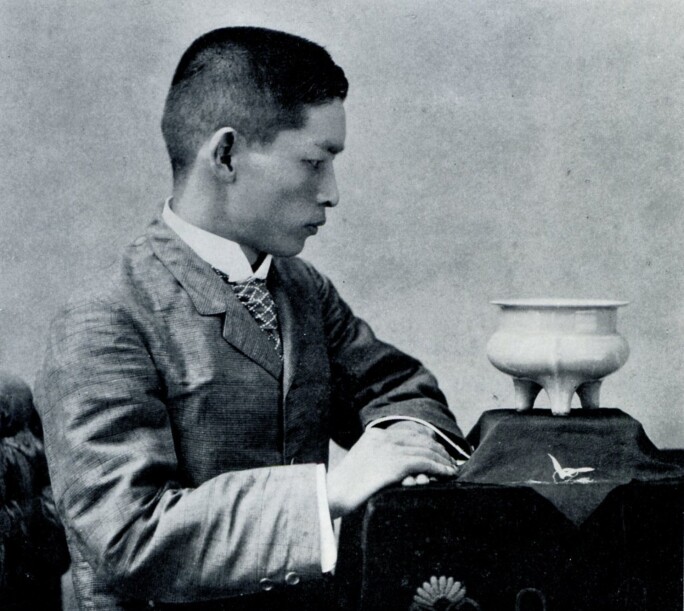
Since the 1950s, Mayuyama & Co., Ltd. was the first Japanese art dealer to participate in overseas auctions, including the sales of some of the most renowned British collects ions offered at Replica Shoes 's London. At the t.mes , Mayuyama Junkichi (1913-99), the then President of the company, had been travelling extensively in Europe and the USA, where he had the opportunity to meet with prominent collects ors such as Sir Percival David, Mrs Alfred Clark, Mr Rolf Cunliffe and other distinguished connoisseurs of the t.mes .
Commemorating our 50-year relationship with Replica Shoes 's Hong Kong, it is a great pleasure for us to offer some of the finest masterpieces from our collects ion for this curated auction aptly titled Karamono. The term, Karamono, holds a very special place in Japanese culture and is reserved for only the finest Chinese tea bowls and flower vases; these rare treasures are meticulously cared for and displayed with the greatest consideration during ceremonies. Among them, we have carefully selected two important and exceptionally rare black-glazed wares of unsurpassed quality for this sale. The first of which is a Jian russet-streaked 'nogime tenmoku' bowl (lot 2511); its glossy pitch-black glaze, marked with mesmerising striations, creates a stunning contrast with Japanese green tea, and epitomises the beauty of the Song dynasty wares. The second is a gilt-decorated black-glazed Dingyao tea bowl (lot 2513). While black-glazed Dingyao conical bowls are already considered the paragon of black wares, it is extraordinarily rare to come across a perfectly finished work, which was even the case during the t.mes of production. Of those exceedingly rare specimens, those adorned with gilt decorations were presented to the Koryo court and served as a test.mes nt to the pinnacle of artistic achievement of the Northern Song dynasty. The boundless darkness of the black glaze evokes the vastness of the universe and a sense of eternal beauty that transcends t.mes .
Mayuyama & Co., Ltd.
President, Tadashi Kawashima
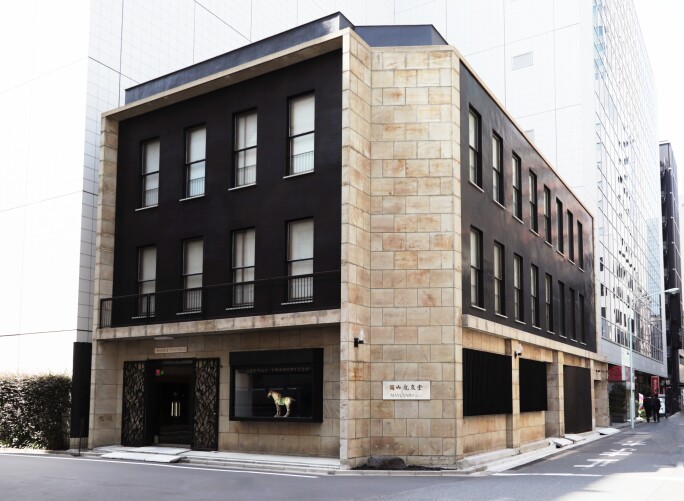
繭山龍泉堂與蘇富比
繭山龍泉堂自五十年代起於國際拍場嶄露頭角,乃首家競拍海外的日本骨董行,所斬獲拍品不少出自倫敦蘇富比經手的英國收藏。時任社長繭山順吉(1913-99年)曾頻繁往返於歐洲及美國,有幸結識大維德爵士、克拉克夫人、肯里夫勳爵等一眾傑出鑑藏家。
為紀念與香港蘇富比攜手共進五十載,我堂將在《唐物》專場中呈現數件精選珍品。「唐物」一詞在日本文化中意義非凡,專指拔萃出群的中國茶具與花器;日本人照料唐物亦無微不至,僅於茶道儀式上慎重展示。 思慮再三,我堂釋出兩件黑釉瓷珍予此專場,兩件皆為稀世名品,路份之高無出其右。一為建窰兔毫禾目天目茶盞(編號2511),釉色明瑩黝潤,兔毫紋理令人愛不釋手,與茶湯交相輝映,宋瓷之美盡收此器。另一為定窰黑釉描金茶盞(編號2513);黑定斗笠盌被奉為黑釉瓷之經典,而成器無瑕如斯者縱於北宋亦不可多得,其中,有器描金,獻入高麗王朝,可鑑北宋美學巔峰成就。黑釉深邃如太虛,神韻雋永,歷久彌新。
繭山龍泉堂
社長川島公之
香港サザビーズ50周年と繭山龍泉堂
当社は、1950年代から、主にロンドン・サザビーズで開催された、名立たる英国人コレクターの売立などに参加し、日本人としては、戦後最も早くに海外オークションに進出した美術商である。これは、当時の社長であった繭山順吉(1913-99)が、1950年代のまだ日本人が容易に渡航できない時代に欧米を視察し、英国では、Sir Percival David、Mrs Alfred Clark、Lord Rolf Cunliffe など当時の最高峰のコレクターと交流を深めていたことが起因している。
それ以後も当社とサザビーズ社との取引は数多く、この度香港サザビーズ50周年のオークションにて、繭山龍泉堂コレクションとして、選りすぐりの3点を出品できたことは、この上ない喜びである。今回の建窯禾目天目茶碗(lot 2511)および黒定金彩碗(lot 2513)のに作品は、突出した黒釉の美意識を充分に感得できる名品である。日本では、10世紀から喫茶の風習が始まり、12~13世紀、日本では鎌倉時代になると寺院や武家などで茶の湯が流行する。その第一位にあったのが、「唐物」と呼ばれる中国産の茶碗や花入であるが、茶碗の最高位が「建盞天目」と呼ばれる建窰の黒釉碗であった。抹茶の色に最も合う漆黒の天目の釉色は、宋時代の美意識を遺憾なく発揮した艶麗な輝きを持している。その黒釉の最初の到達点といえるのが、北宋時代、定窰の黒釉作品、「黒定」と呼ばれる盞形の碗である。完璧に仕上がった作品は当時から余程少なかったようで、現存しているものは極めて稀である。この特別な黒釉に金彩を施した「金花の定碗」と呼ぶタイプの碗は、高麗王朝に献上されたことからもわかるように、超絶した領域にある北宋の生み出した傑作品といえる。その瑞々しい黒色を踏襲した建窰碗は、北宋を受け継ぐ南宋時代の美意識が大いに反映されているといってよいだろう。「宇宙」をイメージさせる際限のない深い黒は、時空を超え現在でも常に新しく、そしてそれは、永遠に褪せることなく輝き続けるにちがいない。
繭山龍泉堂 代表取締役 川島公之
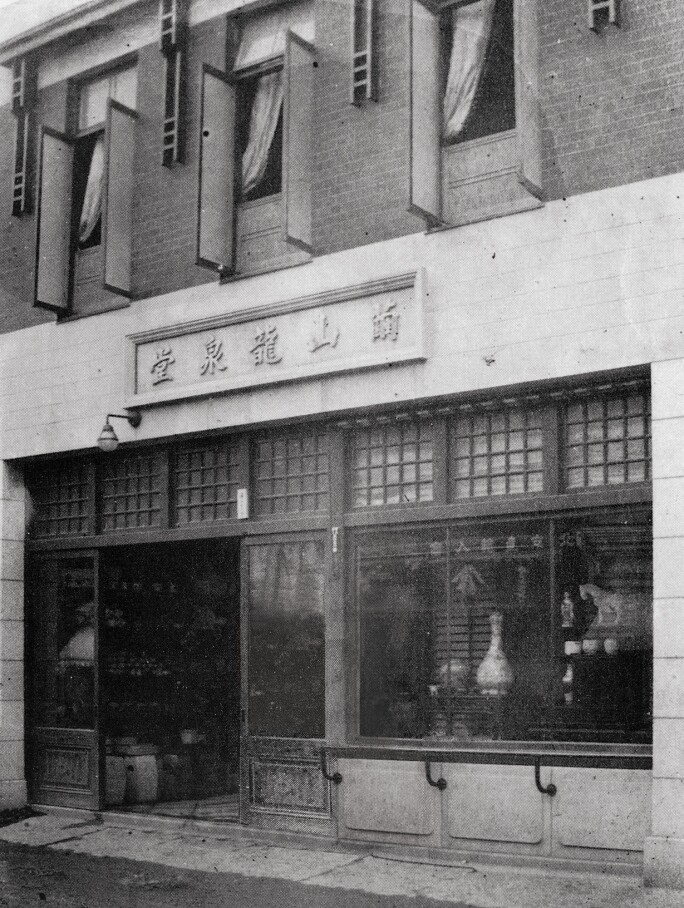
繭山龍泉堂,攝於1920年,京橋區鈴木町(現址東京都中央區京橋)