"These works began with Miró slipping out of his studio, unseen, only to return with an impromptu harvest of objects, his bounty... For Miró, all paths were strewn with such marvelous nothings, all of life's refuse remained alive."
Personnage gothique, oiseau éclair arises from the great body of Joan Miró's late work, in which the artist devoted himself the discipline of sculpture and delighted in the potentiality of the found object. Soaring to a height of four and a half meters tall, the bronze form asserts a commanding yet playful presence.

The present sculpture, its elegant swells, concaves and indentations, is a superb example of the aesthetic potential of Miró's endeavor. Miró constructed this impressive form by using a corrugated cardboard box for the head and a donkey's yoke for the body. On top of the box, he mounted a "bird," the only hand-modeled element. Throughout his oeuvre, the bird is a metaphor for transcendence through flight.

Enlarging the entire assemblage through a series of plasters, he was able to remain faithful both to the original source material while creating a massive presence. The imposing nature of these monumental works is heightened not only by their size but by what appears to be the precarious balance of the elements. The out-sized cast of the cardboard box, serving as the creature's head, appears to teeter atop the body, balanced over a narrow point. Although the head piece is firmly bolted to the body, fixing the parts in stasis with the threat of it toppling removed, the heightened sensation of balance remains.
"What are these figures of Miró that stand before us?... Neither men nor beasts, nor monsters nor intermediate creatures, but with something of all these. Of what 'elsewhere' are they native, from what regions of the fantastic have they traveled?"
Working with found objects was a common practice amongst the Dadaists and Surrealists in the 1920s and 30s (see feature below), and throughout his career Miró seized upon this means of creative expression with fervor. From his assemblages of the 1930s to the monumental sculpture of his mature career, the act of cultivating beauty and investing new life into the inanimate carried overtly divine connotations for the artist, especially when executed on a grand scale.
Explore the Found Object in Dada and Surrealist Art
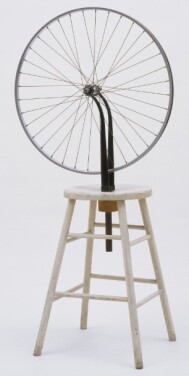
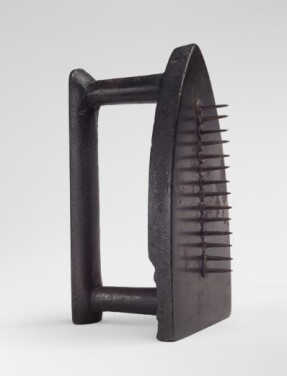

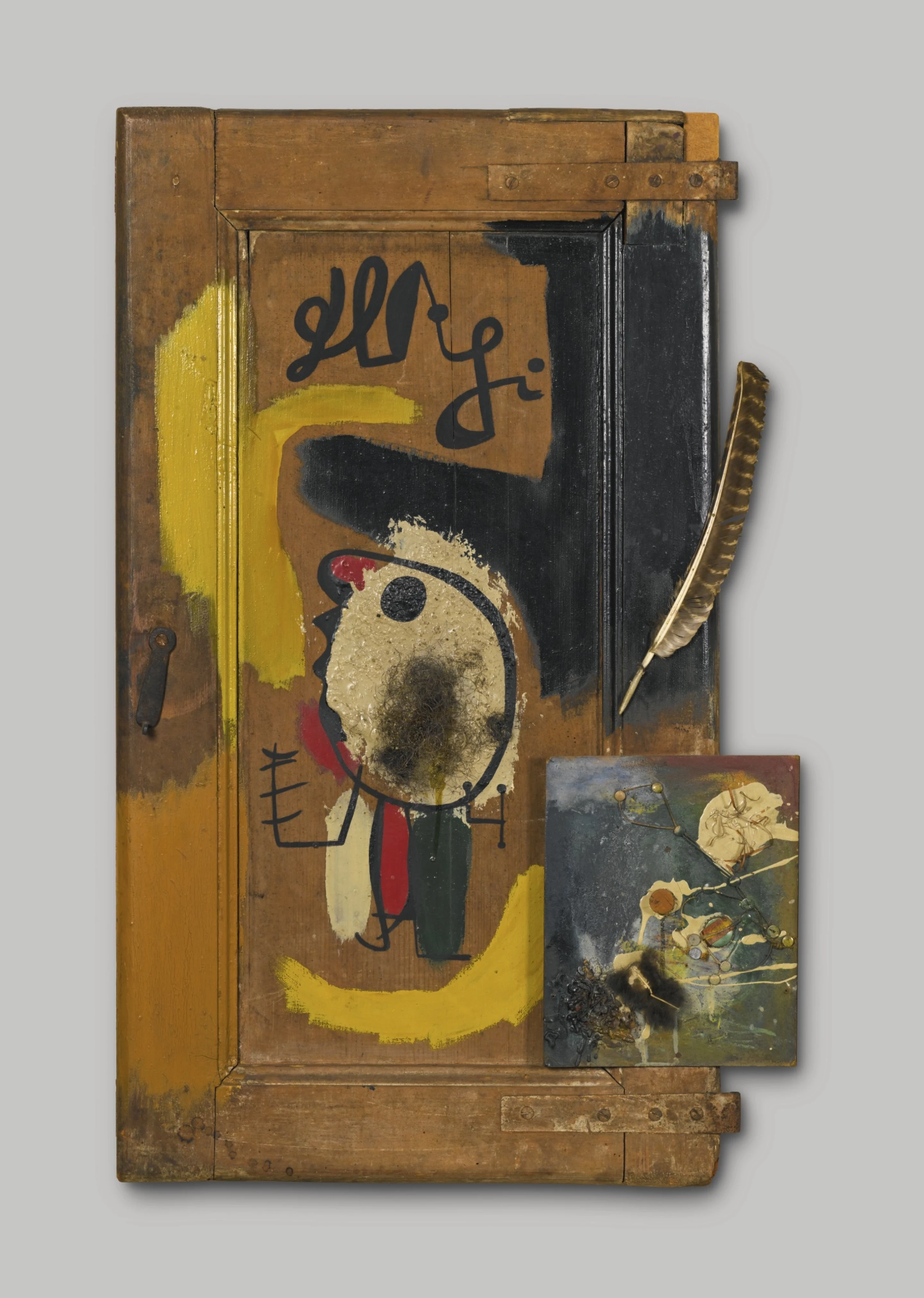

By 1970, Miró was widely recognized for his contributions to Modern art, having inspired the younger generation of Abstract Expressionist painters in the 1950s. The 1960s were for Miró a t.mes of great accolade and recognition, with numerous retrospective of the artist's work held across Europe. By this t.mes , the artist's work had become quite literally larger than life, his monumental works resulting from the commissioned for the Paris World Fair, the Barcelona Airport, the UNESCO building in Paris, the graduate building at Harvard University as well as additional commercial building in the United States.

Comfortable working on a vast scale and across many mediums, Miró began to create larger, more impactful sculptures. The three-dimensional forms like Personnage gothique, oiseau éclair echo the aleatory inspirations and Surrealist impetuses of the late 1920s and 1930s on a monumental scale (see figs. 1 and 2). As Jacques Dupin states of the artist's practice: “In painting, Miró produced his pictograms through the reduction and stylization of reality. Sculpture, on the contrary, allowed Miró to begin with concrete reality and collects ed objects, which were then internalized and plunged into the fires of his imagination, thereby producing three-dimensional images” (Jacques Dupin, Miró, New York, 1993, p. 361).
"When Miró sculpted, everything was either anachronic or unexpected. There were no ground rules, only a penalty for ending the game. Or perhaps there never was any beginning or end, only the perpetual exchange between the sculptor's imagination—his bet as it were—and the objects which rose before him, imposing their presence, the exchange between a venturesome gaze and the work's response to it."

Conceived in 1976 and cast in 1990, the present bronze is numbered 1/2 from an edition of two plus one nominative cast in the collects ion of the Fundació Pilar i Joan Miró in Mallorca. Cast 2/2 belongs to the collects ion of the National Gallery of Art in Washington D.C., making the present work the only cast of this form in private hands.