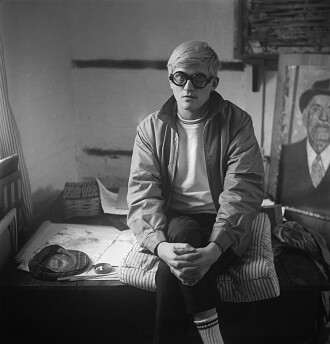
“The idea of achieving verisimilitude in his painting - the ‘truth’ or ‘realism’ - is never the point with David Hockney. The ‘truths’ that he presents in his work are about vision, how we look at the world and how those emotional spaces of looking can be pictured.”
A lyrical treatise on color and form, Sunflowers and Three Oranges from 1996 marks David Hockney's remarkable return to figurative painting during a pivotal period in his artistic career. Amongst the largest Flower paintings that David Hockney produced during this pivotal year. Sunflowers and Three Oranges is distinguished by its radiant hues and exceptional composition. Debuted in 1997, the present work was notably included in the Annely Juda Replica Handbags exhibition Flowers, Faces and Spaces, which marked Hockney's largest exhibition in London since his 1988 Tate retrospective. After a decade-long interlude from studio painting, during which he primarily explored photography, Hockney returned to California with a renewed devotion to portraiture and still-life painting. Following a visit to the Claude Monet retrospective at the Art Institute of Chicago and Johannes Vermeer exhibition in the Mauritshuis, Hockney was inspired by the delicate atmosphere of light engendered by the renowned Impressionist artist and astonished by the enduring virtuosic application of varnish and oil paint by the Dutch master. Following this visit, Hockney returned to his studio with a fervent burst of creative energy to explore his signature stylistic rendering of his surroundings. A dazzling array of rich saffron yellow, burnt oranges and greens, Sunflowers and Three Oranges is a test.mes nt to this vibrant period of production and the artist's incomparable mastery over the elusive and fundamental elements of painting.

In keeping with the tradition of classical still life and flower paintings, Hockney prompts meditations on mortality and transience, both within the artist's own experience of painting flowers and of the deeply personal and profound relationship to t.mes and loss. Hockney had begun painting sunflowers for his friends as get-well cards but turned towards the transiency of flowers in contemplation, and in solace, of the recognition that life can be burgeoning with liveliness while nevertheless evolving and eventually fading. The tender poignancy of the present work coincides with a period of prolonged personal loss and mourning in Hockney's life during the late eighties and nineties, including the death of the critic and curator Henry Geldzahler, the passing of his close friend Ossie Clark, as well as that of painter Sandra Fisher, close friend and wife of R.B. Kitaj. Sunflowers and Three Oranges is thus suffused with personal meaning and transformation while simultaneously paying homage to the historical and artistic lineage of his predecessors, so many of whom explored flower paintings and still life as an opportunity to render their technical mastery of and emotive reckoning with painting.


In the present work, a bouquet of sunflowers springs upwards, their Tuscan yellow and golden ochre heads rising elegantly from thick-stemmed roots and flourishing green leaves; here, Hockney's subject is an unparalleled exploration of light, color and form itself. The sunflowers are perfectly piqued and full of life, preserved in a moment of ineffable perfection; each delicate petal forms a crown around a burnt sienna head of seeds, with the three tantalizing oranges similarly poised to surround them in their most ideal form. Exemplified in the composition of this work, painting water within a clear glass was of critical importance to Hockney, who recognized the creativity and consideration imbued within the representation of water. Set within the vase, each carefully-rendered sunflower constitutes its own unique composition, with deliberate consideration of light intermingled with shadow and perspective. The oranges are plump and supple as they gently rest on the table, accentuating the liveliness of the sunflowers and enticing the viewer into Hockney's captivating setting. The rich vitality of the sunflowers set against a warm and textured amber backdrop woven from delicate brushstrokes completes a breathtaking composition.
"When you are painting flowers, you will [realize] they simply do not last very long. Sunflowers, for instance, I have now noticed Van Gogh had to take the leaves off. They droop after a very few hours. You have to paint very quickly if you want to have them looking as though life is there. I think that you notice things simply will not stay there for so long."
With a heightened naturalism coupled with saturated, expressive colors, Hockney devoted his energies anew during this period to the scrupulously meticulous application of color and rendering of light. In particular, he closely studied Vermeer's method of layering yellow and green beneath outer layers of color to achieve mesmerizing radiance and scintillating vibrancy in his sunflowers and vases – here rendered to consummate effect. For Hockney, still-life paintings are less about the verisimilitude of his subjects but of the pleasure in looking, experiencing, and the delight of capturing the life of his subjects' surroundings in a moment in t.mes . Each of the deftly-painted oranges ground the viewer's gaze with a welcoming softness and awareness of the direction of the northern light that Hockney utilized, reminiscent of Paul Cezanne's Apples and Oranges, casting a slight shadow across the table to add perspectival depth and awareness for the viewer.


Right: Paul Cezanne, Apples and Oranges, 1895-1900. Musee d'Orsay, Paris. Image © Bridgeman Images.
One of twenty-five flower paintings from Hockney's Flower series that went on public view in London after a year of dedicated studio painting, Sunflowers and Three Oranges recalls the t.mes less classicism of Vincent Van Gogh, Henri Matisse and Claude Monet while simultaneously paying homage to the technical aptitude of the Dutch Golden Age painters. Hockney dedicated this year to creating a series of paintings that offered a purview into his mature period of still life painting. Sunflowers and Three Oranges represents a vigorous intellectual interrogation of the representation of still life, the technical application of pigment to canvas and the pleasure of artistic production that continues to occupy Hockney throughout his career. An arresting yet.mes ditative composition, Sunflowers and Three Oranges undeniably references Vincent van Gogh's mastery of the same subject. Hockney described his beloved relationship to the subject matter: "When you are painting flowers, you will [realize] they simply do not last very long. Sunflowers, for instance, I have now noticed Van Gogh had to take the leaves off. They droop after a very few hours. You have to paint very quickly if you want to have them looking as though life is there. I think that you notice things simply will not stay there for so long." (David Hockney quoted in interview with Piet de Jonge, Piet de Jonge, David Hockney: Paintings and Photographs of Paintings, September 1995 pg. 46)