The Glorious Emblem:
Georges Mathieu’s Epic Masterpiece Hommage à Watteau
The history of art is an expansive process akin to metamorphosis. Notions of what is traditional and what is avant-garde differ with each successive era. On the journey in search of a personal approach, an artist will often look back at the achievements of predecessors, seeking on the one hand to learn from the masters and on the other hand to push against tradition, striving for creative breakthroughs. The new generations pay tribute to the forefathers, while also attempting the difficult feat of scaling to even newer artistic heights. Presented in the current season’s sale is a five-metre large-format masterpiece Hommage à Watteau (Lot 1032) by French artist Georges Mathieu, who was renowned for his Lyrical Abstract art. The title of this piece pays homage to Rococo master Jean-Antoine Watteau, revealing not only Mathieu’s deep reverence but also his grand ambition to rival if not exceed the achievements of a great classic, a glorious epic written with sizzling passion.
Known for his command over large-format compositions, Mathieu, who never created preliminary sketches for his paintings, was ever on the pursuit of passionate, explosive emotional expression, transforming his creative process into improvised “action” art. Although the compositions were abstract, the subjects were often historical, including a series of works that paid tribute to important figures in history. Famous examples include Hommage aux poétes du monde entier, painted in 1956 at the Théatre Sarah Bernhardt, and La libération d’Orléans par Jeanne d’Arc, completed in 1982 and presented last year by Replica Shoes ’s Hong Kong. Hommage à Watteau was created in the 1970s, during a t.mes in which Mathieu was widely admired as a post-war art master. From the 1950s, Mathieu had enjoyed global influence, inspiring the Gutai movement in Japan, and introducing New York’s Abstract Expressionism to Paris. At the t.mes , he took inspiration from calligraphy of Asia, an artform introduced to him through his friendships with Chinese artists in France and in turn rewriting the landscape and direction of post-war art. Such triumphant achievements reflected Mathieu’s tireless dedication to the international development of abstract art, and his tremendous energy and vigor were aptly displayed in the present work. He became a member of the Académie des Beaux-Arts in 1976. From promoting avant-garde experimental art to gaining acceptance by an established institution of Replica Handbags , Mathieu had written a glorious chapter of art history. In the 1970s, the artist entered a golden era for his artistic creativity as well as his personal life.
"On a pink and blue background, that of an unreal cosmos, three signs float as in an atmosphere of weightlessness. On the right, a baroque and tragic coat of arms brings human reality into the innocent harmony of a peaceful and gentle nature. The diabolical anguish is ready to surge. The white sign – will he succeed in curbings the forces of evil, in stopping the Faustian adventure?"
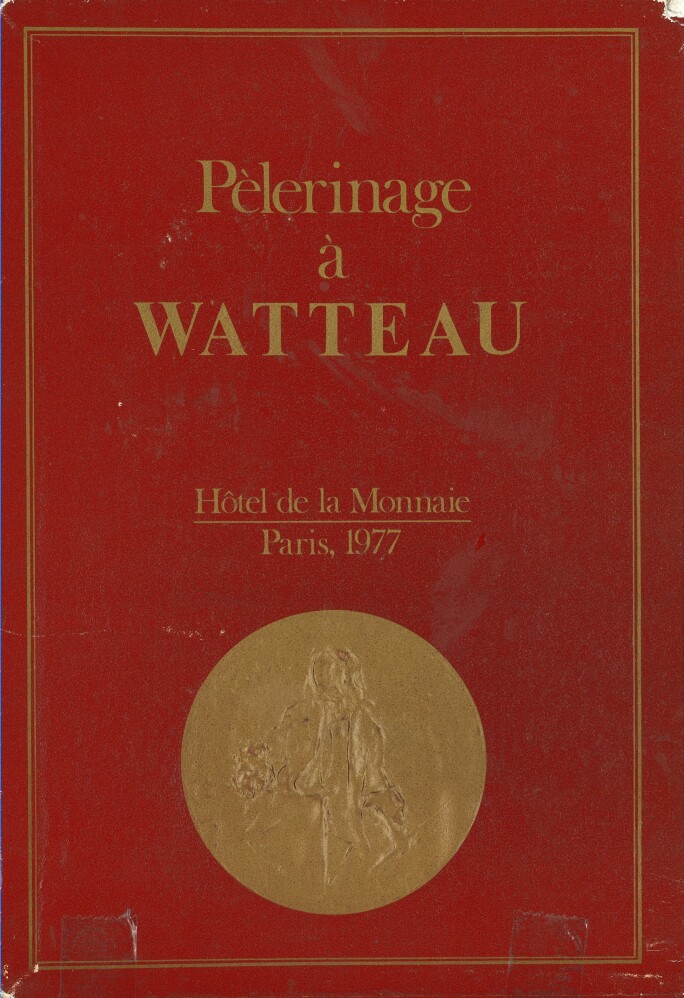
In 1977, a large-scale exhibition Pèlerinage à Watteau was held at the Monnaie de Paris, and contemporary artists were invited to contribute works that would pay tribute to Watteau. Mathieu presented the five-metre large-format piece Hommage à Watteau, displaying his prowess as the official artist. In the exhibition catalogue, he expressed key insights on the present work: “On a pink and blue background, that of an unreal cosmos, three signs float as in an atmosphere of weightlessness. On the right, a baroque and tragic coat of arms brings human reality into the innocent harmony of a peaceful and gentle nature. The diabolical anguish is ready to surge. The white sign – will he succeed in curbings the forces of evil, in stopping the Faustian adventure?” Derived from the earlier Baroque period, Rococo art originated in the 18th century during the reign of Louis XV in France. Richly decorative, Rococo art reflected the indulgent life philosophy prevalent among the aristocracy, which motivated the extravagant visual banquet of the t.mes . Watteau’s delicate and frivolous painting style was an apt representation of that aesthetic aspiration, which gradually moved away from the sacrosanct elegance of Baroque art. Mathieu’s creation was inspired by the transitional period between the two eras. The artist infused his personal imagination into the present work to create a pastel-coloured universe in which soft, glowing light seeps from below, reminding the viewer of Watteau’s dreamscape of flowing light. The most characteristic feature of Rococo art was the use of vibrant colours, in contrast with the darker, stark atmosphere of the Baroque style – demonstrated, for example, by the masterworks of Rembrandt. Watteau was a master of outdoor landscape, which always appeared bright and light, and the characters depicted were beautiful and attractive. Thus, Mathieu introduced a vibrance and translucence reminiscent of Rococo art in the painting’s background, a choice distinct from his usual practice of using plain-coloured backgrounds.
In his youth, Mathieu had lived in Versailles and he was immersed in an environment rich in French history. He naturally developed a passion for studying history and art, as well as a nostalgia for the bygone monarchy, regarding as glamorous the era during which Watteau lived, when French aristocrats established the exceptional standard of taste and refinement. Mathieu’s ravishing paintings were swift as lightening, his composition filled with dazzling lines. Yet in Hommage à Watteau, three majestic symbols were clearly organised, in particular the emblem shaped like a shield on the right hand side, the hexagonal silhouette resembled the shape of France on a map, with golden strands radiating dazzling lights from the centre, perhaps a symbol of the monarchy’s glorious past as well as the hope for France’s revival after the war. In this work, Mathieu not only revealed his admiration for the past era of a glorious monarchy, but also created a new classic of his t.mes , achieved via his unique artistic sensibility. He was a fearless leader of postwar international art, forging ahead on a road of revolution.

法國造幣局委託馬修設計、並於1974至1987年間累積發行逾一億枚的十法郎硬幣。
Mathieu’s paintings were primarily improvised, and repeated compositions were rare. Nevertheless, the patterns in the present work had appeared more than once in Mathieu’s other creations: one of which was the officially commissioned ten francs coin, with a print-run of 100 million copies between 1974 and 1987. Of all the projects Mathieu participated in his life, this was arguably the largest. The image on one side of the coin calls to mind the emblem image on Hommage à Watteau. Another example was a commemorative silver coin as a tribute to Watteau, also created for the Pèlerinage à Watteau exhibition. Designs on both sides of the silver coin found their prototypes on the present work. Repeatedly, Mathieu used the emblem in his works, perhaps a favourite of the artist, and possibly reflecting a hope that the emblem would become a personal icon. Both the ten francs coin and the commemorative silver coin represented the artist’s resolve to, through his artistic activities, become a part of the society and his grand ambition to become a part of history. The present work was completed as the artist’s reputation reached its peak, and the range of his work was so broad that had long gone beyond the identity and ambition as an artist, and by doing so, he transformed himself into a leader in the promotion of French culture. Out of the three projects, the design is seen more comprehensively in Hommage à Watteau, while the historical and symbolic meanings are unrivaled, elevating it to the level of a national treasure.
榮光萬丈的輝煌圖騰:喬治・馬修史詩級巨獻《向華鐸致敬》 藝術史是一個漫長的蛻變過程,何謂傳統、何謂前衛,於每一個時代皆有不同的解讀。畫家在探索個人美學路向時,往往亦會回顧前人種下的成果,一方面是謙卑地向昔日大師學習與致敬,另一方面則是立意挑戰傳統,革新並推翻既有概念,為的是突破創意的桎梏,觸發與時代接軌的嶄新風潮。後代畫家在創作中致敬巨匠先賢,要攀越歷史的高牆絕非易事,而本季登場的五米鉅作《向華鐸致敬》(拍品編號1032)出自法國抒情抽象大師喬治・馬修之手,題旨致敬洛可可時期代表畫家尙-安托萬・華鐸,不僅體現作者虔誠的敬意,更表露其媲美經典的創意、超越大師的野心,以炙熱的感情譜寫榮光萬丈的輝煌史詩。 馬修善於駕馭巨大畫面,從不作草稿的他追求具爆發力的情感抒發,將創作過程化為即興的行動藝術,畫面構成雖為抽象,題材卻多與歷史相關,包括一系列致敬偉人的主題,如1956年在巴黎塞拉・貝恩哈特劇院所創的成名作《向全世界的詩人致敬》,以及去年上拍於香港蘇富比、創於1982年的《聖女貞德解放奧爾良》。《向華鐸致敬》創於馬修事業高峰的七〇年代,其時已廣被推崇為耀眼的戰後藝術大師:自五〇年代起,藝術家在國際藝壇上所累積的影響力極為深遠,包括啟發了遠在日本的具體派,又將紐約畫派的抽象表現主義引進巴黎,亦因與一眾留法中國畫家交情深厚而接觸到東方書道,從此改寫戰後藝術的版圖路向;種種輝煌事蹟,反映馬修對於推動抽象繪畫的國際性發展不遺餘力,其強勁不朽的氣魄在本作中完美盡現。馬修於1976年獲得法蘭西學院美術院士的終身榮譽頭銜,從推動前衛實驗到廣獲主流認同,開創藝術史上輝煌的一頁——七〇年代,可謂馬修邁入藝術創作以至人生盛景的黃金時代。 「在那粉紅與藍色的夢幻宇宙背景上,三個符號如在無重的空間中漂浮著。右邊那巴洛克式壯烈的盾徽,將人類的現實帶入無邪的和諧之中,象徵著和平與陰柔。然而一股歇斯底里的悲楚正要湧現。那白色的符號,它會成功遏制邪惡勢力,阻止浮士德式的遭遇嗎?」
喬治・馬修

法國造幣局委託馬修設計、並於1974至1987年間累積發行逾一億枚的十法郎硬幣。 1977年,巴黎錢幣博物館籌辦之盛大展覽〈朝聖華鐸〉,並邀請一眾當代藝術家呈現以致敬華鐸為題的作品,而馬修即獻出五米鉅作《向華鐸致敬》,展現作為法國官方藝術家的大師風範。在是此展覽的圖錄中,喬治・馬修寫下了重要的作品賞析啟示:「在那粉紅與藍色的夢幻宇宙背景上,三個符號如在無重的空間中漂浮著。右邊那巴洛克式壯烈的盾徽,將人類的現實帶入無邪的和諧之中,象徵著和平與陰柔。然而一股歇斯底里的悲楚正要湧現。那白色的符號,它會成功遏制邪惡勢力,阻止浮士德式的遭遇嗎?」洛可可源起於十八世紀法國路易十五統治時期,並衍生自稍早的巴洛克時期,極富裝飾性的風格反映當時宮廷貴族崇尚享樂主義,掀起一場極致奢華的視覺餐宴,而華鐸繁縟、精緻、愜意又輕浮的繪畫格調,正體現該時期所追求的美學,畫風漸漸遠離巴洛克藝術宗教式的神聖端莊。馬修的創作正是取材自將這段從「壯烈」的巴洛克過渡至「陰柔」的洛可可的美學歷史, 並將個人想像鎔鑄其中 ,營造出有別於一般單色調背景的粉色宇宙,掛上一幕明媚如春的藍天,粉嫩的柔光從底下滲透,讓人自然聯想到華鐸筆下洛可可式的流光迷夢。洛可可藝術其中最具標誌性的特色,是畫家們重點運用鮮豔的顏色:有別於巴洛克時期如倫勃朗畫中大片暗沈、時而冷峻的陰影畫法,華鐸擅長畫的戶外景觀總是光明磊落,人物外型總是輕盈亮麗,馬修亦因此一改自己淨色打底的繪畫習性,在背景中導入象徵洛可可時代的繽紛與透明感。 馬修少時曾居凡爾賽,浸染於王朝史跡林立的環境裡,自然培養出其對研究歷史與藝術的熾熱興趣,更因而對昔日君主專政體制投射了一種浪漫主義式的懷緬情誼;而華鐸所處的年代,正是那個由法國貴族奠定瑰麗不凡品味的璀璨年華。馬修的華麗創作疾如雷電、烈焰似火,畫面盡是令人目眩神馳的縱橫線條,如脫韁野馬奮力往四方騰飛,然而在《向華鐸致敬》之上,三個極具王者氣派的符號則組織分明,尤其是右側的盾形紋徽,六邊形輪廓似是仿照著法國的地形面貌,金黃線條從中心散發如光芒綻放,可謂既象徵昔日法蘭西王朝的輝煌,又展望著戰後法國的勢力重振。在此一作品之上,馬修不僅流露對過往王朝盛世的崇拜與懷緬,又以藝術家的獨特敏銳觸覺,為其所身處之年代創寫經典,勇闖面前一條波瀾壯闊的改革道路,誠心為戰後國際藝術擔當掌舵的角色。 
〈向馬修大師致敬〉(台北,愛力根畫廊,二〇〇六年),封面 馬修的繪畫以即興為主,亦罕有重覆相同構圖,然而畫中的紋飾卻曾多於一次出現在馬修的創作中:其一即是法國造幣局委託馬修設計、並於1974至1987年間累積發行逾一億枚的十法郎硬幣,是為馬修畢生參與過最龐大的工程,其設計在342項公開投稿中脫穎而出,而硬幣其中一面的圖案正與《向華鐸致敬》彼此呼應;其二是同為〈朝聖華鐸〉展覽所設計的一款以致敬華鐸為主題的紀念銀幣,雙面的圖案皆能夠在本作中尋找得到設計靈感的原型。在此兩項別具意義的設計項目中,馬修再三採用同款紋案入畫,可見其對該設計的滿意程度極高,而希望以此奠定藝術家個人專屬的經典標識。無論是廣泛流傳的十法郎硬幣,或是國家館藏之紀念銀幣,都反映馬修決心從藝術層面出發走向社會、走進歷史的理想宏圖。本作之誕生,伴隨著馬修的聲望抵達最高峰,其涉獵範疇之廣,早已衝破作為藝術家所給予他的身份抱負,更搖身成為弘揚法國戰後文化的領袖使者。《向華鐸致敬》作為三個項目中最完整的設計呈現,藉華鐸之名呼應藝術家此刻成就傲視天下,畫中的歷史與精神意義更是無可比擬,堪比國寶級珍罕典藏。 |