In Venus à la coquille II, Matisse demonstrates his genius for rendering the human figure in three dimensions through a radical recontextualising of a famous art historical motif, that of Venus rising from the water in her shell.
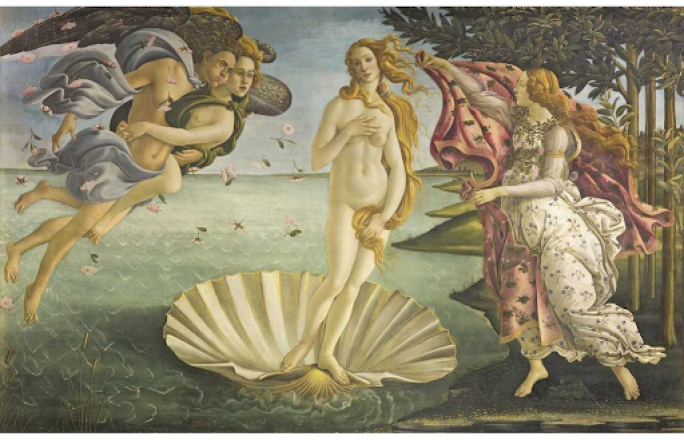
The initial inspiration for the present subject matter, draws on the iconic representations of the birth of Venus found in Classical antiquity and the Italian Renaissance. However in the present work Matisse subverts this link through a deeply modern evocation of form reflective of developments in modern sculpture and his experimental sculptural vision. Matisse had recently returned from a trip to Tahiti in which the artist had been greatly inspired by the colours, light and landscape that he was exposed to, however it was a particular cloud formation resembling a woman rising from the water that the artist witnessed upon this trip that proved the catalyst for Matisse’s investigations into the theme of the Venus à la coquille. Upon his return to Paris he conceived of both Venus à la coquille and Venus à la coquille II demonstrating his fondness for the subject matter. Of the two sculptures, Venus à la coquille II is the more expressively sculpted, almost cubist in its execution, with the artist eschewing the streamlined approach adopted in his first Venus in favour of a greater suggestion of weight and more in depth investigation into the abstraction of the female form.
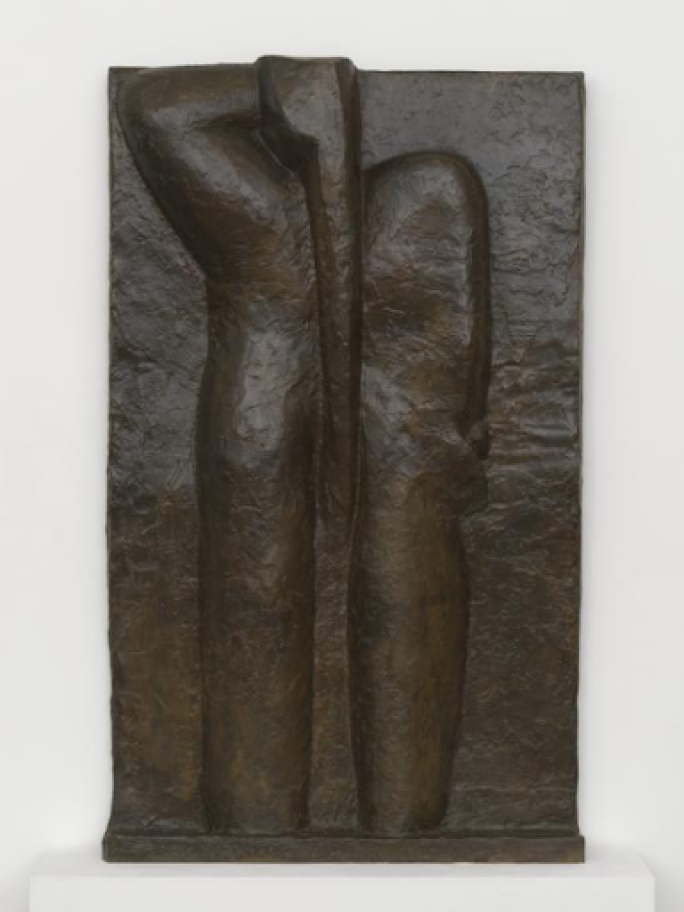
A particularly striking feature of the present sculpture is the abstracted rendering of the figure’s back. A strong vertical runs the length of the figure from the top of her head and down her spine, breaking up the composition and paring the view back to its essentials. The combination of the textured modeling of the figure’s back parted by the strong vertical of the spine immediately calls to mind Matisse’s seminal series of sculptures Nu de Dos, in particular the grand Dos IV from this series of four bas relief sculptures which shifted the way in which modern audiences viewed sculpture. Art historian Albert Elsen's description of Dos IV can equally be applied to Vénus à la coquille II as he writes that: "Matisse shows here his great gift for dividing up a rectangular area into sculptural shapes," wrote Elsen. "Like colour in painting he wanted the light to follow the form of the volumes. Light no longer excavates or obscures the big masses. Depressions have been reduced, as has steepness of gradient, to enhance the volumes" (A. E. Elsen, The Sculpture of Henri Matisse, New York, 1972).
Matisse’s discoveries in clay often informed his painting practice and in the present work the expressive modeling now visible in the bronze and the radical abstraction of form creates a dialogue with the paintings he was executing at the same t.mes and serves to reinforce the artist’s mastery of multiple mediums. Even the prominent curator Alfred Barr believed that if Matisse were survived only by his sculptures, their quality would assure his standing as a major artist.
This work is number 5 from an edition of 10 known examples and according to Wanda de Guébriant's 1997 inventory of Matisse's bronzes, other casts of this sculpture reside in prominent museum collects
ions including the Musée Matisse in Nice and the Hirshhorn Museum and Sculpture Garden in Washington.