B
orn in Colombia and living in Bogotá, Beatriz González is a painter, illustrator, printmaker, and sculptor who has been called one of the founders of modern Colombian art. Photojournalism served as a source for much of her work as well as the appropriation of images associated with Western art history. In her distinct mode of figuration she flattens forms to create hard edged figures with a strong palette in vivid, color-blocked compositions. From the beginning of her career in the early 1960s in Bogotá, Beatriz González's interest in mass culture resulted in a reading of her work as pop art. A characterization with which she never agreed, González described the origin of her work in more local manner. "I painted the joy of underdevelopment," she once said in an interview, referring to the colors and motifs in her paintings, scenes of everyday, provincial life, like the images of the Sacred Heart present in every house. González wanted to paint the joys and pain of the everyday; images inspired by news photos in local papers, in paid advertisements. From the 1980s onward, her work reveals an increasingly sociological perspective. Heroes of Colombian history, portraits of wealthy families, episodes of social pages, and popular prints appear repeatedly. As do the presence of political and violent figures, presidents, drug traffickers and all kinds of famous characters of national life.
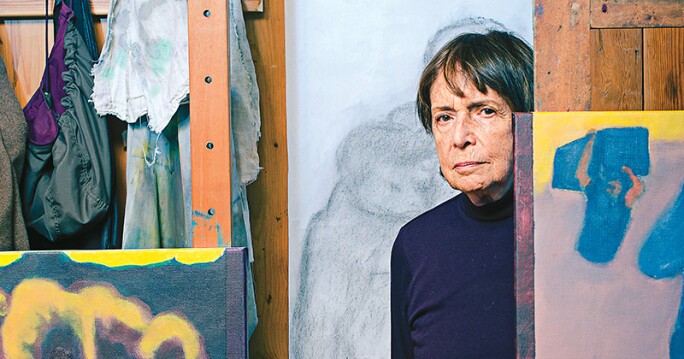
Despite visual similarities with artists like Andy Warhol and Richard Hamilton, González’s work is distinctly her own. Her use of the bright, flattened aesthetic of Pop Art was originally tied to her rejection of geometric abstraction, which had dominated Latin American art since the 1930s and was largely Eurocentric. In her 1994 retrospective, González claimed that hers was a provincial art that cannot circulate universally. Such a claim was meant to counter any claims by art critics that abstraction was universally understood. Unlike many Pop artists, González eschews images taken straight from consumerism in favor of historical narratives, images of European paintings, and images from the popular press. There are, of course, other ways to describe González’s art besides using the term Pop. In the retrospective monograph by Ostrander and Ramírez, González’s output is described alternately as a “distinct mode of figuration,” an “art of contradiction,” a “critical painting practice,” a “confabulation of elements,” a “mediated, meditated painting,” “meta-representation,” and “image as sheer presence."