Executed in the early 1950s, The IJ, Amsterdam is a rare work by the self-taught Indonesian modern master, Affandi. In a buzzling scene reminiscent of Vincent Van Gogh's Starry Night Over the Rhône, Affandi portrays the bustling scene at the landmark water way in the nightt.mes . The present work is a fresh to market discovery, having been held in Dutch collects ion along with another work by Affandi depicting a Jungle (Lot 146).

Musée d'Orsay, Paris
An early example of Affandi's important and sought-after travel series, The IJ, Amsterdam was painted during the artist's first European tour from 1951 till 1954. He traveled throughout Holland, Belgium, Italy, France and Great Britain, exhibiting his works in various key cities. The present lot captures the The IJ (Amsterdam), a large body of water along the northern edge of central Amsterdam in the Amsterdam.
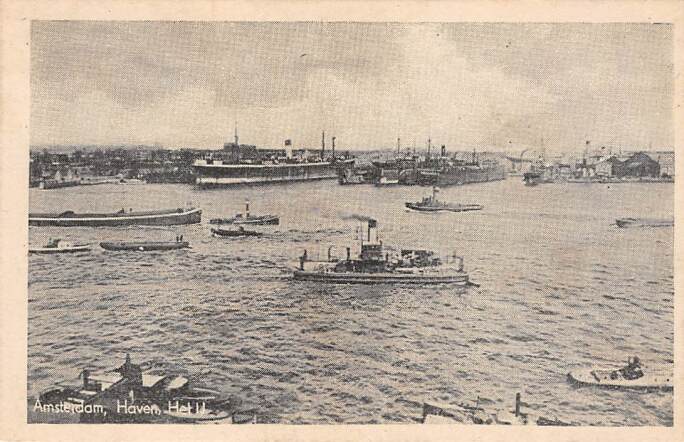
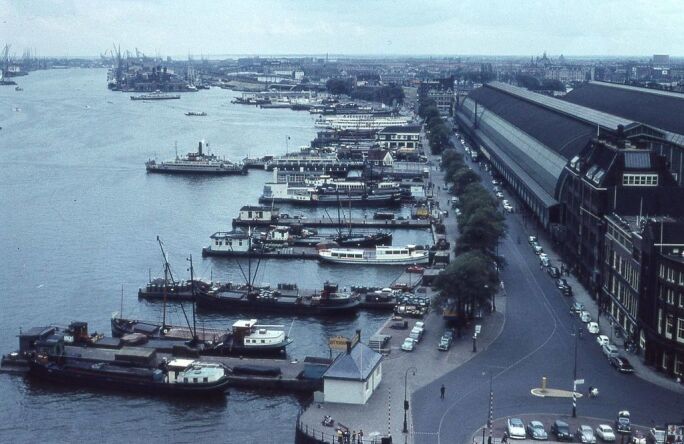
In the 17th century, during the Dutch Golden Age, the IJ became the beating heart of Amsterdam’s marit.mes empire. Ships of the Dutch East India Company departed from its quays to trade across Asia, Africa, and the Americas. By the 1950s, when Affandi visited, the IJ was dominated by harbours, docks, warehouses, and shipyards, as it function as Amsterdam's main mart.mes gateway to the North Sea. Major infrastructures were built in 1950s to accomodate Amsterdam’s population growth, that would eventually transform the area to the vibrant waterfront seen in Amsterdam today.
The present lot is a compelling example of Affandi's squeeze technique developed during his early period in the 1950s. He applied paint directly from the tube before using his fingers to spread it on the canvas. During this early period, the artist painted with short, staccato-like strokes, that were densely layered, capturing details with great linear quality. Much like Claude Monet's series on Gare Saint-Lazare, Affandi embraces and captures the dark fuming smoke from the industrial ships, signature the age of modernism in Europe following the war. The large ferries and ships along the waterway are lit by electrical light, carrying small figures to and fro. Affandi paints the yellow glow of the lights reflecting into the dark waters and a bright crescent moon hanging in the night sky. Towards the end of his European tour in 1954, Affandi was selected to participate in the Venice Biennale to international acclaim.