P
ainted in 1923, Jeune fille au chapeau de crin blanc is a resplendent portrait from Matisse’s early Nice period. This portrait of a striking woman bedecked in a cloche hat, voluminous overcoat, and a vibrant beaded necklace is an ode to Matisse’s keen attention to the ornaments of 20th-century fashion and design. Ever virtuosic in his use of color, Matisse plays with the distinctions between volume and plane through contrasts of punchy cerulean blues with subdued grays, magentas with ballet-slipper pinks. Facing her audience squarely, the unnamed sitter gazes serenely with her mahogany eyes – one eyebrow arched in cool amusement. Her crimson lips, pigmented so brilliantly that they pierce the center of the composition, purse slightly as if she is drawing in a breath before speaking. Though set in the relatively isolated 1920s French Riviera, the model’s sense of liberated self-possession, her modern haircut, and her cosmopolitan fashion sense are anything but provincial.
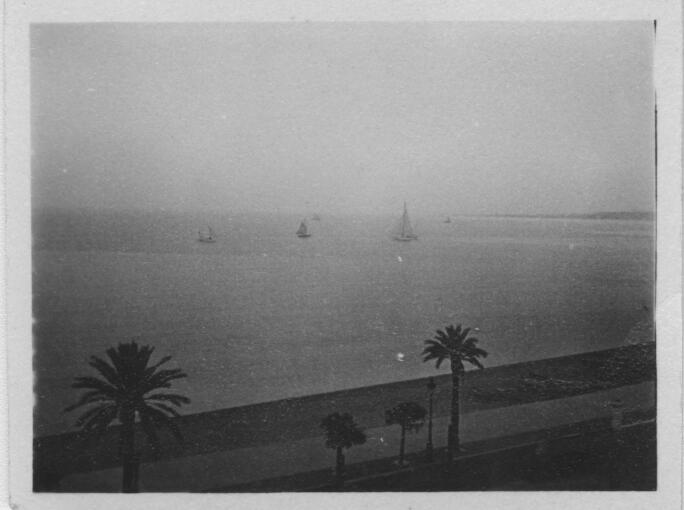
Matisse completed Jeune fille au chapeau de crin blanc in the apartment that he rented on the third floor of Pierlas Caïs Palace at 1 Place Charles Félix in Nice, which would be the site of some of his most lavish interior scenes painted in the 1920s. His studio had a magnificent view of the sea across the Baie des Anges. Matisse’s post-war years in Nice were marked by substantial innovations – most notably a re-engagement with figurative elements in his paintings following brief experiments with Cubism and flattened color during the 1900s and 1910s. Matisse credits Pierre-Auguste Renoir, a lifelong mentor and source of inspiration, for his re-assertion of figurative painting grounded in form and color. The artist remarked: “Renoir’s work saves us from the drying-up effect of pure abstraction.” (Henri Matisse, quoted in Hilary Spurling, Matisse the Master, A Life of Henri Matisse, The Conquest of Colour, New York, 2005, p. 223) Jeune fille au chapeau de crin blanc embodies this composite style: the fleshy pinks of the model’s skin shadowed with pigments of gray further a sense of corporeality thus conveying personal affinity and connection; All the while, the angular lines of her voluminous coat and the flattened floral background impart a stylized, ornamental effect.

Artowrk © 2024 Succession H. Matisse / Artists Rights Society (ARS), New York
Right: Fig. 3 Henri Matisse, Le studio rose (The Pink Studio), 1911. Pushkin Museum, Moscow, Russia.
© 2024 Succession H. Matisse / Artists Rights Society (ARS), New York
Draped behind the model is a rosette-patterned tapestry. Throughout his life, Matisse approached clothing and textiles with the keen eye of a collects or. Matisse was born in an area of northern France near Bohain-en-Vermandois, an area renowned for producing luxury fabrics that supplied high-end ateliers in Paris. It is likely that Matisse’s family on his father’s side had been weavers involved in the textile industry for generations. This upbringing engendered a deep appreciation of textiles in the artist, who amassed a large collects ion of fabrics throughout his life, beginning his early days as a poor art student in Paris and extending to his latter years when his Nice studio overflowed with exotic cost.mes s and wall hangings. The brushy, matte finish of the textile background in Jeune fille au chapeau de crin blanc suggests a weighty European cotton, the weave of which is similar to that of the canvas support itself. Because the background is so flattened, the model appears to float in space imbuing the work with a slightly disorienting ethereality.

Also executed in 1923, Matisse uses the same model, vibrant color palette, and tapestry background as the present work.
Jeune fille au chapeau de crin blanc is revelatory of Matisse’s artistic process, the way he scoured his environment and hoarded motifs and inspiration, even from the t.mes before he “became” an artist. In her review of The Metropolitan Museum of Art exhibition Matisse: The Fabric of Dreams -- His Art and His Textiles, Roberta Smith observes:
Matisse's textiles are fundamental to his development of painting as a unified, forward-pressing surface. They function as a kind of multipurpose emblem of the artificial nature of painting — a pliant, portable picture plane that can be used to close off real space while intimating abstraction.” (Roberta Smith, “How a Renowned Painter Found Inspiration in Cloth,” The New York t.mes s, 24 June 2005)

Middle: Fig. 6 Henri Matisse, La Blouse Bulgare (The Bulgarian Blouse), circa 1920. Fitzwilliam Museum, University of Cambridge, United Kingdom
Right: Fig 7 Henri Matisse, Femme en robe orientale (Woman in Oriental Dress), 1919. Kelvingrove Art Gallery and Museum, Glasgow
© 2024 Succession H. Matisse / Artists Rights Society (ARS), New York
An exemplar of Matisse's early Nice period, the half-length portrait Jeune fille au chapeau de crin blanc is a lush example of the genre for which he is most remembered and a window into his artistic process. Comparable works belong to institutions such as The Legion of Honor, San Francisco; National Gallery, London; The Fitzwilliam Museum, Cambridge and Kelvingrove Art Gallery and Museum, Glasgow.