Calculated Chaos: Gerhard Richter’s Abstraktes Bild


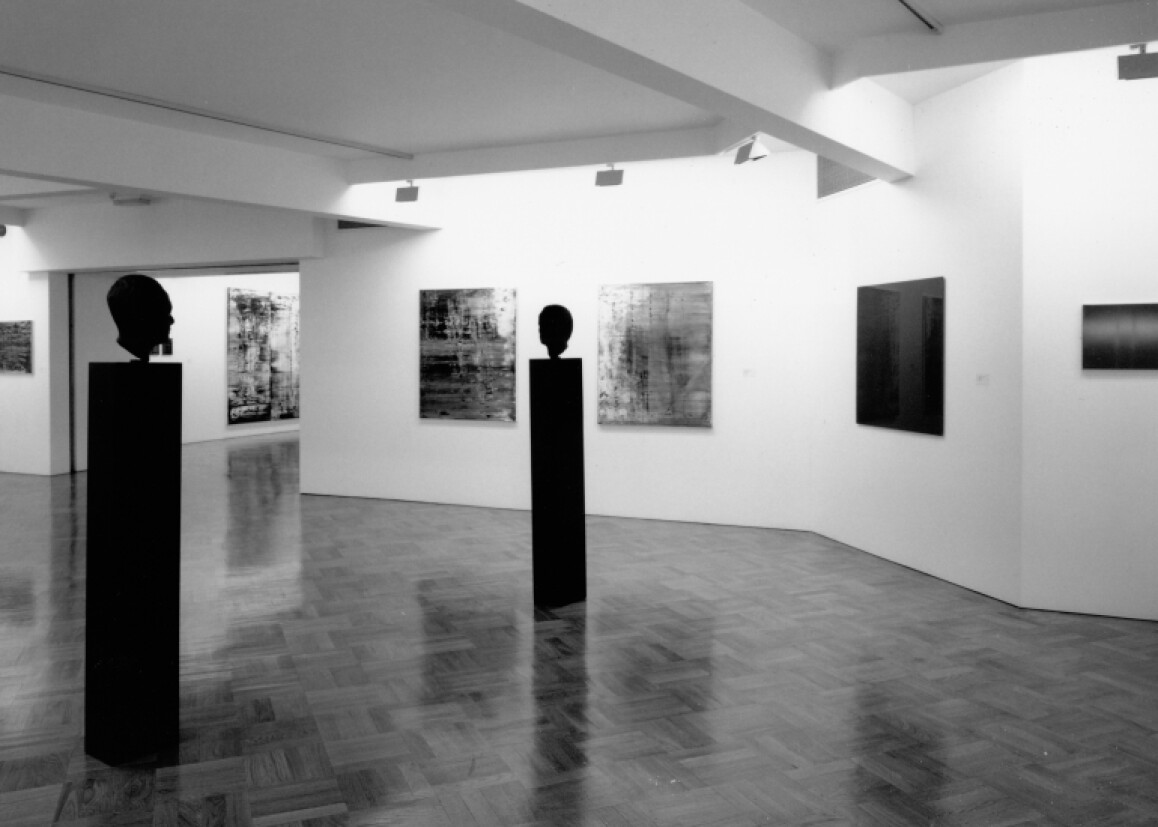
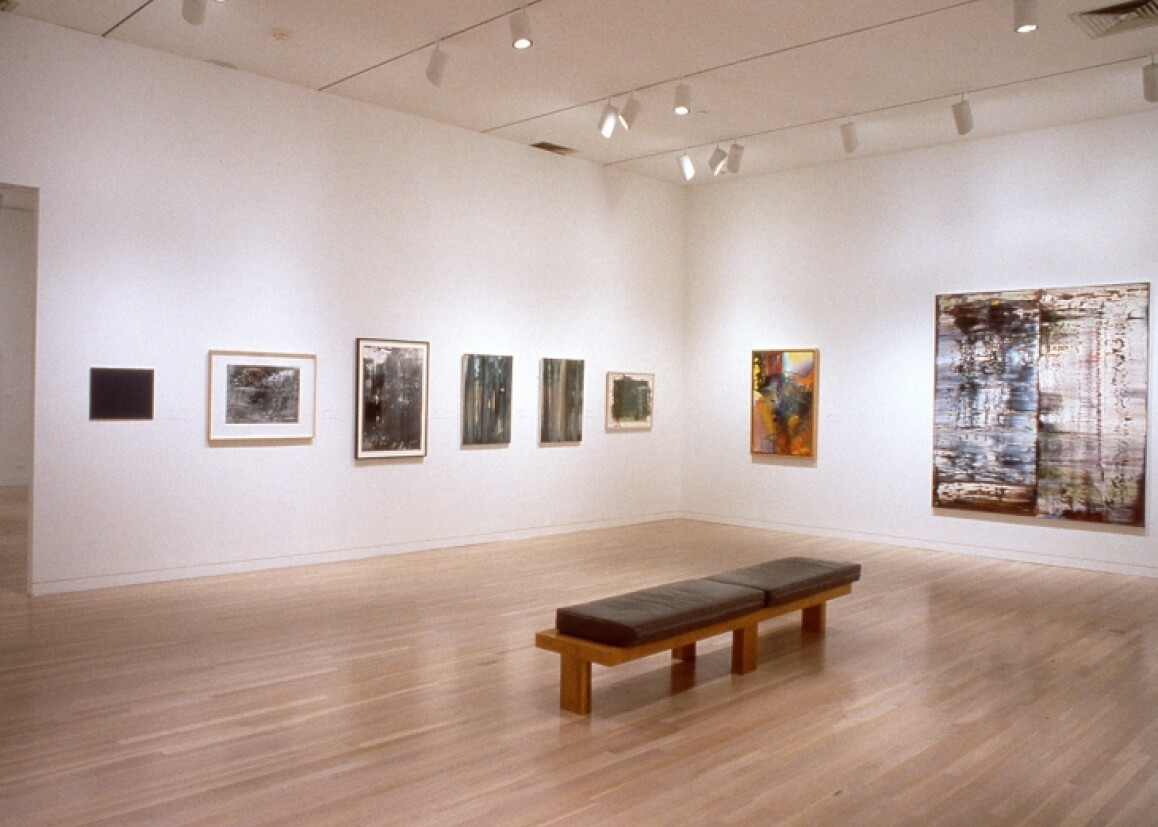
A bstraktes Bild, executed in 1990, is a breathtaking masterwork of Gerhard Richter’s epic cycle of Abstraktes Bild paintings that the artist has produced since the 1980s. Belonging to the concise 725 series of just five works, which includes examples currently housed in the National Gallery of Victoria, Melbourne (725-3) and on loan at the Kunstmuseum Bonn (725-5), this museum-quality work is a paragon of the artist’s most arresting and seductive language of abstraction. One of Richter’s most stylistically stunning works, it.mes asures in excess of two by two metres, thereby functioning on a monumental scale and enveloping the viewer entirely and irresistibly into its chromatic expanse. Test.mes nt to the visual power and significance of the work, Abstraktes Bild has been exhibited internationally in notable exhibitions, including Gerhard Richter: Mirrors at Anthony d'Offay Gallery, London (1991); Gerhard Richter in Dallas collects ions at Dallas Museum of Art, Dallas (2000); Guess What? Hardcore Contemporary Art's Truly a World Treasure. Selected Works from the Yageo Foundation collects ion which travelled to prominent institutions around Japan including The National Museum of Modern Art, Tokyo (2014-2015); and Gerhard Richter: The Life of Images at Queensland Art Gallery, Brisbane (2017-2018).


On loan at the Kunstmuseum Bonn, Germany © 2022 GERHARD RICHTER
Gerhard Richter’s artistic contribution is internationally considered within the highest tier of this era; his inimitably diverse canon evidencing more than five decades of philosophical enquiry into the core natures of perception and cognition. Indeed, with its poignant critical reflections and groundbreaking advancements, it is undeniable that his output has opened up a wealth of possibilities for the future course of Art History. Since the early 1960s he has considered all genres of painting, delving into and pushing the boundaries of theoretical and aesthetic levels of understanding whilst exploring and challenging the fundamentals of their development. However, his extraordinary odyssey into the realm of abstract painting is often regarded as the culmination of his artistic and conceptual inquiries into the foundations of visual understanding. After decades of exploring the role of painting in relation to competing visual cultures; film and photography; and even painting itself, the emergence of the Abstraktes Bild stands as the crowning achievement of his oeuvre. As Benjamin H. D. Buchloh has highlighted, and as there can be absolutely no doubt, Richter’s position within the canon of abstraction is one of ‘incontrovertible centrality’ (Exh. Cat., Cologne, Museum Ludwig and Munich, Haus der Kunst, Gerhard Richter Large Abstracts, 2009, p. 9).

collects ion of Tate, London © Tate Images
Abstraktes Bild is organised by a central ‘seam’ that runs vertically down the canvas creating two sections that are distinct in terms of the artist’s palette. There is a deep earthy red that runs consistently through the entirety of the painting, appearing most prominently around the edges of the canvas and down the central divide, and each side has been worked and re-worked with layers of thick impasto resulting in two subtly different halves that resonate both in concert and strive against each other. Although the present painting is fundamentally non-representational it emanates a shimmering fluidity that evokes the watery reflection or even an oil slick, an effect that the artist achieves by drawing a squeegee horizontally across the canvas creating paint tracks from the central seam to either side of the canvas. Richter’s intense manipulation of the surface conjures a sensation of infinite paint layering.
.
To create this masterpiece, Richter used his unique, highly-sophisticated method, as described by Dietmar Elger: “Richter found a solution - that is, the appropriate form for the abstract paintings - by allowing first for the interplay of planning, composition, and homogeneity and second for spontaneity, arbitrariness, coincidence, destruction, and distance” (Ibid., p. 251). Conducted through an extensive, t.mes -consuming and labour intensive process, he began by using several colours to blend a light ground, then would alternate between brush, palette knife and squeegee to generate a vibrant concoction of effects and would finally add what he himself refers to as a subject “as colourfully and as complicatedly as possible” (the artist quoted in Ibid.).

Abstraktes Bild is an exquisite demonstration of Richter’s employment of the squeegee, which during the later 1980s became his principle and most highly valued tool with which to create abstract paintings. The implement facilitated his desire to introduce spontaneity and chance into his creative approach, as the artist stated himself: “It is a good technique for switching off thinking” for “letting a thing come rather than creating it” (Ibid.). The movements of the squeegee “seem strangely empty, since they behave visibly indifferently to what they uncover, pull along, wipe, and cause to emerge” (Gregor Stemmrich, Exh. Cat., Cologne, Museum Ludwig and Munich, Haus der Kunst, Gerhard Richter Large Abstracts, 2009, p. 31). The marks that Richter creates in his abstract works are essentially meaningless because they have no representational function. According to Richter, these paintings depict “nothing” and therefore this kind of abstraction is a matter of “sheer necessity” because it speaks of the real, of the present - and therefore possesses a transcendental quality (Ibid.).
Richter is celebrated as a pioneer of abstract art. His approach is revered as being of particular significance because of its progressive nature, signifying a critical departure from the iconic geometricity which is the characteristic manifestation of modernist abstraction and a rejection of the expressionistic intentions of the movement’s post-war practitioners. Richter’s unique painterly abstraction is the remarkable product of a deep and clear understanding of these modes of abstraction and a response to the tension between them and their contrasting histories. Whereas the fundamental roots of the abstraction of Kandinsky and Malevich, for example, were founded on linear and systematic qualities in terms of conception and production, Richter’s introduction of chance into his creative process radically undermines these relatively contrived approaches.

IMAGE ©️ CHRIS FELVER / GETTY IMAGES ART
© GERHARD RICHTER 2022 (14042022)
He does not, however, rely entirely on gestural techniques as had been introduced by the action painting of Jackson Pollock, but maintains a consistent structure (and attention to minute detail within this) in his non-compositional works: essentially producing a sort of calculated chaos. “Richter’s deployment of texture, structure, and gesture in painting deliberately suspends itself between scientific and expressive conceptions of painterly process. It is oscillating with the same deliberation, between painting as an act and painting as an accident, between composition as a result of mere chance encounters of materials and structures, and composition as the tracing of a subject’s residual intentionality” (Benjamin H. D. Buchloh, “Working on the Picture: The Discretion of Gerhard Richter” in Exh. Cat., Cologne, Museum of Ludwig and Munich, Haus der Kunst, Gerhard Richter Large Abstracts, 2009, p. 11).

collects ion of the National Gallery of Victoria, Melbourne © 2022 GERHARD RICHTER
Abstraktes Bild is arguably the most visually impressive of a number of large abstracts that Richter produced around the same date, several of which, born of the same techniques, share chromatic schemes. Amongst these are three paintings of 1989 titled, November, December and January, that are housed in the St. Louis Art Museum, and two paintings of the same year Swan (2) and Swan (3) now in the Philadelphia Museum of Art and the Museum Boijmans Van Beuningen, Rotterdam, respectively.
The particularly striking aesthetics of Abstraktes Bild were produced at the height of Richter’s technical development. His expert practical ability, most notable a remarkable proficiency when employing his chosen utensils to manipulate the thick layers of oils, is combined with an intellectual sophistication. The result of an exquisite painting that embodies the fully mature aesthetic of the artist’s abstract vision and is consequently an imperative work in his diversely abundant oeuvre.

《抽
象畫》作於1990年,是格哈德·里希特一幅令人嘆爲觀止的頂級鉅作,來自他最著名的「抽象畫」系列,此系列的創作始於1980年代。本作屬「725」系列之一,該系列僅有五幅作品,包括墨爾本維多利亞國立美術館現藏的《725-3》及德國波恩藝術博物館收藏的《725-5》,可見本作乃博物館典藏級作品,堪稱藝術家抽象語言中最攝人心魂、魅力四射的典範傑作。《抽象畫》尺寸超過兩米乘兩米,氣勢恢弘的巨幅畫面令觀者目光無處可避,廣闊無垠的斑斕色彩將人重重包圍,當屬里希特最具藝術風範的震撼一擊。
格哈德·里希特憑著傲視群雄的藝術貢獻,位居同時代藝術家中的最前列。他的藝術傑作具有不可超越的豐富面貌,見證了他對感知和認知核心本質的哲學探究,此研究足足跨越了五十載。憑藉他尖銳深刻的批判性反思和開創性的視野,他的創作成果無可否認地為藝術史的未來進程開闢了豐富的可能性。自 1960 年代初以來,他研究了所有繪畫流派,窺探及推進理論與審美認知層次的界限,同時探索及挑戰其發展的基準。里希特在抽象繪畫領域中長途跋涉的偉大旅程,常被視爲他藝術性及觀念性探索的高潮,這是他對視覺認知基礎的探索。對於繪畫和視覺文化、電影及攝影,甚至繪畫本身之間的關係與作用,里希特進行了數十年的探索,《抽象畫》一作的誕生意味著他所有創作中的巔峰成就。正如本杰明·H·D·布赫洛所強調,同時這一點本身亦毋庸置疑——里希特在抽象藝術經典中的地位是「毫無爭議的中流砥柱」之一(載於展覽圖錄, 科隆路德維希博物館、慕尼黑藝術之家美術館,「格哈德·里希特大型抽象畫」,2009 年,頁9)。
《抽象畫》由一個中央「接縫」相連,接縫垂直地貫穿於畫布,分成兩個用色上互相獨立的區域。整個畫面鋪滿了一種深邃的紅褐色,它在畫布的邊緣和中央分界線周圍最爲明顯,左右兩面都經歷了一次又一次的加工處理,厚塗的色彩層層交曡,形成了兩個對半畫面,彼此具有微妙的分別,相互共鳴而又相互對峙。本作通體流光閃閃,既像波光蕩漾,又如浮油虹彩,雖然此作並非這個特點最典型的例子;藝術家在畫布上以水平方向拖曳刮板,營造出從中央接縫到畫布兩側的顔料軌跡,由此形成獨特的表面光色效果。里希特對表面肌理進行高强度的處理,如魔法般演繹出極緻的顔料層次感。
為了締造這一傑作,里希特使用了他獨一無二、複雜精奇的方法,正如戴馬·埃爾格所描述:「里希特找到了一個解決方案——一種適合抽象繪畫的形式——首先是允许計劃、構圖和同質性的相互作用,其次是允许自發性、任意性、巧合性、破壞和距離」(来源同上,頁251)。他的製作是一個大型、耗時及勞累的過程。開始時,他會調和幾種顏色來打下輕薄的底子,然後交替使用畫筆、油畫刀和刮板,來製造璀璨明艷的混合效果,最後形成他所説的「盡可能豐富多彩、盡可能複雜」的主題(引述自藝術家,来源同上)。
《抽象畫》是里希特運用刮板創作的精湛呈現。刮板在1980年代後期成為他創作抽象繪畫最基本及最寶貴的工具。這個工具推進了他的一個設想,就是將自發性和巧合性引入創作方法,正如藝術家自己所說:「這是一種斷離思考的好技術」,因其「讓事物來臨,而非創造事物」(來源同上)。刮板的移動「看起來詭異空洞,因為它們對於自身揭露、拖曳、擦除以及引發的一切,顯然作出了冷漠的姿態」(格雷戈爾·斯坦姆里奇,載於展覽圖錄, 科隆路德維希博物館、慕尼黑藝術之家美術館,「格哈德·里希特大型抽象畫」,2009 年,頁31)。里希特在他抽象作品中創造的痕跡在本質上是毫無意義的,因為它們沒有表達的功能。根據里希特的說法,這些畫作描繪了「無」,所以這種抽象是一個關乎「單純必要性」的問題,因為它顯示了真實及當下 ——因而具有超驗的性質(來源同上)。
里希特被譽為抽象藝術的先驅巨匠。他的方法因先進性而受到推崇,別具深刻意義,標誌著對符號式幾何圖像的一種批判性的背離,這是現代主義抽象藝術的特徵體現,也是對戰後抽象藝術實踐者表現主義意圖的一種拒絕。里希特清晰透徹地認知這些抽象模式,又對它們與自身各不相同的歷史之間的緊張關係作出回應,從而帶來這一非凡的藝術產物——他獨一無二的繪畫性抽象藝術。舉例,像康定斯基、馬列維奇的抽象藝術,其根基是建立在概念和製作方面的線性與系統性特質上,里希特卻在他的創作過程中引入偶然性因素,從根本上動搖了這些相對人爲的創作方法。然而,他並沒有完全依賴動態技法,這是傑克森・波拉克在行動繪畫中初創的;反而,他在非構圖作品中保持了一致的結構(並注意其中的微小細節):本質上是創造了一種經過巧思妙算的混亂狀態。「里希特在繪畫中對肌理、結構和動態的部署,是刻意將自己懸置於繪畫過程的兩種概念之間,即其科學性和表現性。同樣的,他以這種審慎的思慮在其他方面的兩種概念之間擺動:其一,繪畫作為一種行為和作為一種偶然;其二,構圖作爲材料與結構偶然碰撞的結果,和作為一種對主題自身殘餘意向性的追蹤」(本杰明·H·D·布赫洛,<圖像製作:格哈德·里希特的自由決定權>,載於展覽圖錄,科隆路德維希博物館、慕尼黑藝術之家美術館,「格哈德·里希特大型抽象畫」,2009 年,頁11)。
此幅《抽象畫》可以說是里希特在同期創作的大型抽象畫中最具視覺震撼力的一幅,這些作品運用了相同的創作技法以及色彩搭配,其中包括三幅1989年的畫作,分別題為《11月》、《12月》及《1月》,現均藏於聖路易斯藝術博物館,另外兩幅同年創作的《天鵝(2)》及《天鵝(3)》,分別由費城藝術博物館及鹿特丹博伊曼斯·范伯寧恩美術館收藏。
《抽象畫》令人驚嘆的美學精神,誕生於里希特在技法上達到爐火純青的時期。他不但擁有一流的實踐技巧,而且心思縝密、才華過人,尤其是當他用自選工具來調配濃稠的油畫顔料層時,顯得最為神乎其技。這幅精彩絕倫的畫作體現了藝術家超卓的抽象視野中至臻成熟的美學思想,因而成爲他豐富多彩的藝術成果中一幅必不可少的傑作。