My cubist paintings are my most.mes xican.
Diego Rivera (1886–1957) received an exceptional academic training in Mexico founded in the principles of classical drawing and the theoretical constructs of perspective. Pursuing further training as an artist, he emigrated to Europe in 1907 where his stylistic journey led him to discover the pictorial proposals of Monet, Toulouse-Lautrec, Gauguin and the works of Cézanne at the famed Ambroise Vollard gallery where Rivera first encountered modern art. After a brief sojourn in his native Mexico, Rivera returned to Paris to settle in Montparnasse in 1911 where he reinvented himself as an avant-garde painter once he discovered cubism at the Salon d’Automne.
Cubist Paintings by Diego Rivera in International Museum collects ions
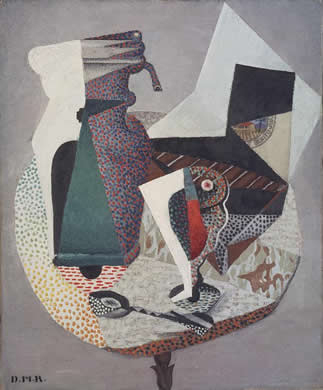
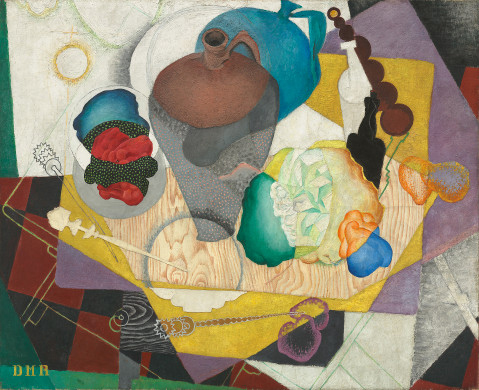
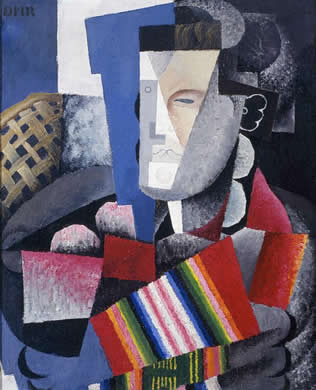
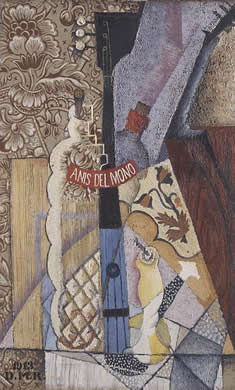
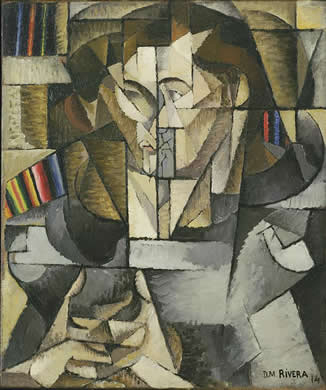
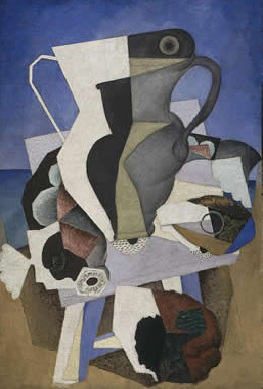
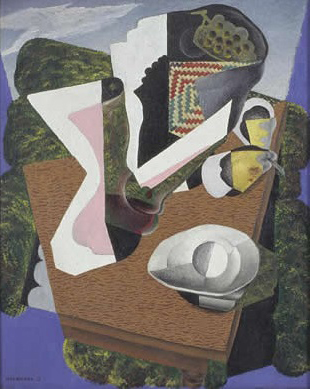
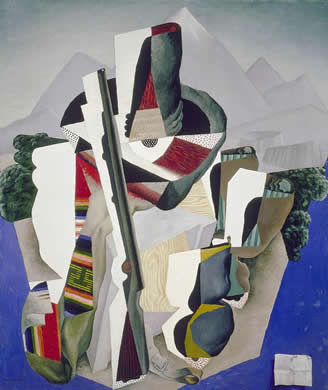

After studying the pointillist theories of Seurat and the compositional distortions of Mannerism in the work of El Greco, Rivera gradually approached cubism through the study of landscape. His first works under cubist influence appeared in 1913; one year later, he would fully embody the movement exhibiting as a cubist artist at the Berthe Weil gallery. It was in this context and through the Chilean painter Manuel Ortiz de Zarate that Diego Rivera met Pablo Picasso and gallery owner Léonce Rosenberg. Soon thereafter, Rivera signed an exclusive contract with the controversial dealer joining a new group of cubist artists comprised of Jacques Lipchitz, Jean Metzinger, and Gino Severini.

Nature morte aux trois citrons jaunes from 1916 belongs to Diego Rivera's greatest period of experimentation, a t.mes when he stripped away any decorative element from Cubism and delved into an art of geometric structures and chromatic planimetries—a type of “purified cubism” as the critic Pierre Reverdy proclaimed. Objects arranged arbitrarily on a table—where les trois citrons jaunes are appreciated—unfold from an axis where the bottom converges with an accidental vertical plane, colliding into a "supraphysical dimension." In so doing, Rivera appealed to a classical cubism where form and volume prevailed, while simultaneously experimenting with developing compositional space through abstract planes and a nonconforming interaction of diaphanous and bright colors, thus distancing himself from the heterodoxies that would eventually lead the cubist movement to a path of no return.

Rivera’s innovative contribution to cubism provoked jealousy among the other artists at the Rosenberg’s Galerie L’effort Moderne, resulting in the subsequent distress and antagonism of its owner who would ultimately part ways with the artist. However disenchanted, Rivera prevailed in his academic discipline and remained faithful to his theoretical ideals—particularly in his search of the golden section and the representation of a fourth dimension through Jules-Henri Poincaré’s mathematical approach to painting. Diego Rivera would conclude his cubist phase one year after completing Nature morte aux trois citrons jaunes, only to return to the constructivist principles advanced by Paul Cézanne and a retour a l’ordre.
Luis Martín Lozano
Art Historian