An idyllic glimpse into the life of Caillebotte, Le Jardinier transports the viewer to the artist’s picturesque estate in Yerres. In 1860 Caillebotte’s father purchased the estate from the widow of Martin-Guillaume Biennais, the highly-regarded goldsmith to Napoleon. Biennais’ keen eye and craftmanship extended to his expansive gardens, which featured at the t.mes the same elegant English-inspired design and features later depicted in Caillebotte’s work. From the age of twelve until his parents' deaths, Caillebotte and his brothers would spend their summers boating, hunting and playing billiards at the property (see fig. 1). It was there that the artist would first gain an appreciation for gardens, keenly observing not only the verdant landscape around him but also the groundskeepers and laborers who tended the estate. In 1876, the town of Yerres would also serve as the backdrop for the fast-developing friendship between the young artist and Claude Monet (see fig. 2), who was in the area at the invitation of friend and patron Ernest Hoschedé.

RIGHT: Fig. 2 Claude Monet, Corner of the Garden at Montgeron, oil on canvas, circa 1876, The State Hermitage Museum, St. Petersburg
Painted at the height of the Impressionist movement, Le Jardinier comes from a critical period in Caillebotte’s career. The First Impressionist Exhibition was held in Paris in 1874 with groundbreaking displays of the new course of painting, led directly by the artists without a jury or government sanction. Caillebotte would soon become a mainstay of this experimental new group of painters, submitting his work to all but two of the eight exhibitions. Dominating the artist’s paintings and pastels at the Fourth Impressionist Exhibition in 1879 were scenes much like Le Jardinier, lush and tranquil compositions which acutely reflected the tapestry of life at Yerres.
CAILLEBOTTE’S DEPICTIONS OF GARDENS AT YERRES AND GENNEVILLIERS

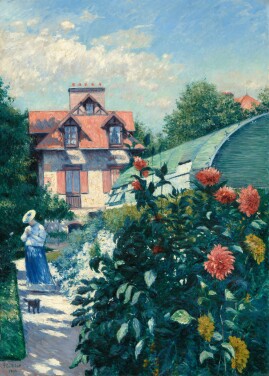


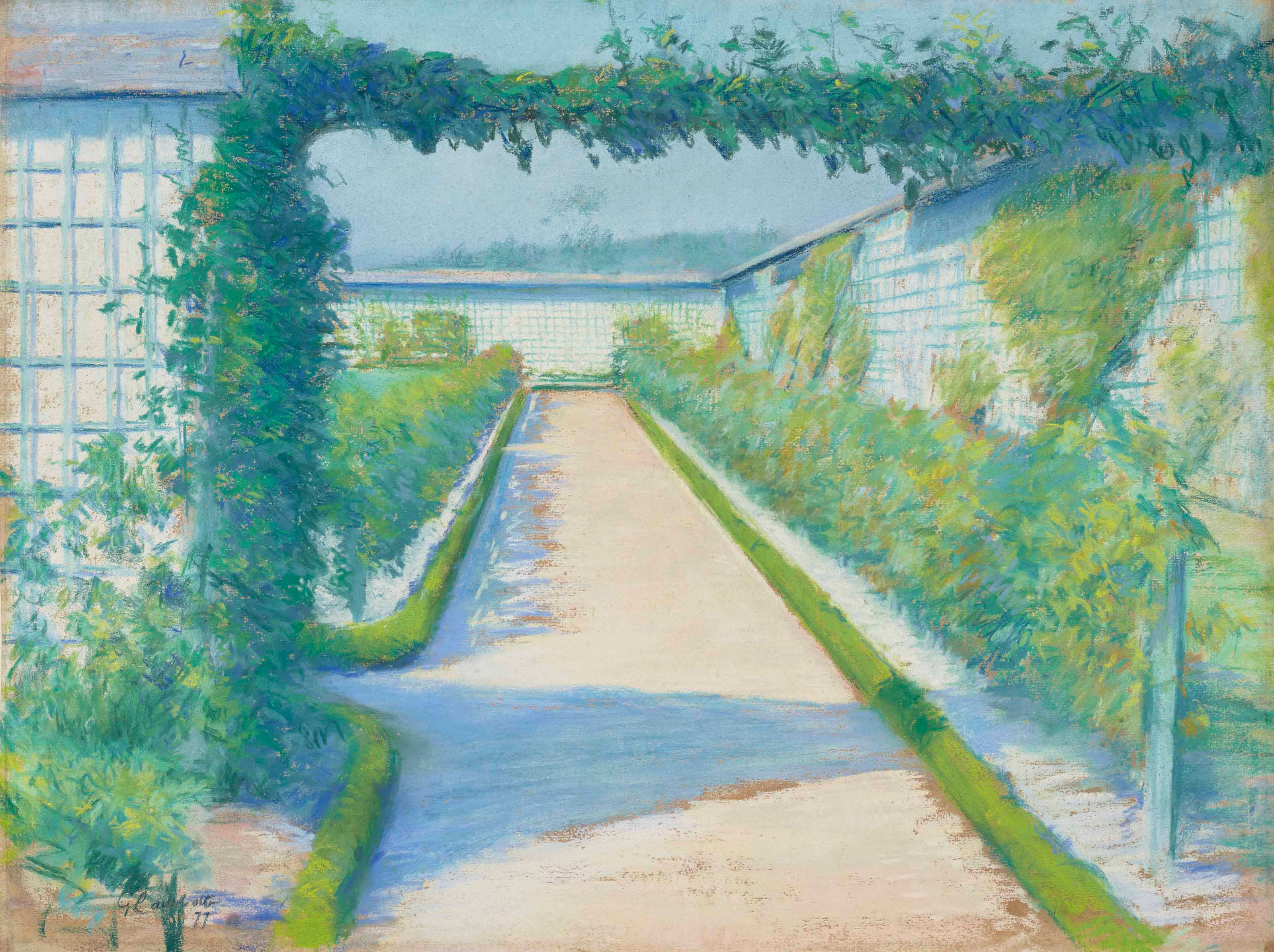
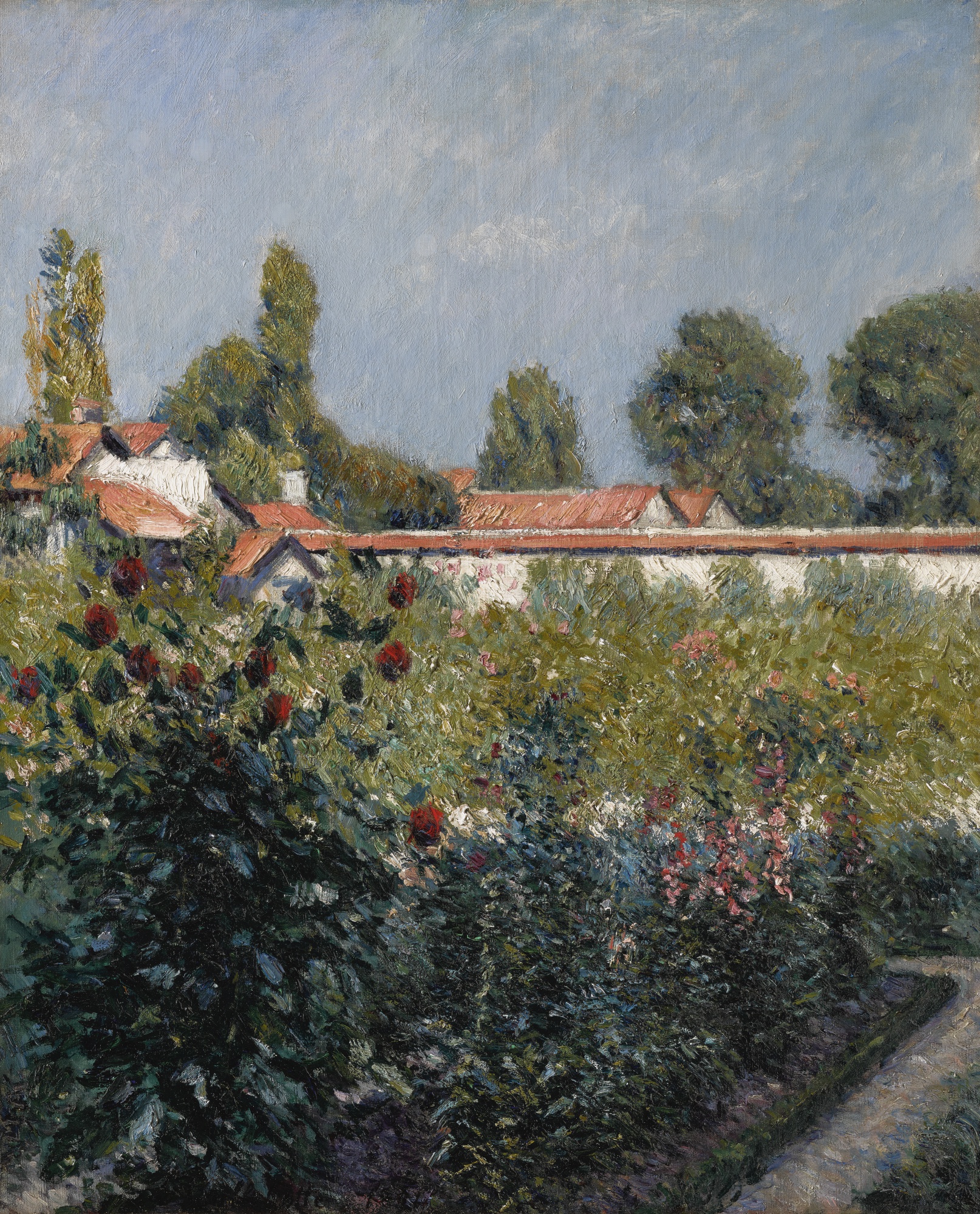
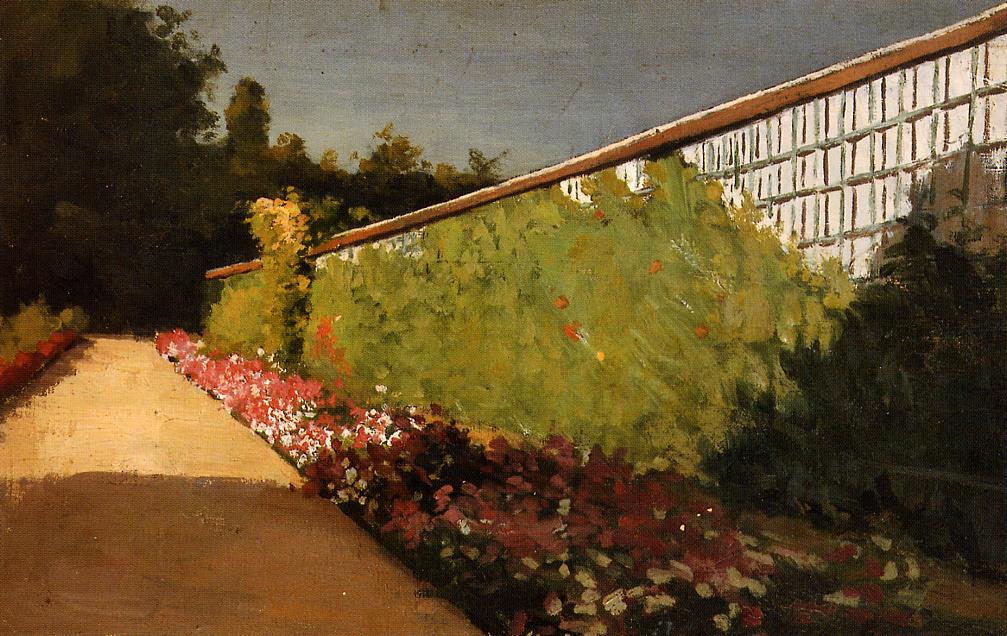
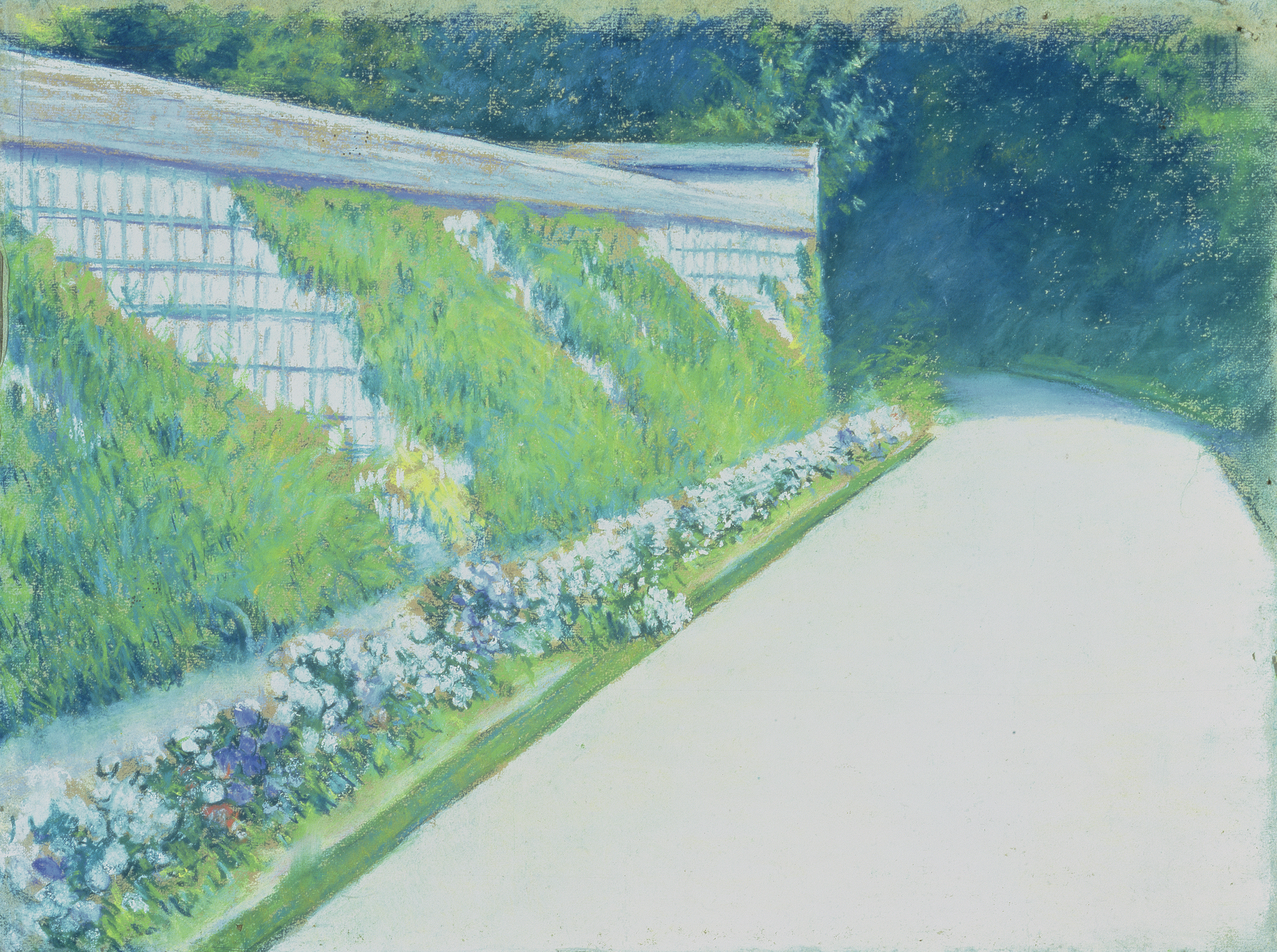

Rendered in delicate, attentive brushstrokes, the present composition reveals Caillebotte’s careful observation of the environment; his family’s potager the recipient of the softly painted, sun-drenched scene. Though the artist’s compositions are infused with the hallmark airy subtly of Impressionist painting, his realistic representations and precise delineation of space recall photographic imagery and anticipate the later acceptance of photography as an artistic medium—one also championed by the efforts of Caillebotte’s brother Martial. A later photograph taken by Martial of Gustave’s garden at their shared home at Petit Gennevilliers reveals the painter’s continued love of nature and the influence of the family grounds at Yerres (see fig. 3) Caillebotte would continue to capture such resplendent fields in his later works, though is perhaps best remembered for his bold and angular Parisian cityscapes with same stylistic inclinations as displayed in his earliest works (see fig. 4).


Today, the Caillebotte property remains much the same as it appeared nearly one-hundred and fifty years ago, allowing scholars to locate the specific site upon which the artist painted Le Jardinier. According to Pierre Wit.mes
r, the present work was painted facing eastward, overlooking one of the greenhouses at left and the blue gate leading out of the garden behind the figure (see fig. 5). The titular gardener appears at right center of the composition, bent at the waist in a gesture indicative of his role as a laborer in the landscape. Though the wall at left is neatly flanked by flowerbeds, this composition most certainly takes place in the potager—or working garden—on the estate, a curious subject given that such vehicles of necessity were often purposefully kept hidden in wealthier households like that of the artist. Despite his aristocratic roots, Caillebotte’s works often reflected the working class and the places where French social classes met. From the bustling boulevards of Paris where the bourgeois classes collided with those who entertained them, to the more personal interactions of the proprietor and their employees at his home, Caillebotte proved a skilled and epitomal figure of the Impressionist movement and its daring artistic contraventions.