‘Everyone is constrained by one tradition, whereas I am constrained by two.’
In the early 1950s, Zao Wou-Ki formally transitioned from figuration to abstraction. After a brief Klee period, he entered the most celebrated phase of his career in 1955: the "Oracle Period." The inspiration for this stage derived from ancient Chinese script—oracle bone inscriptions—marking the closest integration with traditional culture in his lifelong oeuvre. Ville Chinoise stands as an exemplary test.mes nt to this pivotal transformation. This work predominantly features the mature visual vocabulary of oracle bone script while retaining the linear brushwork reminiscent of Paul Klee. The convergence of these two defining aesthetics makes this piece a unique witness to the dawn of this seminal series.
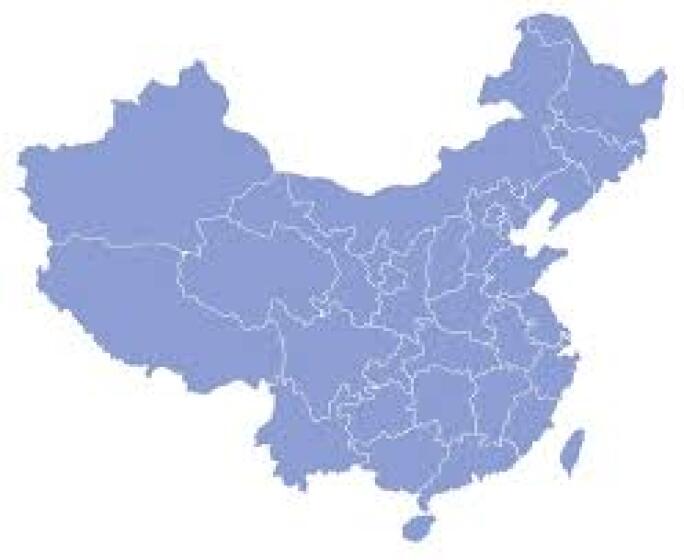
Born into a distinguished scholarly family whose lineage can be traced back to the Song dynasty, Zao Wou-Ki spent most of his life in France, yet China remained his deepest spiritual anchor. Notably, Ville Chinoise holds a singular position in his entire body of work: it is the only oil painting directly themed after his motherland. Ville Chinoise represents the profound emotions everyone harbors for the land that nurtured them. The layered brushstrokes within the composition subtly coalesce into the contour of China's territory. This looming, elusive form may not have been the artist's conscious intention but rather the subconscious manifestation of his deep-seated sense of belonging to his homeland. The brushwork in the upper right corner of the painting resembles a facial mask, accentuated by a touch of light purple that not only animates the composition but also symbolizes "purple air from the east"—an auspicious omen perfectly aligned with the beautiful connotations of traditional Chinese culture.
In its use of color, Ville Chinoise also demonstrates its rarity. Zao Wou-Ki's oracle works from 1955 to 1958 predominantly tend toward dark and profound tones, whereas Ville Chinoise is among the few from this period dominated by a light palette. The painting features a soft, dreamy powder blue as its primary hue, locally accented with deep blue, bright yellow, or light purple. The overall tonality is fluent and harmonious, with a layered, rhythmic color composition. According to the Catalogue Raisonné of Zao Wou-Ki's Works, fewer than five oracle period pieces share a similar powder blue tonality with Ville Chinoise, further underscoring the exceptional rarity of this work.
「「每個人都受制於一個傳統,而我受制於兩個傳統。」
一九五〇年代初,趙無極正式從具象走向抽象。在短暫的克利時期之後,一九五五年,他迎來了創作生涯中最負盛名的「甲骨文時期」。此階段的靈感源自中國遠古文字——甲骨文,是其畢生創作中,與傳統文化結合最為緊密者。而《中國城》正是此一關鍵轉折的絕佳例證。
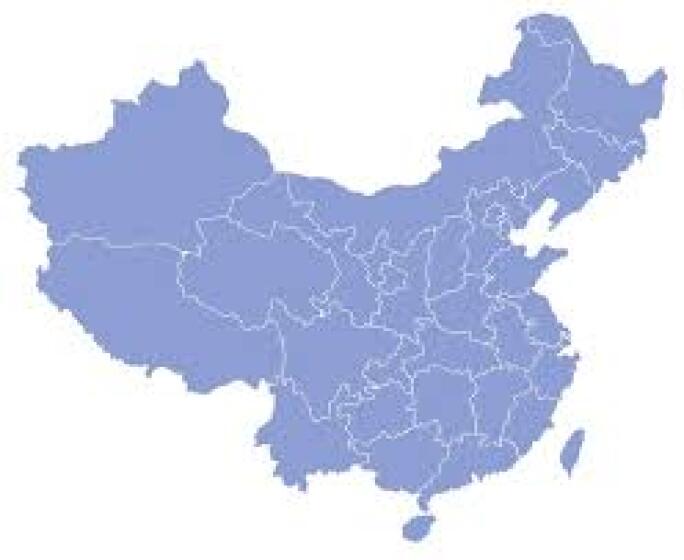
本作以成熟的甲骨文視覺語彙為主體,卻同時保留了令人聯想起保羅·克利的線條性筆觸。兩種決定性美學的匯流,使此作成為該系列誕生之初的獨特見證。 趙無極出身於淵源可溯至宋室的書香門第。儘管大半生在法國度過,中國始終是他內心最深處的依歸。值得注意的是,《中國城》在其畢生創作中佔有獨特地位,是唯一一件直接以祖國為題的油畫作品。「中國城」所代表的,是每個人對孕育自己的那片土地所懷抱的深厚情感。畫面中層層堆疊的筆觸,隱約凝聚成中國疆域的輪廓。這若隱若現的形貌,或許並非藝術家刻意為之,而是潛意識中對祖國深切的歸屬之情。畫作右上方的筆觸宛如一張臉譜,一抹淺紫點睛其間,不僅為畫面注入生氣,更寓意「紫氣東來」,與傳統文化的美好祝願完美契合。
在色調運用上,《中國城》亦展現其稀有性。趙無極於一九五五至一九五八年間的甲骨文作品,色調多偏向黑沉深邃,而《中國城》則是其中少數以淺色調為主的作品。全畫以柔美夢幻的粉藍作為主色調,局部綴以深藍、明黃或淺紫,整體色調流暢和諧,色彩節奏層疊有致。據《趙無極作品全集》記載,與《中國城》粉藍色調相近的甲骨文作品不足五幅,更顯此作之珍貴。