
“In 'The Tunesmith,'... the young musician displays a typical Barnesian intensity of purpose: dedicated to his craft, he meticulously plots out his compositional strategy… Creative expression requires protracted, often frustrating work, represented by the stretch and strain of the figure’s body language.”
Vividly pulsating with soulful vigor and musical rhythm, Ernie Barnes’s The Tunesmith from 1978 is a strikingly cinematic yet intimate scene of an African American pianist that evinces Ernie Barnes’s celebrated legacy for capturing some of the most vivacious and joyful depictions of twentieth century Black life. Initially acquired by Berry Gordy, The Tunesmith once belonged to the private collects ion of the legendary songwriter and record producer who founded the Motown record label in 1959 and signed iconic musicians like Marvin Gaye and Stevie Wonder. Prominent as a groundbreaking record producer, executive, and songwriter, Gordy's own legacy on American music finds resonance in the passion with which the protagonist in The Tunesmith concentrates on his piano. Posed to compose a song with immense focus, the protagonist of the present work perfectly exemplifies Barnes’s unique Neo-Mannerist approach of depicting figures with elongated limbs, a style that imbues them with infectious energy, movement, and rhythm. The Black musical heritage embodies a central motif for Barnes, whose visual interpretation of sonic rhythm and dance reverberates throughout his most celebrated paintings, standing today as inspiring and enduring odes to the uplifting power of music and its historical significance within the African American community. The Tunesmith further stands out for its signature artist’s frame, which recycles the distressed wood from the ramshackle fence outside Barnes’s childhood home that his father regularly maintained before falling ill as an endearing tribute to him.


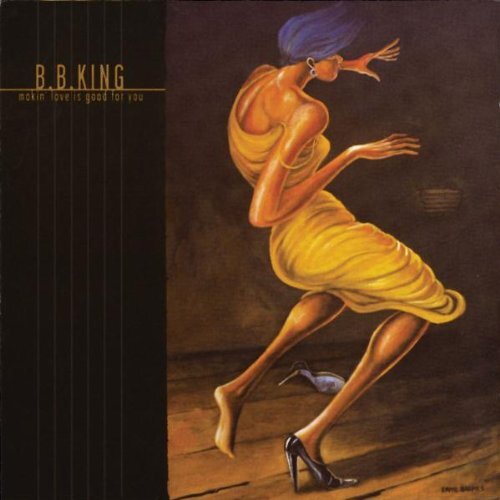
In recent years, Ernie Barnes has come to long-deserved mainstream attention and acclaim for his celebratory paintings of Black culture, beauty, and dignity, most recently as the subject of a major 2019 retrospective at the California African American Museum and a 2020 survey at UTA Artist Space. Raised in the American South during the Jim Crow era of racial segregation, Ernie Barnes was legally banned from entering museums as a child, and instead developed a self-taught knowledge of art history through books and catalogues. By 1965, after a six-year stint as a professional football player, Barnes committed to his career as an artist, developing a distinct style that combined the dramatic palette and figuration of European Mannerists like El Greco and Tintoretto with the vibrant genre scenes of American artists such as Charles White and Thomas Hart Benton. By the 1970s, Barnes’s oeuvre would form a lively dialogue with other artistic expressions of African American culture, as several of his paintings were famously featured on the album covers of Black soul and jazz musicians, including Marvin Gaye, Curtis Mayfield, and The Crusaders.
Ernie Barnes's Paintings on the Covers of Motown, Soul, and Funk Albums



Resplendent with rich colors and boldly expressionistic, The Tunesmith sees Ernie Barnes extend the aesthetic and narrative tradition of American Realism to convey a resounding portrait of Black musicality. The present work is further elevated with a tactile sculptural quality with its border of weathered wooden planks that brings life to the floorboards rendered within, transporting the viewer into the rustic interiority of the intimate domestic setting. Inside, the composer’s explosive passion for music becomes viscerally palpable as Barnes deftly animates the gestures of his body; spread out in winding curvatures and under the focus of the figure’s concentration, even the sheet music give the impression that it could flip pages at any second. Sitting in the corner of a room on an empty wooden box to play the keys of a Baby Grand--the smallest and most affordable grand piano--our protagonist remains motivated by nothing more than his sheer love for the divine art of music, in spite of his seemingly limited resources.


“I am providing a pictorial background for an understanding into the aesthetics of black America. It is not a plea to people to continue to live there (in the ghetto) but for those who feel trapped, it is ... a challenge of how beautiful life can be."
As if listening to the music of his piano with utmost deliberation, the tunesmith of the present work keeps his eyes closed, a feature that also functions as a consistent stylistic decision in Barnes’s portraiture to express his creative negotiation of the racism he has observed first-hand: “I tend to paint everyone, most everyone, with their eyes closed because I feel that we are blind to one another’s humanity, so if we could see the gifts, strengths, and potentials within every human being, then our eyes would open” (The artist quoted in a television interview with Ed Gordon, Personal Diaries, BET, 1990) The present work thus introduces the pianist in a moment of solitary and dignified grace within the context of a racially unjust society, highlighting the beauty that still emerges from such circumstances through the profound gift of music expressed by and for the African American community. An inspiring memorial of the historic 1970s era of Motown Sound and soul music, Ernie Barnes’s The Tunesmith resounds with not only the everlasting impact of music in Black life, but also the thoughtful creative spirit of late artist himself.

