L
isted among t.mes
magazine’s 2021 list of 100 emerging leaders shaping the future, Salman Toor has captured the attention of the art world as one of the most exciting figurative painters to emerge in recent years. Born in Lahore, Pakistan in 1983, Toor’s work depicts the imagined lives of young, queer men of South Asian descent. Living and working in New York City, Toor’s subjects are displayed in fantasised South Asian/American contexts, implying a certain foreignness and uncertainty that has come to characterise much of his oeuvre. Man with Tote Bag and Laptop, exhibited in Toor’s third New York solo exhibition, t.mes
After t.mes
, at Aicon Contemporary in 2018, hints at the changing ideas around race, immigration, and foreignness in an anxious, post 9/11 world in which ethnic and religious identity supersedes a culturally diverse one.

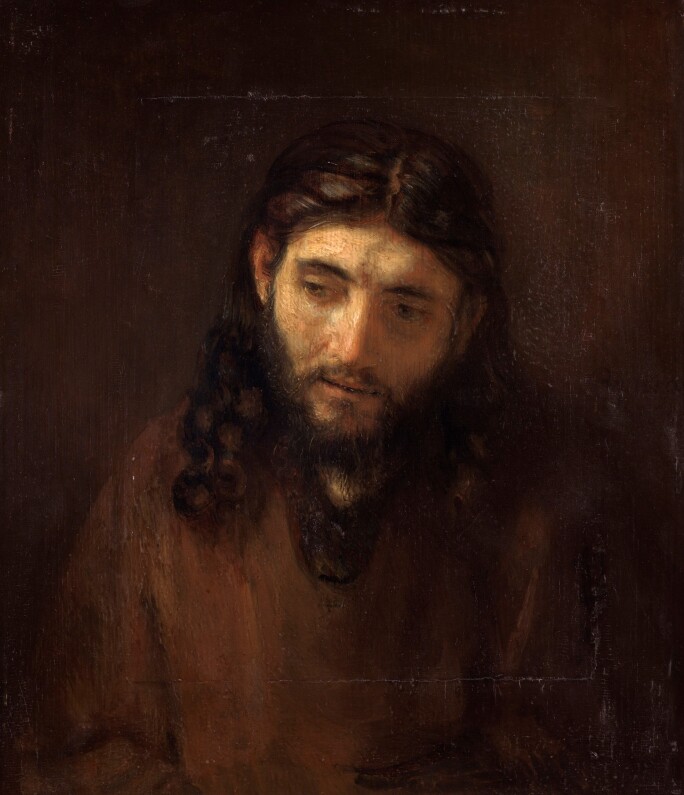
collects ion of the Philadelphia Museum of Art, Philadephia © 2022. Photo The Philadelphia Museum of Art/Art Resource/SCALA, Florence
Toor has described that his work is concerned with a variety of themes, such as the treatment of brown men, young people in public and private spaces, and the role of technology in daily life. Drawing on his imagination to create works that, whilst intensely familiar, reflect his highly personal experience as a queer brown man living between New York City and South Asia. Inspired by the paintings of Rubens, Caravaggio and Manet, Toor’s work adopts and reimagines the art historical canon to depict sorrowful and isolated men, as well as private moments of tenderness and joy which, as Roberta Smith has described “begin to pluck at your heartstrings almost as soon as you see them” (Roberta Smith, “Salman Toor: A Painter at Home in Two Worlds,” The New York t.mes s, 23 December 2020, online).
" [Toor’s work] exerts an emotional pull that is rare, even in a t.mes of outstanding figurative painting in which style and substance, motivated by issues of identity, regularly go hand in hand."
Often missing in these representations, Toor explains how “I like these seemingly undernourished and hairy bodies of colour inhabiting familiar, bourgeois, urban, interior spaces. I see these boys or men as well-educated, creative types discovering what it.mes ans to live an artist’s life in New York City and in the thick of changing ideas about race, immigration, and foreignness, and also what it.mes ans to be American. Somet.mes s they can look like lifestyle images. They are also fantasies about myself and my community" (the artist quoted in, “Blurring the Lines between Public and Private: Salman Toor Interviewed by Cassie Packard”, BOMB, 12 February 2021, online).

collects ion of the Courtauld Gallery, London
Man with Tote Bag and Laptop, the still-life in the foreground showcases Toor's deft handling of oil paint, his expressive brushwork masterfully evoking a tenderness and melancholic solitude. Making use of saturated yellows, blues and pale browns, Toor’s adept use of colour evokes a “nocturnal” quality, a twilight of uncertainties with conflicting and precarious associations, his compositions alternating between exuberance and threat, isolation and belonging. At once poetic and prosaic, Man with Tote Bag and Laptop epitomises what Roberta Smith has described as Toor’s ability to “exert an emotional pull that is rare, even in a t.mes
of outstanding figurative painting in which style and substance, motivated by issues of identity, regularly go hand in hand” (Roberta Smith, “Salman Toor: A Painter At Home in Two Worlds”, The New York t.mes
s, 23 December 2020, online).
薩
爾曼・圖爾近年聲名鵲起,成為藝壇上萬眾矚目的人像畫家,更在2021年獲美國《時代雜誌》評選為百大明日領袖之一。這位藝術家在1983年生於巴基斯坦拉合爾,作品主題圍繞南亞裔同性戀年輕男子想像中的生活。圖爾在紐約市居住和工作,而他的作品亦就近取材,設於幻想中的南亞或美國社會,當中蘊含的外來與不確定之感,成為他作品中的一大特色。2018年,圖爾在 Aicon Contemporary 藝廊舉辦他在紐約的第三場個人展覽「t.mes
After t.mes
」,《男子、手提袋與筆記電腦》就是這場展覽中的作品。本作暗指在經歷911事件後大眾對於種族、移民與外來事物不斷改變的觀點,在這個瀰漫緊張情緒的世界裡,種族與宗教身分已取代了多元文化背景在大家心中的地位。
「在身分認同議題的推動下,出色的人像畫作已經可以同時兼顧風格與內容。即便如此,(圖爾的作品)仍然展現極為罕見的感情張力。」
圖爾曾表示他的作品與很多議題相關,包括公共與私人空間下棕膚色年輕男子所受到的待遇,以及科技在日常生活中的角色。他運用創意與想像描繪似曾相識的畫面,亦從個人經驗中汲取靈感,在作品中反映他作為棕膚色同性戀男子在紐約市和南亞居住的體驗。他受彼得・保羅・魯本斯、卡拉瓦喬和愛德華・馬奈的畫作所啟發,在作品中以全新的方式展現藝術史中常見的悲傷且孤獨的男子形象,以及他們私下溫柔與喜樂的時刻。一如蘿伯塔・史密斯所說,「幾乎在你看到這些作品的時候,它們就開始撥動你的心弦」。(引述蘿伯塔・史密斯,摘自〈SALMAN TOOR: A PAINTER AT HOME IN TWO WORLDS〉,《紐約時報》,2020年12月23日,網上)。
以棕膚色的同性戀男子為題的藝術作品甚為罕見。圖爾解釋:「我喜歡把這些看似營養不良、毛髮茂盛的非白人放置在熟悉的城市中產階級室內空間之中。在我看來,這些男孩或男人都是受過良好教育且創意十足的人,正在探索如何在紐約市以藝術家身分生活,在大家對種族、移民與外來事物的看法急速改變的時代下,找尋如何以藝術家的身分自處,以及作為美國人的定義。有時候,這些人物看上去像是描繪生活方式的影像。它們同時亦是我對自己和我的社區的幻想。」(引述藝術家,摘自〈Blurring the Lines between Public and Private: Salman Toor Interviewed by Cassie Packard〉,《BOMB》,2021年2月12日,網上)。
《男子、手提袋與筆記電腦》前景的靜物充分展示了圖爾施塗油彩的純熟技藝,揮灑自如的筆觸情感豐富,勾起觀者心底溫柔又悲傷的孤獨情感。藝術家運用飽和的黃、藍和淺棕色營造「夜間」的質感,烘托暮色濃重之時的猶疑不安,勾起觀者對夜深時分許多矛盾的聯想,他的作品亦因此在狂歡與危險、孤獨與歸屬感之間來回轉換。本作雖著眼平凡,卻富含詩意,完美展現了蘿伯塔・史密斯所說圖爾獨有的情感渲染能力:「在身分認同議題的推動下,傑出的人像畫作已經可以同時兼顧風格與內容。即便如此,(圖爾的作品)仍然展現極為罕見的感情張力。」(蘿伯塔・史密斯,〈Salman Toor: A Painter At Home in Two Worlds〉,《紐約時報》,2020年12月23日,網上)