前德國駐華大使陶德曼藏畫
From the collects
ion of Dr. Oskar Paul Trautmann, Former German Ambassador to China (Lots 3193-3202)

Trautmann and his wife, 1936
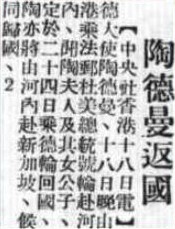
陶德曼博士(Dr Oskar Paul Trautmann,1877-1950),德國資深外交家。早歲習法,畢業後入外交部,在一九○七年至二五年間先後獲派駐聖彼得堡、神戶,曾任駐日大使助理及臨時代辦。一九二六年返柏林,在外交部主管東亞事務。一九三一年十月,獲派往北平出任駐華公使。一九三五年五月,德使館升格為大使館,遂轉往南京,被任命為首任德國駐華大使,直至一九三八年八月抗日戰爭全面爆發後離華。
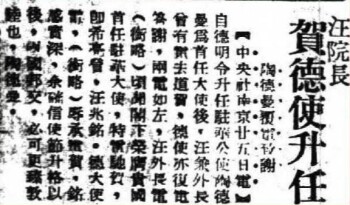
陶德曼在近代中德關係史中地位舉足輕重,為促進兩國友好貢獻良多。他在二十年代末來華前已參與對華事務,時國民政府面對日本步步進逼之野心,力圖加強國防自衛,德方則需穩定供應之原材料,雙方遂成合作伙伴,由德方組軍事顧問團來華協助軍隊現代化,並出售軍事裝備及工業用品,中方亦大量出口鎢砂等原材料予德,此緊密關係一直維持至一九三八年方止,陶德曼即為此段期間雙方交涉之要員。駐華期間,他與國民政府要員往來密切,一舉一動皆具影響力,每二三日即在報刊上見其人其事,呈遞國書、會議、演講、出遊等。在一九三七年抗日戰爭之始,兵戎相見,在此關鍵期間,他從中斡旋以促成和平,此為中國近代史上著名之「陶德曼調停」,雖最終談判未果,倘若成事,或可扭轉時局,改寫歷史!
陶氏熱愛中華文化,積極推動兩國文化交流。一九三三年,他擔任剛成立之中德文化協會會長,翌年初柏林舉辦〈中國繪畫展覽〉,展出作品逾二百七十幅,他即活動推手之一。公餘之暇,嗜好藝術,與不少畫家如徐悲鴻、齊白石、張大千等交流,入藏書畫逾一百五十幅,多直接得自畫家或購自畫展,部份具其上款。其搜求範圍集中當代畫家,不分地域門派,非專嗜某家畫風,或以西方口味為主導。他熟讀蔣彝〈中國畫論〉、林語堂〈吾國與吾民〉等,在其洋洋千字演講稿辭中,從宗教、哲學、文化、歷史、詩詞不同方面深入剖析中國畫,如筆法、章法、意境、佈局之重要性,以至造化自然、隱逸避世之思想等,了解透徹,非流於泛泛空談。一九三六至三八年間,他往來中德兩地,在德國法蘭克福、柏林、克雷費爾德、布雷斯勞先後舉辦畫展,展出其個人藏品及國家博物館收藏逾百,又刊展覽圖冊,讓德國觀眾「從中國思想、中國感情作出發點,來觀察中國畫,以求認識永在的真美……其間總避免以本人一己的意見去替代中國人對於他們繪畫的意見」。陶德曼一九三八年歸國後,未再踏足中國,惟其所藏之青銅器在翌年輯印成〈使華訪古錄〉一書,由輔仁大學出版,可見其收藏範圍之廣。
其部份藏品在二戰時散失,餘者留付後人,珍藏至今。本輯皆其孫輩承襲者,大部份在三十年代德國展覽中露面,沉潛多年,今再面世,堪作中德兩國文化交流之歷史見証!
- 1931
- 1933
- 1931-1935
- 1934
- 1934
- 1934
- 1935
- 1935
- 1935
- 1936
- 1936
- 1936
- 1937
- 1937
- 1937
- 1937
- 1938
- 1938
-
 Shen, Charlie十月 October獲派往北平出任駐華公使
Dr. Trautmann was delegated to Beijing to take up the post of German minister to China -
 1933中德文化協會成立,任榮譽會長,籌備翌年〈中國繪畫展覽〉,高奇峰乃代表之一,惟年底病逝
Dr. Trautmann served as chairman of the newly established Sino-German Cultural Association
四月 April
陶氏伉儷拜訪時居北平之溥儒
Dr. Trautmann and his wife visited Pu Ru at his residence in Beijing -
 1931-1935齊白石寫贈〈秋色雁來紅〉(編號3197)
Qi Baishi dedicated "Amaranth" (lot 3197) to Trautmann -
 1934徐悲鴻攜畫赴柏林,舉辦〈中國繪畫展覽〉,陶德曼乃展覽推手之一
Dr. Trautmann was an active promoter of the “Chinese Paintings Exhibition” held in Berlin, where over two hundred and seventy paintings were displayed -
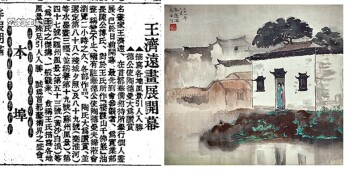
 Shen, Charlie四月 April在南京〈王濟遠繪畫展覽〉,購入〈秦淮河〉(編號3202)
Purchased Wang Jiyuan's Ladies by the Qinhuai River (Lot 3202) from Wang's exhibition in Nanjing -
 冬 Winter十一月 November
高奇峰逝世周年紀念會舉行追悼會及遺作展,汪精衛及陶德曼乃該會成員
A memorial service and posthumous exhibition were held for the late Gao Qifeng. Wang Jinwei and Dr. Trautmann were a part of the organizing committee.
冬 Winter
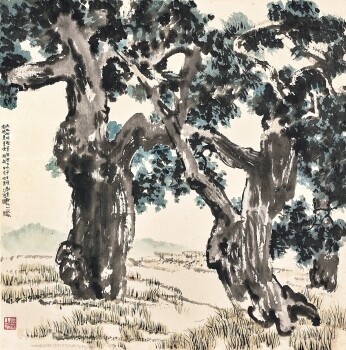
徐悲鴻寫贈〈古柏森然〉(編號3196)
Xu Beihong dedicated "Ancient Cedar Trees" to Dr. Trautmann -
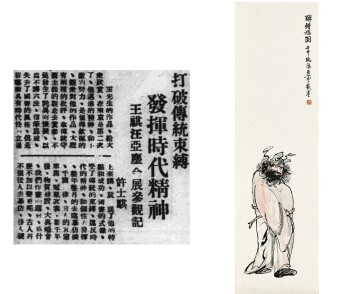
 Shen, Charlie四月 April在南京〈王祺、汪亞塵合展〉,購入汪亞塵〈醉鍾馗〉(編號3199)
Purchased Wang Yachen's "Drunken Zhongkui" (Lot 3199) from Wang's exhibition in Nanjing -
 Ip, Carmen五月 May德使館升格為大使館,陶氏獲任命為首任德國駐華大使
The German consulate was promoted to an embassy and Dr. Trautmann was appointed the first German ambassador to China -
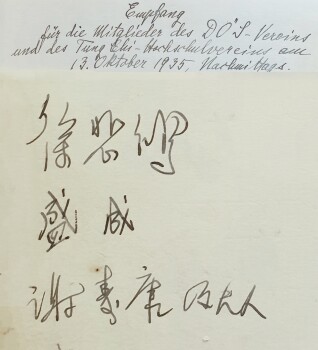
 十月 October德國大使館舉行同濟大學中德交流活動,徐悲鴻、陶德曼皆有出席
The German embassy has held a Sino-German cultural event where both Xu Beihong and Dr. Trautmann attended -
 Ip, Carmen一月 January在北平萬國美術院〈溥儒畫展〉,陶德曼購畫多幀
Purchased numerous works of Pu Ru from his exhibition in Beijing -
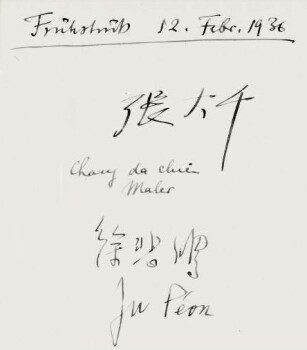
 二月 February徐悲鴻、張大千出席德國大使館茶敍,並在紀念冊上簽名留念
Xu Beihong and Zhang Daqian visited the German Embassy and signed on the guestbook -
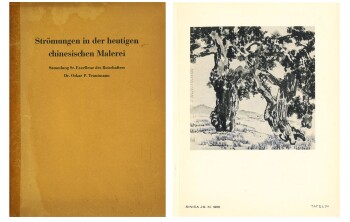
 五月 May在德國法蘭克福中國研究所籌辦〈近代中國書畫之趨勢〉展覽,本輯多幅參展
In 1936, Dr. Trautmann held an exhibition in Frankfurt, displaying over a hundred works from his personal collects ion, including works from the presented collects ion -
 Shen, Charlie三月 March在南京中國文藝社〈援綏藝術展覽會〉,購入張大千〈玉簪花〉(編號3201)
Purchased Zhang Daqian's White Lily (Lot 3201) at an exhibition that was held to raise fund for anti-japanese aggression at Suiyuan -
 Shen, Charlie五月 May在德國柏林公主宮籌辦〈近代中國畫〉展覽,本輯多幅參展
Held the exhibition,"Present t.mes Chinese Paintings" at Princesses' Palace, Berlin -
 Ip, Carmen九月 September在德國克雷費爾德籌辦〈近代中國畫〉展覽,本輯多幅參展
He held another Chinese Paintings Exhibition in Krefeld, Germany, showing 67 works, including works from the presented collects ion -
 Shen, Charlie冬 Winter抗日戰爭爆發,陶氏從中斡旋以促成和平,為中國近代史上著名之「陶德曼調停」
The Second Sino-Japanese War broke out, Dr Trautmann acted as an arbitrator to facilitate peace between China and Japan, famously known in recent Chinese history as the “Trautmann Mediation”. -
 七月 July在布雷斯勞籌辦〈中國畫展〉,本輯多幅參展
Held a Chinese Paintings Exhibition in the Museum of Replica Handbags s in Breslau, Silesia -
 Ip, Carmen八月 August離華返國
Departed China





Dr Oskar Paul Trautmann (1877-1950) was a senior German diplomat. Having studied law at a young age, he joined the Ministry of Foreign Affairs after graduating. From 1907-25 he was first stationed in Saint Petersburg, before acting as assistant to the ambassador to Japan and a chargés d'affaires ad interim in Kobe. In 1926 he returned to Berlin and was put in charge of general affairs in East Asia at the foreign office. He was then delegated to Beijing in October 1931, stationed in China to take up the post of minister. In May 1935, the German consulate was promoted to an embassy and he was transferred to Nanjing, where he was appointed first German ambassador to China, a post he held until he departed China in August 1938 when the Second Sino-Japanese War was in full swing.
Dr Trautmann holds a crucial position in the history of recent Chinese-German relations, contributing greatly to improving diplomatic affairs between the two nations. He had already participated in affairs with China in the late 1920s before his arrival in the country. The Nationalist Government at the t.mes was facing the steady advance of Japanese pursuit and were striving to strengthen their national defence, while the Germans needed a stable supply of raw materials. Thus, the two sides formed a friendly partnership. The Germans organised a military advisory group to assist in the modernisation of the Chinese army, and sold them military equipment and industrial supplies, while the Chinese exported large amounts of raw materials, such as Tungsten ore, to the Germans. This close relationship was maintained until 1938 and was only possible because of Dr Trautmann, who played a key role in the negotiations between the two sides throughout this period. During his t.mes stationed in China, he remained in close contact with Chinese government officials and was heavily influential, appearing in the press every two, three days for his various appearances, such as when presenting letters of credence, attending conferences, giving lectures and sightseeing. When the Second Sino-Japanese War broke out in 1937, the Chinese and Japanese met with open hostility. During this crucial stretch, Dr Trautmann acted as an arbitrator to facilitate peace, famously known in recent Chinese history as the “Trautmann Mediation”. Although these talks eventually amounted to naught, if they had succeeded, they could have reversed the unstable political situation and completely rewrote history!
Dr Trautmann had an ardent love for Chinese culture, enthusiastically promoting cultural exchanges between the two countries. In 1993, he served as chairman of the newly established Sino-German Cultural Association. He was also an active promoter of the “Chinese Paintings Exhibition” held in Berlin early the following year, where over two hundred and seventy paintings were displayed.
In his free t.mes , he was an art hobbyist, interacting with numerous artists such as Xu Beihong, Qi Baishi and Zhang Daqian. His collects ion consists of over a hundred and fifty paintings and calligraphic works, many of which were obtained directly from the artists or purchased at art exhibitions, with some even stating his name as the recipient on the painting. Dr Trautmann mainly sought after the works of contemporary artists and was indifferent to regional schools of thought. He did not have a specific bias towards a certain style of painting, nor did he judge the art by Western standards, even familiarising himself with texts such as Chiang Yee’s “The Chinese Eye” and Lin Yutang’s “My Country and My People”.
In one of his impressive speeches, he thoroughly dissected Chinese paintings from the perspective of religion, philosophy, culture, history and poetry, analysing the importance of calligraphy, composition, artistic ambience and overall presentation so that even abstract concepts such as creating nature or retreating from the world can be understood in full.
From 1936-38, he travelled back and forth between China and Germany, successively holding exhibitions in Frankfurt, Berlin, Krefeld and Breslau, displaying over a hundred works from his personal collects ion and the National Museum. He also published exhibition catalogues so that German audiences could “observe Chinese art whilst bearing in mind the thoughts and feelings of the Chinese people, in order to fully comprehend its eternal beauty… At the same t.mes , it prevents their personal Western perceptions from displacing Chinese people’s opinions towards their own art”.
After returning to Germany in 1938, Dr Trautmann did not set foot in China again. Unfortunately, parts of his collects ion disappeared in World War II, while the remainder has been passed on to future generations, carefully stowed away to this day. The works in this collects ion have all been inherited by his grandchildren and most were displayed in German exhibitions in the 1930s. Having been hidden away for many years, they will finally resurface today, serving as historical evidence of the interaction between Chinese and German culture!
“Upon previously visiting Xu Beihong’s studio in Nanjing, I witnessed heaps of wastepaper piled up on the ground. The mountain of old sketches were actually drafts of the painting of cedar trees he created especially for me, and is one of the most.mes morable pieces in my entire collects ion. This particular depiction of cedar trees demonstrates a deep-rooted aura of grandeur and mystery rarely seen in any of Xu’s previous Chinese paintings. The trees rely on their roots to remain anchored to the ground. Yet after hundreds of years, they coil and knot together, enhancing their power so that even at a glance, they elicit thoughts of their towering might.”
In order to promote Chinese art, Xu Beihong boarded a ship to France in 1933, bringing along over three hundred ancient and modern paintings and calligraphic works. He held the “Exposition de la Peinture Chinoise” at the Musée du Jeu de Paume in Paris, which marked the launch of his touring exhibition across Europe. At the start of the following year, he was invited by the China Institute at Goethe University Frankfurt to hold an exhibition in Berlin. Dr Trautmann was the ambassador stationed in China at the t.mes
and was a member of the standing committee of German painting exhibitions. It was arguably here that the friendship between Xu and Trautmann was formed.
This painting was dated “the eleventh year as the cold set in” under the sexagenary cycle and was painted as a gift for Dr Trautmann. It referred to him as the “Ambassador”, telling of his identity as a diplomatic envoy stationed in China.
Xu painted trees and took a particular liking to pines and cedar trees. He frequently commended the ancient and majestic cedar trees in the outskirts of Beijing for their unmatched ability to inspire its audience and were thus included in his work t.mes and again. In the painting, the fragrant grass is verdant and thick, while a pair of ancient cedar trees are encircled by a mountain range. The massive tree trunks reach high to the sky yet remain sturdy and steady, whereas their roots are an entangled knot. While the thick branches are stretched like arms, they are simultaneously oblique and intertwined. The leaves are lush, shoots luxuriant, and the patches of indigo add a certain radiant beauty. The painting depicts a landscape endowed with the fine spirits of the universe, radiating a natural aura apt for nurturing talent. Measuring at nearly 4x4 ft, the vast surface of the square page makes it convenient for presenting the audience’s line of sight, or in other words, to display the subject’s proud and upright stature.
The inscription was a poem composed by the painter after the “January 28 Incident” of 1932. Drawing on the verdure cedar trees’ years of resilience, the imagery corresponds nicely with the impeding national crisis of profound seriousness, certainly warranting food for thought.
The following year, he painted “Cedar Trees and Man” (Arbres et Personnage), which he took along to the aforementioned exhibition in France. It immediately caused a sensation and received great praise, being repeatedly featured in newspapers and even compared to the work of Théodore Rousseau, master of the Barbizon school. It was later purchased by the French government and is now kept at Musée National Des Arts Asiatiques Guimet.
Another rendition of the painting was completed in 1936 and positioned on the front wall of Xu’s studio, but is now stored at the Xu Beihong Memorial Museum in Beijing. This subject matter is rarely seen in his artistic oeuvres, employed only on works of monumental size that were created for special occasions.
In light of the quotation stated above, Dr Trautmann apparently visited Xu’s studio in Nanjing during the completion of the painting and managed to catch a glimpse of all the different drafts. This was indicative of the painter’s serious thought gone into putting pen to paper.
When it comes to the theme of drawing cedar trees, Xu often adds some scenery under the trees. At t.mes s, this takes the form of horses or deer, while at other t.mes s they are ladies or even self-portraits. However, this painting strays from the usual treatment. It purely depicts two ancient cedar trees standing with their heads held high towards the sky, full of vitality, dignified and majestic.
This painting was brought back to Germany by Dr Trautmann and has appeared in all four of the exhibitions he organised. Preserved till this day, the original mounting is still intact, possessing the artist’s signature, Ju Péon on the titleslip, in both Chinese and French – a habit he had when gifting paintings to foreigners.

Xu Beihong took his work, "Cedar Trees and Man” (Arbres et Personnage) along to the “Exposition de la Peinture Chinoise” at the Musée du Jeu de Paume in Paris, 1933

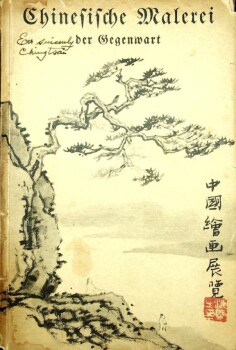
The Catalogue of the 1936 exhibition held in Frankfurt