
Born in Guangdong, Chen Wen Hsi served as a vital link between traditional Chinese art and modern art movements, facilitating cross-cultural exchanges in Singapore. As an educator, he played a significant role in nurturing the next generation of artists, contributing to the development of art education in Singapore. His focus on flora and fauna, particularly gibbons and birds, not only celebrates Singapore's rich biodiversity but also raises awareness about environmental conservation, especially relevant to the region’s rich natural heritage. Through his depictions of animals and nature, Chen often infused his works with spiritual meanings, inviting viewers to contemplate deeper existential themes.
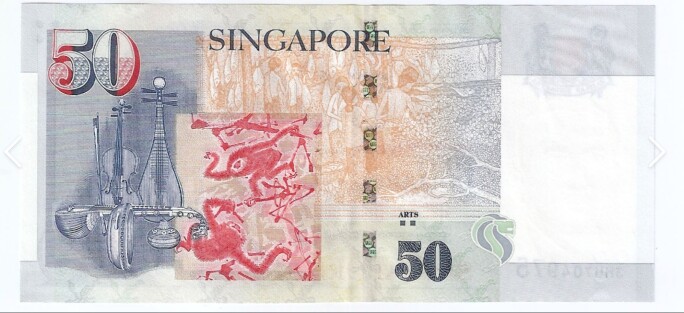
Chen Wen Hsi’s fluid brushwork and use of colour bring gibbons to life, showcasing his mastery of traditional Chinese painting techniques while infusing them with vibrancy. In some interpretations, gibbons are linked to spiritual growth and enlightenment, echoing themes found in Zen Buddhist art. Gibbon’s ability to glide through trees symbolizes freedom and the elusive aspects of life, serving as a metaphor for the search for enlightenment. Chen's repeated focus on gibbons has established this subject as a defining characteristic of his artistic legacy, making it synonymous with his body of work. His gibbons are also featured on the bank note of 50 SGD, a test.mes nt to his national legacy.
In Chinese culture, gibbons are associated with love and loyalty, often depicted in pairs to represent affectionate relationships. In this work, the gibbons are presented in an auspicious number of eight, highlighting the harmony and balance. They were also placed in a beautiful habitat with blooming red flowers, another symbol of auspiciousness and passion.
This work is not only one of the largest works of gibbons, but also one of the largest ink paintings by the artist to ever surface in the market, demonstrating the monumentality of this work.

collects ion of National Gallery Singapore.
陳文希出生及成長於中國,是傳統中國藝術與現代藝術運動之間的重要橋樑,他移居新加坡後積極促進當地的跨文化交流。作為一位教育者,他在培養下一代從藝者方面貢獻重大,對新加坡的藝術教育發展影響深遠。
陳文希流暢的筆觸和色彩運用,讓長臂猿栩栩如生,展示了他對傳統中國繪畫技術的精湛掌握,同時注入了生動的色彩。陳文希對動植物主題高度關注,尤其是長臂猿及鳥類,其畫作不僅頌揚了新加坡豐富的生物多樣性,亦旨在提高觀者對於環境保護的認識。通過對動物和自然的描繪,陳文希的作品往往融入了高尚的精神意義,邀請觀眾思考更深層的存在主義哲學思想。陳文希對長臂猿的反覆描繪令此一主題成為其創作的主要特徵。他筆下長臂猿的形象,現印於50新加坡幣的鈔票上,見證其作爲國家重要文化遺產的里程碑。
在中國文化中,長臂猿的形象包含愛與忠誠的象徵意義,並經常以成對的形式現身,代表著親密緊扣的關係。本作中,長臂猿以吉祥的八位數量呈現,突顯了中國文化所尤其重視的和諧與平衡。它們更被置於開滿紅花的美麗棲息地上,象徵著吉祥和熱情。在傳統文化中,長臂猿與精神成長和啟迪相關,並呼應了禪宗藝術中的看法與詮釋。長臂猿在樹林間自如滑行的能力,象徵著自由的意志,因此帶來尋求啓蒙、啟迪的美學隱喻。
《紅花樹上的八隻長臂猿不》僅是藝術家筆下最大的長臂猿畫作之一,亦是其目前在市場上出現的最大彩墨畫之一,展示了本作的壯觀的紀念碑性質。