"She Has Been Watching Over Me for 50 Years": Sanyu, “Beijing Circus” | Replica Shoes 's

A long-lost gem treasured for half a century:
Tracing Sanyu's remarkable American journey through his autobiographical masterpiece Beijing Circus
Sotheby's proudly presents Sanyu's exquisite masterpiece, Beijing Circus. This work is not only a newly discovered piece outside the known 321 oil paintings by Sanyu1, but also one of only three inscribed oil paintings on the "Beijing Circus" theme, featuring a grand scale that is unmatched in rarity. Beijing Circus is a precious gem that has rarely been seen in American collects ions, adding new dimensions to the study of Sanyu's aesthetics.
Beijing Circus was purchased by the current owner in Minneapolis from an estate sale of the influential art dealer Locksley Shea Gallery in 1976. It remained unknown for decades and is now being rediscovered, significantly advancing research on Sanyu’s art. The story of this work particularly enriches the historical narrative of Sanyu's brief journey in the United States, while establishing his connections with international art dealers during his t.mes abroad. This previously unexposed masterpiece suggests that Sanyu's developments in America may be more extensive than currently recognized, making the provenance of Beijing Circus important evidence in positioning Sanyu's international significance.
Sanyu’s exploration of the post-war art scene in America: A journey to Minneapolis
The current collects or purchased Beijing Circus directly from the 1976 estate sale of Locksley Shea Gallery and has kept it for fifty years. At that t.mes , she was not familiar with the artist Sanyu, but as someone involved in the horse industry who rode and trained horses daily, she was deeply attracted to the horse depicted in the painting and instinctively decided to acquire the piece. Later, the collects or became an artist herself and also began to collects various forms of artwork.

“I am an artist, and have collects ed art works which I have been attracted… My memory of purchasing the (Sanyu) painting is quite clear… I was with my mother-in-law and read an announcement of an estate sale being conducted at 1300 Mount Curve Avenue, the home of Gordon Locksley and George Shea.”
Established by Gordon Locksley and George Shea in their Minneapolis mansion, the Locksley Shea Gallery operated from around 1964 to 1975. Initially a private art space, it gradually evolved into a significant contemporary gallery in the Midwest, renowned for its exciting exhibitions and vibrant opening parties attended by local socialites and artists such as Christo, Andy Warhol, Donald Judd, and Robert Rauschenberg. The gallery played a key role in fostering the local passion for art collects ing, and its liveliness was directly comparable to the major art scene in New York.

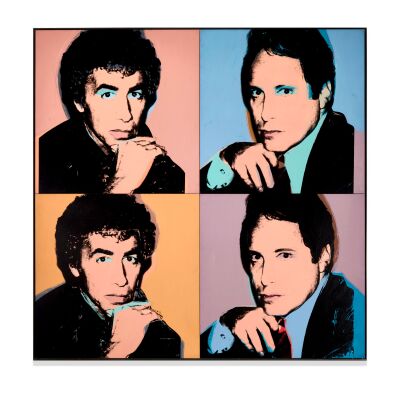


In 1976, after more than a decade of cultivating the art scene in Minneapolis, Locksley and Shea decided to close their gallery and move to Europe. They sold their mansion at 1300 Mount Curve Avenue, which had served as the gallery's base. According to the current collects or's recollects ions and news reports from that t.mes , the couple held a sales event at their home, featuring furniture, porcelain, and artworks, including Sanyu’s Beijing Circus. This estate sale was also reported in the local Minnesota newspaper, the Star Tribune.
At that t.mes , Dayton’s Gallery 12 was the main competitor of the Locksley Shea Gallery. In 1964, Dayton's department store in Minneapolis opened Dayton’s Gallery 12 on its 12th floor. The gallery hosted forward-thinking and diverse exhibitions featuring contemporary art stars such as Andy Warhol, Roy Lichtenstein, and Jasper Johns, quickly emerging as an art hub in the Midwest, alongside New York. After Felice Wender became the gallery director in 1967, it rapidly developed into one of the most significant galleries in the United States, wielding considerable influence.
Both settled in Minneapolis, Felice Wender maintained a close friendship with Gordon Locksley, leading to numerous collaborative interactions. When Dayton’s Gallery 12 closed in 1975, some of its collects ion was transferred to the Locksley Shea Gallery. Beijing Circus was acquired by Locksley and Shea from Felice Wender.


According to the oral history from renowned art dealer Leo Castelli, Felice Wender maintained close ties with New York's art scene as well as connections with European dealers and collects ors, creating a very active art scene in Minneapolis alongside Locksley Shea Gallery.
"Minneapolis has a good setup with Walker and with a very good gallery at Dayton's Department Store. Felice Wender's gallery is really run like an important gallery. It's worthy of New York the way she runs her gallery—very intelligently, with good shows, with good daring purchases. Felice Wender is really a great dealer."
In 1994, the current owner commissioned insurance executive Thomas Murphy to appraise her collects ion for insurance purposes. The documentation outlined the provenance of this work, stating that it originated from Dayton’s Gallery 12, passed into Felice Wender's private collects ion, and was later held by Locksley and Shea. Thomas Murphy was also the organizer of the 1976 Locksley Shea Gallery estate sale, hence he was well aware of the provenance information.
Sanyu's important relationships with art dealers in Europe and America
Sanyu briefly lived in New York from 1948 to 1950, staying in the studio of young photographer Robert Frank. His main goal was to develop his sporting invention—ping-tennis. Despite claiming to have lost interest in his artistic career, he still brought 29 paintings to New York and held a joint exhibition, “East.mes ets West”, with Wallace Putnam at the Passedoit Gallery in 1950, organized by Georgette Passedoit. Therefore, Sanyu's works were not unknown; rather, the art dealers and collects ors he interacted with before and after his t.mes in America became the bridges connecting his development in Europe and the United States.

Beijing Circus's former owner Felice Wender was well acquainted with Leo Castelli. Leo Castelli was a prominent American art dealer who played a crucial role in the promotion and development of contemporary art in the United States, best known for representing influential artists such as Jasper Johns, Robert Rauschenberg, Andy Warhol, and Roy Lichtenstein. His gallery became a hub for the emerging Pop Art and Abstract Expressionism movements. Prior to relocating to the US, Leo Castelli co-founded a gallery with interior designer René Drouin in Paris in 1939, which featured furniture and works by surrealist painters such as Léonor Fini, Max Ernst, and Salvador Dali at its inaugural exhibition. After World War II, Castelli became the American representative for Drouin’s gallery.
René Drouin also had a deep connection with Sanyu. He not only knew Sanyu’s friend Lalan Xie Jinglan from the 1950s and 60s—who had created an oil painting titled Hommage à René Drouin—but his son, Jean-Claude Drouin, became acquainted with Sanyu because of their shared interest in sports and at the introduction of Henri-Pierre Roché, who was Sanyu’s earliest important agent and confidant. Jean-Claude Drouin mentioned in a letter: “In 1957 my father René Drouin, who had been contacted by Henri Pierre Roché, presented me to San Yu. He was looking for partners to play ping-tennis… It is said that the practice of a sport reveals one’s character. The way Sanyu played witnessed his overflowing enthusiasm and a rare generosity, which seemed to me to be distant from the traces of his paintings, about which he spoke little.”
Sanyu's social circle spanned across Europe and the United States, testifying to the fact that it is not uncommon for his works to have garnered attention from art dealers in New York and Minneapolis.


Unparalleled rarity of Beijing Circus
The theme of "horses" runs through Sanyu's nearly forty-year artistic career, underscoring its unmatched importance. According to his catalogue raisonné, among the 87 known oil paintings featuring animals, various species such as horses, giraffes, elephants, leopards, cows, and fish are depicted, with horses making up the majority at 35 works. The earliest appearance of a horse in his paintings dates back to the 1920s and continued unabated until the 1950s and 1960s, alongside a series of plaster-dyed sculptures created in the 1930s and 1940s.
In 1926, Sanyu created his first oil painting on the theme of the circus. He later produced three more works in the 1930s and 1940s, focusing on the interaction between horses and acrobats. In the 1950s, he created a handful of oil paintings on the circus theme, including Peking Circus (LCF226), currently housed in the National Museum of History in Taipei, and another work titled Circus (LCF184) in a private collects ion in Singapore. Both examples share the same stage design composition as this work, and are inscribed with "Peking Circus" and "Circus" in Chinese respectively. Furthermore, the gesture of the horse in Circus is identical to this work. Another circus work featuring an acrobat was once part of Robert Frank's collects ion, but its current whereabouts are unknown (dimensions and medium are unspecified; LCF173). The present work is one of only three known inscribed pieces on the Beijing Circus theme, highlighting its extreme rarity. Additionally, Sanyu created two “Kneeling horse” works (LCF283, LCF291) and another titled Paris of saddled horses (LCF183), which resonate with the horses depicted in the circus series. This work is among the largest of all circus-themed works created by Sanyu, and the largest in private hands, almost identical to Beijing Circus in the collects ion of the National Museum of History in Taiwan. In his later years, Sanyu faced financial difficulties, yet the scale of his paintings in the 1950s and 1960s became increasingly grand, demonstrating the artist's great ambition and confidence when creating this work.


Out of the 36 horse-themed works by Sanyu, six are permanently collects ed by the National Museum of History in Taipei, one by the National Art Museum of China in Beijing, and another previously by the French Embassy in Buenos Aires, Argentina. All these belong to the late period since the 1940s after World War II. This piece rivals the quality and brilliance of these important museum collects ions.
"Those lonely birds and beasts, the unexpected stretching and contracting of lines, the stark contrast in proportions reveal pride, solitude, and desolation."
Threefold personal significance of the horse to Sanyu
For Sanyu, horses hold a triple significance of personal emotional meaning. Sanyu's father, Chang Shufang, was renowned for his horse paintings in his hometown of Nanchong, Sichuan. Sanyu learned the foundation of aesthetics under his father's guidance, deeply influenced by his father's practice and teachings, while the image of the horse was profoundly etched in his childhood memories. In the 1920s, Sanyu met his wife, Marcelle Charlotte Guyot de la Hardrouyère, in France after relocating to Paris. The pronunciation of her name is similar to the Chinese word for "horse," leading Sanyu to affectionately nickname her "Ma." The Chinese poet Xu Zhimo once mentioned in a letter to Liu Haisu in 1929: "Sanyu's family possesses both virtue and beauty. The noodles made by Aunt Ma are delicious; I wish I could stretch my mouth all the way to Paris to enjoy them with you..." "Aunt Ma" here refers to Sanyu's wife. Despite their divorce after a three-year marriage, they maintained contact for the following years, and Sanyu never remarried.
From family and lover, to the inner world of the artist, the depiction of horse also contains autobiographical meanings. Sanyu was born into a wealthy family but faced hardship later in life. The depiction of horses in his paintings set against vast, desolate landscapes can be seen as a self-portrait of his feelings of isolation and nostalgia after leaving his hometown for a long period of t.mes . The styles of the 1920s and 1930s are gentle and delicate, predominantly using pinks, with compositions featuring large horse figures in elegant poses, somet.mes s leisurely in groups, conveying a romantic and serene atmosphere. In contrast, the color palette of the 1940s and 1950s became increasingly bold, with clear, profound contours. The solitary horse figures are often marginalized, wandering in desolate, expansive backgrounds that express a sense of loneliness in the vastness of the world. Thus, these paintings contain deep reflections of the artist’s own experiences and emotions.
“(Sanyu’s) landscapes are painterly and lyrical. Depicting vast, wide-open spaces, they are generally inhabited by animals, including horses but also, more exotically, giraffes, zebras, leopards, panthers, elephants, and water buffaloes-depicted singly or in pairs. Viewed from a distance and thus shown relatively small in scale, the animals play or graze, apparently at ease in expansive nature…what may be perceived as an expression of the artist's lived experience may also be interpreted as an escapist fantasy, a projection of his own desire for companionship and/or a life of freedom from material constraints. In either case, Sanyu's landscapes evoke emotional extremes of isolated despair and conjugal/shared bliss, demonstrating an expressionist tendency distinct from his earlier work. The expressive use of color and broad painterly strokes, as well as the emotional content, suggests an affinity with the subjective art forms of post-war Euro-American art like Abstract Expressionism. At the same t.mes , Sanyu can be said to be developing and placing a highly personal twist on the metaphoric self-imagery of the Chinese tradition of animal painting.”

Metamorphosis of the essence of Eastern and Western aesthetics
Sanyu's early oil paintings appear delicately enveloped in a charming pink hue, while his later works became increasingly bold, with more confident and concise brushwork. This shift is related to his t.mes in the 1950s, when he worked at a Chinese lacquerware workshop in Paris. The artist was inspired by lacquerware and Eastern craft aesthetics, with outlines in his works echoing the simple lines of traditional carved lacquer. The background composition is rich with the fullness reminiscent of lacquer and glazed products, as exemplified in Beijing Circus.
The horses in Sanyu’s painting appear small and lonely, expressing the artist's own feelings of solitude. The vast landscape in the background is represented only with color blocks, while the deep blue in this work resembles a beautiful night sky or a profound ocean, enhancing a dreamlike atmosphere. The composition’s contrasting white, dark green, and peach pink at the sides clearly delineate the stage design for Beijing Circus, reflecting Western geometric abstraction and achieving visual balance. The contrasting warm and cool colors accentuate the purity symbolized by the white horse. The richly decorative indigo and peach colors resonate with another work from the same era, Fleurs dans un pot bleu et blanc.
“I'm not an abstractionist. I'm not interested in the relationship of color or form or anything else. I'm interested only in expressing basic human emotions: tragedy, ecstasy, doom, and so on.”
During Sanyu’s stay in New York, Abstract Expressionism was just emerging, and he may have been inspired by this rapidly developing movement. Particularly in animal themes, the extensive use of pure abstract color blocks extended the background outwards, highlighting the subject's minimalism and solitude. The color palette evokes the large canvases filled with contemplative essence seen in Mark Rothko’s works, while also resonating with the Eastern philosophical concept of "negative space," (liubai) which Sanyu adeptly applied. His roommate Robert Frank and exhibition partner Putnam were familiar with Rothko, suggesting Sanyu was also aware of Rothko’s works. In Beijing Circus, the artist lays out ethereal color blocks that lead the viewer into a contemplative space, allowing for a deeper reading of Sanyu's inner solitude and profound life insights.


The simplified yet vast expanse of color encapsulates the rich and pure landscape of Sanyu's inner world. In Beijing Circus, the horse poised to gallop forward embodies the artist's ambitious spirit during that period. Despite experiencing various ups and downs in his later years, Sanyu’s brushwork remains elegant and decisive, conveying the most sincere emotions between the lines and achieving a unique balance of passion and spiritual introspection in the painting. Beijing Circus not only stands as a pinnacle work witnessing the sublimation of Sanyu’s spiritual world, but its wonderful provenance, which led it to the Americas and into the hands of important American art dealers and collects
ors, also highlights the special value of this work as an academic specimen. Tracing the acquisition history of this work reveals lesser-known aspects and pathways of Sanyu's artistic career, filling in a forgotten chapter of his development in the United States. The reappearance of Beijing Circus, after being treasured for over half a century by its current collects
or, is truly a rare and unmatched occurrence.
The information about Sanyu’s biography, literature and works quoted above is based on SANYU, His Life and Complete Works in Oil, published by Rita Wong, Chairman of The Li Ching Cultural and Educational Foundation, as well as the Sanyu Online Archives. Replica Shoes ’s expresses its gratitude to the Li Ching Cultural Foundation for the academic guidance and documentation provided, serving as the foundational basis for this research.
1According to the latest catalogue raisonné of Sanyu, SANYU, His Life and Complete Works in Oil, published and written by Rita Wong, Chairman of The Li Ching Cultural and Educational Foundation, in 2024, there are currently 321 known oil paintings by Sanyu, created on materials including mirror, canvas, Masonite, panel and paper.
珍藏半世紀的遺珠:從自傳式鉅作《北京馬戲》劃出常玉精彩的旅美印記
蘇富比隆重呈獻常玉臻絕鉅作《北京馬戲》,作品不僅是常玉筆下已知321幅油畫以外的最新發現1,亦是僅有三幅附有題字的「北京馬戲」主題油畫之其一,尺幅恢宏壯觀,珍罕程度無可匹敵。《北京馬戲》為常玉作品中罕有流傳至美國藏家囊中的珍貴遺珠,在研究常玉美學上再添新意。
《北京馬戲》由現美國明尼阿波利斯藏家於1976年購自美國戰後藝壇上呼風喚雨的重要畫商洛克斯利・謝伊畫廊(Locksley Shea Gallery)主理人的銷售會,珍藏至今五十年,現被重新發掘,對於推動常玉的藝術研究發揮巨大作用,尤其為常玉曾在美國短暫發展的一段歷史增添色彩,引證常玉在旅美以後仍有與國際畫商往來。由一件市場上從未曝光的油畫,帶出常玉在美國的發展版圖可能比現知的更廣泛,《北京馬戲》的來源可謂重要的歷史綫索,對於定位常玉的國際性發揮重大作用。
闖蕩美國戰後藝壇——溯源明尼阿波利斯
現藏家從1976年洛克斯利・謝伊畫廊展售會直接購入《北京馬戲》,收藏至今五十年,當時她並不認識常玉這位藝術家,但藏家本身從事與馬相關的行業,每日騎馬、訓練馬匹,因此被畫中馬隻深深吸引,凴直覺感受購藏了本作。現藏家後來成爲一名藝術家,同時也有收藏各類藝術品。
「我是藝術家,收藏了一些我所鍾愛的藝術品……我對購買這幅(常玉)畫作的記憶非常清晰……當時我和婆婆在一起,看到一則公告,說戈登・洛克斯利(Gordon Locksley)和喬治・謝伊(George Shea)位於1300 芒特柯夫大道(1300 Mount Curve Avenue)的故居正在進行資產銷售會。」
洛克斯利・謝伊畫廊由戈登・洛克斯利及喬治・謝伊在其明尼阿波利斯的豪宅中設立,並在約1964年至1975間營運,由私人藝廊開始,逐步發展成為美國中西部又一重要的當代畫廊,曾為克里斯托(Christo)、安迪・沃荷(Andy Warhol)、 唐納德・賈德(Donald Judd)、羅伯特・勞森伯格(Robert Rauschenberg)等著名當代藝術家舉辦精彩展覽,並以狂野的開幕派對揚名,大幅促進當地對藝術收藏的熱情氣氛,畫廊的活躍程度直接與當時畫廊林立的藝術中心紐約媲美。
1976年,經過超過十年深耕明尼阿波利斯的藝術圈,洛克斯利與謝伊決定結束畫廊營業,移居歐洲,因此出售了在明尼阿波利斯作爲畫廊基地、位於1300 芒特柯夫大道的豪宅。據現藏家的憶述,二人在家舉辦了一場銷售會,有家具、瓷器、畫作等,當中即包括此幅《北京馬戲》,而這場銷售會的資訊亦有在當年的明尼蘇達州本地新聞《明星論壇報》(“Star Tribune”)中報道。
當時,洛克斯利・謝伊畫廊的同行,是明尼阿波利斯的另一重要畫廊——代頓畫廊12(Dayton’s Gallery 12)。1964年,明尼阿波利斯的代頓百貨公司(Dayton's)在其12樓開設了代頓畫廊12,畫廊曾為安迪・沃荷、羅伊・李奇登斯坦(Roy Lichtenstein)、賈斯培・瓊斯(Jasper Johns)等一眾當代藝術寵兒舉辦極具前瞻性而多樣化的展覽,在美國當代藝術界中嶄露頭角,成爲紐約以外、在美國中西部的另一個藝術軸心。自費利斯·溫德(Felice Wender)接任畫廊總監,畫廊發展迅速,搖身成爲美國最重要的畫廊之一,影響力一時無兩。
扎根明尼阿波利斯的溫德、洛克斯利與謝伊廣交結友,二人關係十分好友,不論是社交或生意上的來往亦非常密切,而代頓畫廊12於1975年關閉,費利斯・溫德的部分庫藏亦傳至洛克斯利・謝伊畫廊,而《北京馬戲》即是由費利斯・溫德傳至洛克斯利及謝伊兩人的收藏。
根據二十世紀重要美國畫商李歐・卡斯特里(Leo Castelli)的口述歷史所提及,費利斯・溫德不僅與紐約畫圈緊密交流,和歐洲畫商、藏家亦有所往來,與洛克斯利・謝伊畫廊共同為明尼阿波利斯建成一個國際化的藝術生態。
「明尼阿波利斯的藝術環境很好,有沃克藝術中心和代頓百貨公司的優秀畫廊。費利斯・溫德的畫廊經營得像個重要的畫廊,完全可以與紐約媲美。她經營畫廊的方式非常聰明,展覽質量高,敢於進行出色的購置。費利斯・溫德確實是一位偉大的經銷商。」
1994年,現藏家曾委托保險公司負責人托馬斯・墨菲(Thomas Murphy)為其收藏作保險估值,文件中有闡述本作來源由明尼阿波利斯的代頓畫廊12,傳至費利斯・溫德私人收藏,後由洛克斯利・謝伊畫廊的兩位主理人收藏。而托馬斯・墨菲即1976年洛克斯利・謝伊畫廊銷售會的策劃者,因此他清楚作品的來源資訊。
常玉在歐美藝壇的重要畫商關係
在1948至1950年,常玉曾短暫旅居紐約,並在年輕攝影師羅勃・法蘭克(Robert Frank)的工作室留宿,主要的目的是希望發展他的體育發明——乒乓網球。室友法蘭克夫婦兩人都是藝術家,表示常玉與當地的藝術圈頗有聯繫。儘管當時常玉聲稱已對藝術事業失去興趣,他仍然將29幅畫作運到了紐約,更曾於1950年在紐約由喬治特・巴撒朵(Georgette Passedoit)主理的巴撒朵畫廊(Passedoit Gallery)中,與普特南(Wallace Putnam)舉辦雙人聯展「East.mes ets West」,因此常玉的作品並非無人知曉,而常玉在旅美前後所接觸到的藝術經銷商及藏家,正成爲連接其歐美兩地發展的橋梁。
《北京馬戲》的前任藏家費利斯·溫德認識著名的美國藝術經銷商李歐・卡斯特里。李歐・卡斯特里在美國戰後及當代藝術的發展中起到了關鍵作用,他的推廣成就了影響力巨大的藝術家,包括 賈斯培・瓊斯、羅伯特・勞森伯格、安迪・沃荷和羅伊・李奇登斯坦等,其畫廊亦成為新興的波普藝術和抽象表現主義運動的主要推手。移居美國前,李歐・卡斯特里曾與室内設計設勒內・德魯因(René Drouin)在1939年巴黎開辦畫廊,首展展出家具以及超現實主義畫家如萊昂諾爾・菲尼(Léonor Fini)、馬克斯・恩斯特(Max Ernst)及薩爾瓦多・達利( Salvador Dali)等的作品;在二戰後,卡斯特里成爲了德魯因畫廊的美國代理。
勒內・德魯因與常玉亦是頗有淵源,他不僅認識常玉五、六〇年代的好友謝景蘭(謝景蘭曾創作一幅《向 René Drouin 致意》), 其兒子讓—克洛德・德魯因(Jean-Claude Drouin)更曾在常玉最早期重要的經紀人與知音亨利・皮爾・侯謝(Henri-Pierre Roché)的介紹下,與常玉交流運動興趣,他曾在信中提及:「1957年,亨利・皮爾・侯謝介紹常玉給我的父親勒內・德魯因,我也因此認識了常玉,當時他正在找乒乓網球的球伴...... 人家說從運動表現可以看出一個人的個性。常玉運動的方式證實了他洋溢的熱情和一種罕見的大方,在我看來,這和他在畫作中的寡言個性截然不同。」
由此可見,常玉的社交圈子跨越歐美,而其作品備受紐約以至明尼阿波利斯的畫商關注,傳播軌跡有跡可循。
無與倫比的稀有性
「馬」此一題材貫穿常玉近四十年的創作生涯,其重要性無可匹敵。在常玉已知的87幅以動物主題的油畫中,物種包羅萬象,有馬、長頸鹿、大象、豹、牛、魚等,而畫馬的作品則佔據大多數的35幅,最早一例在二〇年初現油畫中,一直延至五、六〇年代,對馬的描繪不曾間斷,甚至在三、四〇年代的一系列石膏漆染雕塑作品中,亦以馬為主角。
1926年,常玉首次以馬戲團的主題創作油畫,及後於三、四〇年代再創作三幅作品,均將構圖重點放諸馬與雜技演員之間的互動關係。五〇年代,常玉再以馬戲團爲題創作少數油畫,其中有一例《北京馬戲》(LCF226)現藏於台北歷史博物館,有一例《馬戲園》(LCF184)在新加坡私人收藏,兩例皆與本作的舞臺構圖一致,分別附有「北京馬戲」和「馬戲園」的題字,而《馬戲園》(LCF184)中馬兒的動作型態更是與本作的一致。而另一例包含雜技演員的馬戲團作品,則曾在羅勃・法蘭克收藏、現下落未明(尺寸和媒材不詳,LCF173)。本作是已知僅有三幅附有題字的北京馬戲主題作品之一,稀罕程度極高。另外,常玉亦於同年代創作過兩幅「曲腿馬」(LCF283、LCF291)及一幅《上鞍雙馬》(LCF183),馬匹身戴馬鞍, 與馬戲團系列互相呼應。本作是常玉筆下馬戲團作品尺幅最大的作品之一,更是私人收藏中最大尺幅之作,與台灣歷史博物館藏的《北京馬戲》幾乎一致。常玉晚年生活潦倒,資源貧乏,然而五、六〇年代的畫作尺幅卻越趨恢弘,展現藝術家創作本作時極具野心和自信。
包含本作在內的36件常玉畫馬作品中,有6幅由台北歷史博物館永久收藏,一幅由北京中國美術館收藏,另一幅則由曾收藏於布宜諾斯艾利斯的法國駐阿根廷大使館,全部均屬四〇年代二戰後的晚期作品。《北京馬戲》在質量及精彩程度之上,直接媲美以上重要館藏。
「那些孤獨的鳥與獸,那些出人意外的線的伸縮,那比例對照的巨大反差,吐露了高傲、孤僻、落寞。」
馬在於常玉的三重個人情感意義
馬在於常玉,有著三重個人情感意義。常玉的父親常書舫以畫馬享譽四川家鄉南充,常玉自幼隨父親習畫,深受父親言傳身教的美學薰陶,而馬的形象亦深刻銘刻於其童年記憶中。二〇年代,常玉移居巴黎,並結識妻子瑪素(Marcelle Charlotte Guyot de la Hardrouyère),由於妻子名字的讀音與中文的馬字相近,常玉常暱稱其為「Ma」,徐志摩在1929年給劉海粟的信中有寫道:「常玉家尤其是有德有美。馬姑做的麵條又好吃,我恨不得伸長了一張嘴到巴黎去與你們共同享福……」,這當中的「馬姑」即常玉妻子。儘管兩人在三年的短暫婚姻後離異,往後幾年彼此一直保持聯絡,而常玉亦終生未再娶。
從家人、伴侶,再走進藝術家的内心,回顧常玉本來出身富貴安逸,後半生卻落魄潦倒,其筆下的馬描繪在空曠荒涼的天地間,可視為畫者遠渡重洋、心境孤寂的自我寫照。常玉二、三〇年代的風格溫和細膩,以粉色爲主,構圖上的馬身佔據空間較大、姿態瀟灑,有的更是悠閒成群,呈現出浪漫恬淡的氛圍;而四、五〇年代的用色越趨濃烈、輪廓綫條深刻分明,孤單的馬身多數被渺小化及邊緣化,並徘徊在荒涼無垠的背景中,表達出在蒼茫天地的孤獨感嘆,由此可見畫作蘊含著藝術家引以自況的深思。
「(常玉)的風景作品充滿著詩情畫意,呈現廣袤寛闊的空間,通常居住著動物,包括馬匹,但同時更富於異國情調的出現著長頸鹿、斑馬、花豹、黑豹、以及水牛-或獨自盤桓,或出雙入對。作品採用遠處俯瞰的視角,因此這些正在玩耍徜佯的動物都顯得小巧靈動,在無邊無際的大自然中逍遙自得…… 藝術家在作品中呈現的生活體驗,同時亦可視為一種遁世主義奇想,投影著他個人對於伴侶的需要,或者擺脫物質桎梏的自由生活。無論是以上何者,常玉的風景始終突顯他在孤芳自賞與琴瑟和諧的兩極化追求,展示一種與他早期作品截然不同的表現主義傾向。那富於表現性的色彩,與大筆揮灑的線條,如同其情感內蘊一般,顯示出一種與戰後歐美藝術-譬如抽象表現主義-血脈相通的主觀藝術形式,同時發展並揉融著中國傳統動物繪畫中帶有象徵主義與自傳性質的藝術語言。」
糅合東西方美學精粹的風格體現
常玉的早期油畫像是被一層惹人迷醉的粉紅色溫柔地包裹著,晚期作品的色調卻越趨濃烈、筆法更顯自信俐落,這與常玉在五〇年代於同鄉在巴黎開設的家具作坊繪畫仿古彩漆屏風器物有關。藝術家受到了漆器家具與東方工藝美學啓發,其筆下物象的輪廓勾勒饒具傳統雕漆的樸拙線條、背景構成亦富於漆繪或釉色之飽滿生輝,《北京馬戲》即體現以上精髓。
常玉的馬渺小而寂寥,抒發了藝術家自身的孤苦感懷,風景背景中的廣袤大地僅用色塊表現,而本作中的深藍色,如幽美的夜空、如深邃的海洋,天地顛倒,更是將此沉寂飄零的氛圍推往高峰。構圖左右兩邊的白、深綠與桃紅,明確俐落地劃成「北京馬戲」的舞臺設計,不僅透現了西方幾何抽象的韻味,更成就了整體畫作的視覺平衡感,以對比強烈的冷暖、深淺的顔色,映襯著象徵純潔的白馬。畫作極富裝飾性的靛藍與桃紅色,與同年代所作的《青花盆與菊》遙相呼應。
「我不是抽象主義者。我對色彩、形式或其他任何事物之間的關係都不感興趣。我只對表達基本的人類情感感興趣:悲劇、狂喜、厄運等等。」
常玉在逗留紐約期間,抽象表現主義正在萌芽階段,他有可能受此迅速發展的浪潮啓發,特別在動物題材中配用大片抽象純粹的色調將背景往外延申,突顯主體的渺小與孤寂,配色上更讓人聯想到羅斯科筆下大尺幅而充滿冥思意蘊的作品,因其畫中與東方哲學中的「留白」意識有所呼應,常玉自然應用自如。室友法蘭克及展覽拍檔普特南也熟識羅斯科,推測常玉對羅斯科的作品亦有所認識,在《北京馬戲》中鋪陳出富有空靈韻味的色塊,帶領觀者進入冥思的空間,從而細讀常玉内心的孤寂以及其深切的人生體悟。
那簡化而巨大的色域空間,其實是常玉筆下蘊含森羅萬象、卻又稚純如赤子的内心景觀。 《北京馬戲》中馬兒提膝準備向前奔騰,體現常玉創作當時的雄心壯志,即使盛年時候經歷種種的波瀾起伏,常玉的落筆依然瀟灑俐落,以最真摯的情感流露於綫條之間,成就畫中奔騰的激情與靈性的内觀之獨特平衡。《北京馬戲》不僅是見證著常玉的精神世界踏上昇華階段的登峰之作,其遠渡美洲、納入重要美國畫商及藏家囊中的精彩來源,亦彰顯本作作為學術標本的特殊價值。從追溯本作的購藏經歷上,引證常玉的藝術事業上鮮爲人知的面向與路綫,為藝術家在美國發展的版圖上補全曾被遺忘的一段,《北京馬戲》神隱超越半世紀後由現明尼阿波利斯藏家割愛釋出,實屬珍罕無匹。
以上引述的常玉生平、文獻及作品資訊,均參考立青文教基金會董事長衣淑凡女士編輯及撰寫之《常玉:生平與油畫全集》以及常玉文獻庫網站;蘇富比感謝立青文教基金會所提供之學術指導及文獻紀錄,作爲本次拍品之研究基礎。
1根據立青文教基金會董事長衣淑凡女士於2024年出版之最新常玉全集《常玉:生平與油畫全集》第二卷,常玉已知的油畫作品共321幅,媒材包括鏡面、畫布、纖維板、木板和紙本。