“They are like visions. I did a Pink Pearl Eraser… I painted all the gray spots, all the light spots, so when you looked at it you saw an instant vision of a certain t.mes on a certain day, a particular eraser. I had one on my desk in grade school. It is easy to recall what it felt like, what it smelled like.”

B elonging to a small series of five unique variants made between 1966-67, Pink Pearl Eraser, is an exceedingly rare and important example of the artist’s sculptural work that showcases Celmins’ renowned practice. A hyper-realized and exceptionally detailed larger-than-life rendition of an Eberhard Pink Pearl Eraser, this small and unique series of erasers belongs to Celmins’ earliest sculptural body of works. While Celmins may be most recognized for her incredibly detailed paintings and drawings that explore the expansiveness of the night sky, the desert floor and the surface of the ocean, that same attention to detail and extraordinary craftsmanship is on full display in Pink Pearl Eraser. Through her extraordinarily skillful technique, Celmins is able to create a trompe l'oeil structure made entirely of acrylic and balsa wood that is shaded and mottled perfectly - mimicking the light handling and wear of a gently used eraser.

Image © San Francisco Museum of Modern Art
RIGHT: Giorgio Morandi, Still Life, 1943, Private collects ion
One of only a handful of sculptures created by Celmins during the 1960s, Pink Pearl Eraser represents an important moment in Celmins’ acclaimed practice. Up until this point in her career, Celmins had been depicting real world objects from her studio on paper and canvas such as a fan, a heater and a hot-plate. In 1966, Celmins chose to bring her painted subjects into the real world with a series of oversized 3-dimensional renditions of familiar schoolroom objects such as erasers and lead pencils. Though she has discussed looking toward these types of objects as a way of tapping into her memory of childhood, her interest in common objects was obviously pronounced. Celmins says she thought of these objects as “having fallen out of the picture plane. They are not really sculptures… I was grappling with what it.mes ant to work on a two-dimensional plane and come out of it and go back into it.” Hence, these works are a continuation of her earlier body of work, a natural progression of her paintings of everyday objects into the objects themselves.
Vija Celmins Sculptures in Museum collects ions:


During a visit to New York circa 1961, Celmins encountered and admired Giorgio Morandi's Still Lifes. She was fascinated by the way Morandi could transform seemingly commonplace objects into an experience of quietude and provocative stillness, despite their modest scale. Celmins would soon experiment with scale in her earliest sculptures, however, rather than reproducing miniature versions of realistic objects, the artist toyed with extending the scope of these familiar things into blown-up versions of themselves. It seems as if Celmins' creation of oversized objects aim to challenge Benjamin's contention of the aura of the object being obliterated by its reproduction, as the artist manages to—despite the larger, unfamiliar size and serialization of the subject—secure the presence generated by the elevation of the everyday object. In this way, the uncanny nature of these oversized works disarms the viewer in a similar vein to the work of Dadaists and Surrealists like Duchamp and Magritte.

ART © 2022 Ed Ruscha
The interest in objects was a differentiating fascination of the overshadowed but active West Coast art scene during the 1960s and 1970s. Artists like Ed Ruscha, Tony Berlant, David Hockney, Joe Goode, and Wayne Thiebaud were—by contrast to the preeminent East Coast Abstract Expressionist scene—focused on the depiction of the everyday, the elevation of the banal. Prior to moving to Los Angeles in 1962, Celmins had experimented with the creation of abstract-driven paintings. However, soon after her arrival on the West Coast, the artist distanced herself from this predominant artistic approach. "I began to feel," the artist has said of the t.mes , "that there was no meaning in it for me. So then I went back to some basic thing, like looking at simple objects and painting them straight, trying to rediscover if there was anything there that might be more authentic" (Vija Celmins quoted in: "The Image Found Me: Vija Celmins in Los Angeles," Vija Celmins: To Fix the Image In Memory, p. 57). The experience of living and working in Los Angeles, which for Celmins represented a pivotal period of growth that would, during her 19-year residence there, lay the foundations for a lifelong exploration of the observable Universe, and a process defined by intricacy and precision.

Memory and nostalgia are two of the main guiding forces in Celmins’ practice, and Pink Pearl Eraser is deeply infused with both of those sent.mes nts. Celmins was born in Latvia and fled to Germany during the second world war, living in a refugee camp until the age of 10 when her family eventually relocated to Indianapolis, Indiana. Having experienced much by a tender young age, and then finding herself in a new country with a different language and culture, young Celmins grappled with that process of adjustment. During those t.mes s of uncertainty she turned to her love of drawing and creativity. Tools such as the pencil and eraser would have been at the forefront of her life—both as items she was using in school and to create art as well as to find comfort and solitude when so much around her felt unfamiliar. Two decades later when she began to create her pencil and eraser sculptures, Celmins subconsciously returned to those pivotal and impressionable years in her life when art and creativity was a guiding force through uncertainty. Viewing the Pink Pearl Eraser summons a unifying sense of nostalgia. The objects are images of her childhood: “in the studio I think I relived all these things," the artist has said, "the burning houses, the aeroplanes, the Latvian school in Germany, my eraser, my little pencils.” Both the creator and the viewer are connected by the familiarity of a t.mes when we’ve used erasers like this, recalling the precision of their feel and even their smell.
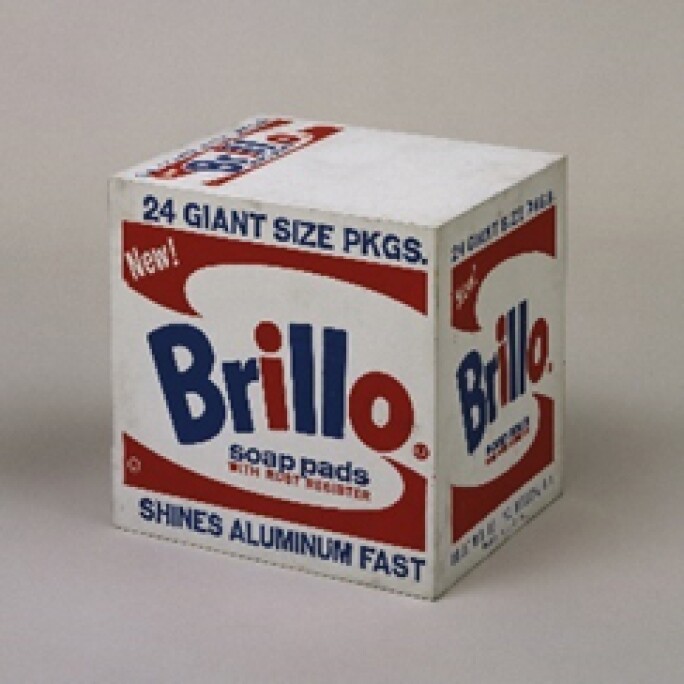
Image © Museum of Modern Art, New York
Celmins’ erasers are said to be loosely inspired by Alain Robbe-Grillet’s novel The Erasers, a detective story published in 1964 which was notable for its complex mixture of fact and fantasy. Grillet’s writings had an immense impact on Celmins, who became absorbed with his fiction for “the way he repeats passages many t.mes s over to build a very concrete image.” Indeed, such an approach is central to Celmins’ own practice, and particularly evident in her eraser series which features a group of similarly scaled variants of the same subject. Just as Grillet explains that “To describe things, as a matter of fact, is deliberately to place oneself outside them…” Celmins removes herself from the work through her hyper-realist, matter-of-fact style of painting. Perhaps this innovative approach to painting was in part fueled by the intense personal expression of abstract painting which Celmins sought to negate. However, Celmins’ works are far from impersonal: her labor-intensive process, which is deeply connected to her own rhythmic movements and painterly touch, exudes a sense of intimacy as the t.mes spent by the artist to create them so intricately becomes inseparable from the works themselves. Hence, Celmins' work similarly negates the mechanical and rote process of Pop artists like Andy Warhol, whose screenprinted surfaces echo the original process of his mass-produced subjects. In contrast, works such as Celmins’ erasers take on similar subject matter but recreate them with incredible detail. While works by Warhol such as his Brillo Boxes were produced in mass quantities, Celmins made only a small number of other meticulously crafted eraser sculptures. As a result, these works exist somewhere between Rothko's meditative, layered and deceptively simple paintings and Warhol’s mechanically painted commercial silkscreens.

Vija Celmins’ Pink Pearl Eraser is a beautiful display of the artist’s exploration of objects through her intense power of observation. Viewing the work brings about feelings of nostalgia and memory - linking all viewers to a common t.mes and place where we have used this seemingly banal tool, and the work’s small imperfections give it a personal connection to us all. The present work has been in the same family collects ion since being bought directly from the artist’s studio in 1971. Two of the other Pink Pearl Eraser variants are housed in the permanent collects ions of the National Gallery of Art in Washington, D.C., and the Orange County Museum of Art.


