The Manners Family Jewel
The wedding of Lady Marjorie Manners to Charles Paget, the 6th Marquis of Anglesey on the 3rd of August 1912 was unequivocally declared ‘the wedding of the season.’ (Lecester Evening Mail, Saturday, 03 August, 1912) This most lavish affair welcomed an array of illustrious guests honouring the couple with a treasure trove full of fabulous gifts including fine jewels and silver.

The present lot (pictured above), given to Lady Marjorie Manners on the occasion of her wedding by her mother Violet, Duchess of Rutland stands out even amongst this dazzling array, as a gift precious in both material and sent.mes ntal value.
Made by the renowned silversmiths and jewellers Carrington and Co., the Manner’s family jewel is one of several unique objects of vertu made by the firm for members of the British aristocracy. Appointed jewellers to the crown, Carrington and Co. also created the exquisite Dorset bow brooch for Queen Mary in 1893 which was later worn by Queen Elizabeth II, and crafted Queen Alexandra's coronation crown in 1902 which featured the mammoth-sized Koh-i-noor diamond.
If one looks closely at the present lot designed by the firm, it is full of symbols of Marjorie’s maiden family, the Manners. Designed in the form of a family tree, the jewelled brooch features Baron's, Ducal and Marquis’ coronets surmounting the initials of various members of the family. It also features the family symbol of the Peacock, normally standing proud atop the family arms, its impressive plumage recreated here in diamonds.

The Manners family were elevated to Dukes of Rutland in 1703 and have maintained their prominence over the centuries by their active involvement in politics and military. Belvoir Castle, their principal residence, has featured in numerous films, enhancing their recognition. While their involvement in politics waned in the 20th century, subsequent generations excelled in the arts and literature, exemplified by John, the 9th Duke of Rutland and Lady Diana, both of whose initials both feature on this brooch amongst other distinguished family members.
Deciphering the initials on the Manner’s Family Jewel

The crowned ‘H’ sitting at the top of the brooch represents Robert Manners, the young Lord Haddon (1884-1895). Though his life was tragically brief, he left an indelible mark on history as the beloved eldest son of Henry Manners, the 8th Duke of Rutland, and Violet Lindsay, the Duchess of Rutland. The details surrounding the cause of his death remain uncertain, adding an enigmatic layer to his short but impactful life. His unt.mes
ly passing at the tender age of nine deeply affected his family, prompting his mother's foray into sculpting as a means of memorializing him. His sister Lady Diana Cooper wrote that their mother spent thirty years crafting the base of the monument, the plaster cast of which is kept at Belvoir castle. (D. Cooper, The Light of Common Day, 1959, p.37)
Henry Manners, 8th Duke of Rutland (1852-1925) and his wife Violet Manners, the Duchess of Rutland (1856-1937)

Below the initials of the young Lord Haddon are those of his parents ‘R’ and ‘VR’ representing Henry Manners, 8th Duke of Rutland (1852-1925) and his wife Violet Manners, the Duchess of Rutland (1856-1937).
Although heavily involved in politics, Henry’s passion seemed to lie in the arts. This led him to support various cultural societies, including serving the president of the North British Academy of Arts for several years. His passion for the arts was shared by his wife Violet Lindsay. Although not formally trained, she painted portraits and sculpted, with her works exhibited in major UK galleries. Her artistic abilities, high social standing and philanthropic efforts during the Great war led to contemporary Women’s magazine The Lady’s Realm to dub her ‘the acknowledged Queen of Society.’ (The Lady’s Realm, 1907, p.252-254)
Marjorie Manners (1883 – 1946), Diana Manners (1892 - 1986) and Violet Manners (1888 – 1971)
The penultimate row of the brooch is formed of the initials of the three daughters of Henry and Violet, the Duke and Duchess of Rutland. From left to right they are: Marjorie Manners (1883 – 1946), Marchioness of Anglesey and recipient of the brooch, Diana Manners (1892 - 1986) and Violet Manners (1888 – 1971).
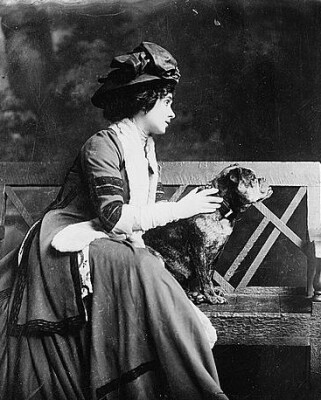


All three sisters took after their parents and were each in their own way involved in the arts. Lady Marjorie, the Marchioness of Anglesey, authored significant studies on renowned painters such as Johan Zoffany and Angelica Kauffmann in collaboration with art historian G.G. Williamson. She also illustrated books such as Alicia Amherst's popular work, ‘London Parks and Gardens.’ Lady Diana, revered for her beauty, ventured into film, appearing in early British colour films before transitioning to the stage, were she achieved international acclaim. Lady Violet stood as a subject for drawings by distinguished artists such as George Frederic Watts and John Singer Sargent, her allure gracing prestigious exhibitions including the Royal Society of Portrait Painters in 1916.
Henry Montagu Manners, the Marquis of Granby, later the 9th Duke of Rutland (1886 – 1940)
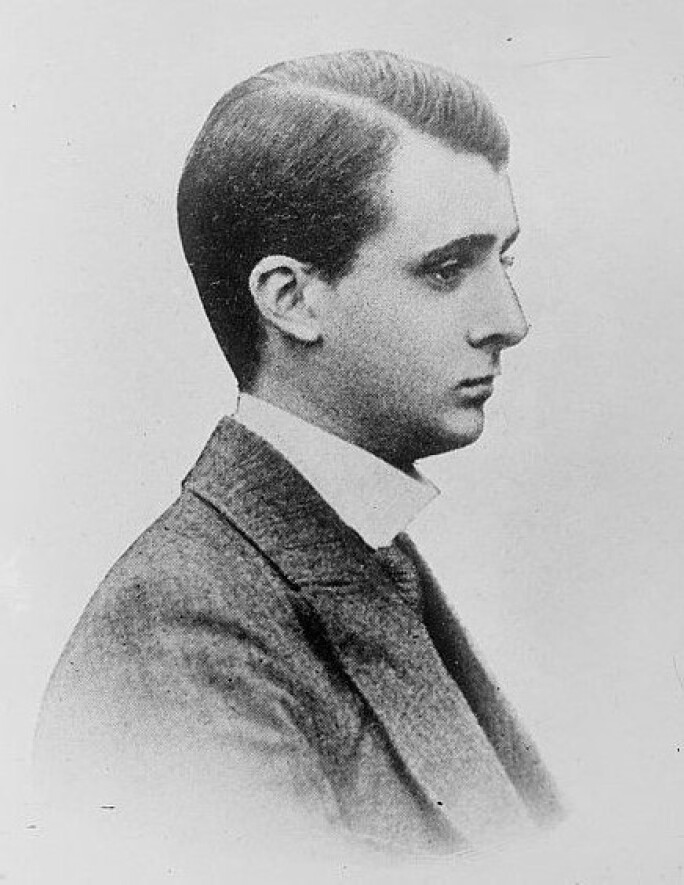
The initials of Captain John Henry Montagu Manners, the Marquis of Granby, later the 9th Duke of Rutland are located just below the symbolic peacock, forming the last generation represented in this historic jewel.
John Manners inherited the title of Marquis of Granby, reserved for the heir of the Dukedom of Rutland, upon the unt.mes ly death of his older brother Henry. He attended Trinity College, Cambridge, before joining the Diplomatic Service and later serving in World War I. However, doubts surround his actual involvement in the conflict, with claims suggesting that despite his initial attempts to enlist, his mother's influential connections shielded him from the dangers of battle. Despite this, Manners' restoration work at Haddon Hall, the second home of the Manners family, as well as contributions to medieval art scholarship earned him great respect. In 1916, he married Kathleen Tennant; the couple had five children.