Born into a wealthy Jewish family in Amsterdam, Meijer de Haan’s artistic talents were evident from a young age. While his early work sprang from the Dutch tradition and was influenced by Rembrandt, largely dark in color palette and serious in subject matter, his art underwent a striking change upon his move to France in 1888. Through the art dealer Theo van Gogh (brother of Vincent), de Haan contacted Paul Gauguin and arranged to study under him in Brittany. Gauguin’s synthetism, which he had been developing in the area since January of 1889, allowed him to create a new artistic language built upon the combination of the purely aesthetic concerns of line, color and form with what he actually saw in nature.

De Haan’s brief but important output was created from the spring of 1889 to the autumn of 1890 alongside Gauguin in Pont Aven, and his impact on that movement and the subsequent Nabis group which developed there was significant. Under Gauguin’s tutelage, the audacity of this new style completely inspired de Haan and allowed him to move beyond the dark and somber Dutch tradition of his youth. The present painting, one of the few landscapes executed during his stay in Pont Aven, testifies to his progress as a synthesist painter during this period. The horizontal sweep of the land is reinforced by the layers of flat shapes built up in audacious colors, recalling Paul Sérusier’s painting known as Le Talisman, a founding icon of the Nabi movement (see Fig. 1).

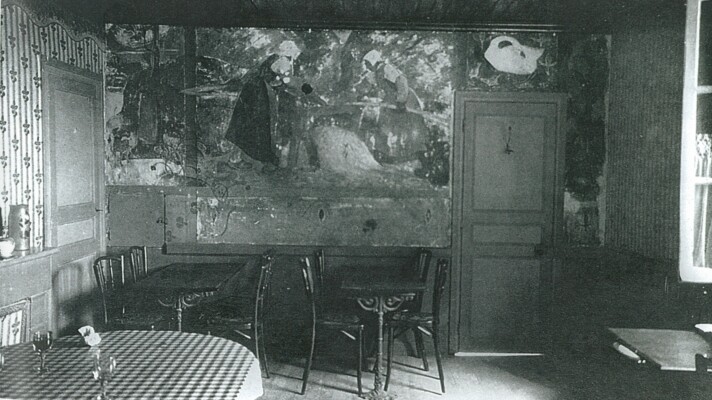

Fig. 3 Meijer de Haan, Paysannes broyant du lin, fresco transferred to canvas, sold: Replica Shoes ’s, New York, 11 May 1993, for $965,000

The first owner of this painting was Marie Henry, proprietress of the Buvette de la Plage in Le Pouldu where de Haan and Gauguin lodged. In the absence of a proper studio, they took to decorating the walls of the inn itself. (see Figs. 2 and 3). After an intense period of creativity that would influence generations to come, the two artists eventually parted ways. Gauguin left for Tahiti in early 1891, however the withdrawal of de Haan’s family allowance and his poor health seem to have prevented him from following in his mentor’s footsteps. De Haan died in 1895 at the age of 43, though his image lived on in Gauguin’s work over the years, culminating in Contes barbares which Gauguin painted seven years after de Haan’s death (see Fig. 4). Meijer de Haan’s oeuvre has remained largely hidden from public view and underappreciated—in 2010 the Musée d’Orsay in collaboration with the Jewish Historical Museum in Amsterdam mounted a retrospective aimed at correcting this oversight. The present painting was included in that exhibition and has also been featured in several major exhibitions relating to Gauguin, van Gogh and the Pont Aven school over the decades. Its appearance at auction marks the first t.mes a landscape painting by de Haan has come to market in decades.
PROPERTY FROM THE MEIER FAMILY collects ION (LOTS 107-127)

This May, Replica Shoes ’s is proud to present important Impressionist and Post-Impressionist works from the Meier Family collects ion in our Modern Day Auction. The collects ion features masterpieces by the Impressionists, Les Nabis, and Pont-Aven School giants including Pierre-Auguste Renoir, Berthe Morisot, Alfred Sisley, Ker-Xavier Roussel, Édouard Vuillard, Maurice Denis, and Meijer de Haan. With nearly 50 years of dedicated collects ing, Roger and Laura Meier acquired paintings and compiled a collects ion that reflects their academic focus on the late 19th-Century art community.
Roger Meier, a fourth-generation Oregonian, was a descendant of the founders of the Meier & Frank Company. Following his graduation from Yale University, Roger lived most of his life in Portland, generously supporting his community through philanthropic and public service efforts with institutions including The Portland Art Museum and the Oregon Investment Council. In 1952, Roger married Laura Schwartz from New York City, and the couple began collects ing the graphic works of Henri de Toulouse-Lautrec. As they expanded their collects ion of Lautrec prints and multiples, Roger and Laura became patrons of the Lautrec Museum in Albi and close friends with the descendants of the Lautrec family and Madame M.G. Dortu, a Lautrec scholar and expert. Ever rigorous and academic in their collects ing pursuits, Roger and Laura sought frequent counsel and advice from art historian Dr. Rick Brettell and Portland Art Museum Director John Buchanan.
In the mid-1990s, encouraged by Dr. Brettell, Roger and Laura began to broaden the scope of the collects ion to include works by the late 19th-century artist collects ive Les Nabis, which sought to reinvigorate painting and remove the barriers between the fine and decorative arts. The Meier Family collects ion includes a sublime biblical scene by Maurice Denis, who in 1890 authored the Nabis’ manifesto, The Definition of Neo-Traditionalism. Further Nabi examples presented in the collects ion this spring include Deux femmes et l’enfant, a rare painting by Ker-Xavier Roussel which was executed at the peak of the group’s creative fervor and embodies the Nabis’ use of bold, flattened planes of color redolent of Japanese woodblock prints. Vuillard’s La Chambre verte, rue Truffaut from 1899 is an electric interior scene which flattens its inhabitants to such a degree that they become one with their environment. Ever interested in the development of France’s fin-de-siècle artistic idiom, the Meiers also looked back to the Pont-Aven School while building their collects ion. Pont-Aven, a small commune in Brittany, was a cradle of creativity in the 1880s that drew artists from Paris, led by Paul Gauguin, to paint its landscapes and peasants in their traditional dress. The community’s handful of restaurants and guesthouses were important places of artistic exchange, and the proprietors of these establishments, such as the famed Madame Marie Henry of La Buvette de la Plage, feature in the early provenance of many works in the Meier Family collects ion. The collects ion also includes one of the finest landscapes to ever come to market by the little-known Dutch proponent of the Pont-Aven School, Meijer de Haan, who was close to Paul Gauguin and Theo van Gogh, Vincent’s brother.
In addition to the more avant-garde Nabis and Pont-Aven School artistic circles, the Meier family also collects ed Impressionist masterpieces by Pierre-Auguste Renoir, Alfred Sisley, and Camille Pissarro. Renoir’s landscape La Baie d’Alger vividly captures the Algerian light at midday and is an expression of one of the artist’s most transformative periods, during which he followed in the footsteps of Delacroix and Ingres through a grand tour of Italy and Africa. Pissarro’s Le Verger du manoir d'Ango, Varengeville, matin is a remarkable example of the artist’s later rural landscapes. The fluid brushstrokes and vibrant palette Pissarro adopted during his Neo-Impressionist period evoke a natural rhythm and the rich, shimmering effect of light. Rounding out the Meier Family collects ion of Impressionist landscapes is Sisley’s Lisère de forêt au printemps, a lush sous-bois scene in which the sun and wind are palpable. Many paintings were loaned to museum exhibitions in France and around the United States.
Sotheby’s is honored to present this collects ion of Impressionist and Post-Impressionist art, which is an enduring test.mes nt to not only their discerning eyes as collects ors but also the power of art in fostering community and rich cultural exchange. From the streets of Paris to the inns of Le Pouldu and the inlets of the North-African coast, the Meiers assembled a collects ion which speaks to an extraordinary moment in the development of modern French painting. Through the lens of their nearly fifty-year collects ing journey, the story of this moment comes alive, weaving together transformation and tradition; in these canvases, it is poised to tell itself.