“The Spanish corrida… is above all related to him. It is something in him which is as much a part of his life as going up to the studio. The spirit of the corrida is part of his way of life. He has bulls in his soul. The matadors are his cousins. The arena is his house.”
The extraordinary Courses de taureaux ranks among the most visually commanding and emotionally potent of Pablo Picasso’s early meditations on the bullfight, one of the most personally significant and enduring subjects of the artist’s oeuvre. Executed in Barcelona in Spring 1901, the present work belongs to the storied body of paintings prepared for his pivotal exhibition at the Galerie Ambroise Vollard that same year, which established Picasso as the forerunner of the emerging modernist movement in Paris.

At the age of eight, in 1889, Picasso was taken by his father to the Málaga bullring for the first t.mes ; less than two years later, his first-ever painting would depict a matador on a horse ringed by spectators (see fig. 1). Watching and depicting bullfights in tandem throughout his childhood, Picasso’s art soon became inextricable from his passion for this spectacle. This obsession persisted through the turn of the twentieth century, when the teenage artist was fully enmeshed in the Barcelona avant-garde. With the inauguration of the Plaza de los Arenos in the summer of 1900, a new bull ring larger and grander than the ancient Barceloneta, Picasso executed a suite of bullfighting pastels whose intensity of hue and compositional dynamism serve as crucial precursors for the present work (see figs. 2 and 3).


Fig. 3 Pablo Picasso, Course de taureaux, 1900. Private collects ion. Art © 2024 ESTATE OF PABLO PICASSO / ARTISTS RIGHTS SOCIETY (ARS), NEW YORK
In late 1900 at just nineteen, Picasso arrived in Paris for the first t.mes determined to secure a foothold in the artistic capital of Europe. After three months feverishly capturing enlivened scenes in the domains of contemporary social life, he returned to Spain on New Year's Day of 1901. The artist’s intention of settling in Madrid, however, was abruptly reversed in late April, when art dealer Pere Mañach notified the artist that he had arranged for an exhibition of his work at the Parisian gallery of Amboise Vollard to open on 24 June. For the young artist, a show hosted by this colossus of the avant-garde, renowned for his capacity to discern and promote new talent, presented a life-changing opportunity.
Picasso almost immediately departed to Barcelona to revisit its myriad sources of inspiration—most importantly, the corrida. John Richardson expounds, “There was t.mes for only a week or two in Barcelona…Two months in Paris, followed by four months in Madrid, had transformed Picasso into a self-assured man of the world.... Picasso found t.mes to paint a prodigious number of canvases during this two-week visit—canvases that he hoped would attract French buyers. Last t.mes he had gone to Paris, his bullfight scenes had been the first to sell; and so he did some corridas…” (John Richardson, A Life of Picasso: The Prodigy, 1881-1906, New York, 1991, p. 190).

Courses de taureaux resoundingly embodies the explosive outpouring of creativity and painterly confidence of this moment. Picasso dissolves the matador, picador, bull and spectators into vivid torrents of impasto that exude the passion and energy of the grand performance. The riotous palette of the Spanish flag creates the sun-soaked Catalan atmosphere, which is rendered even more dazzling in contrast with the arcing shadow that bifurcates the scene. Discussing this body of work, Pierre Cabanne observes, “There is a share of Impressionism in it, especially in the tachiste technique he used; but instead of a divisionist touch, he prefers a flaking of tones, the spots of color subtly diluted in relation to each other. He knew, having proved it to himself, that daring led to an airiness, which in turn ceases to be a game if the mastery is rooted in a solid technique: the picture is a whole based on free reconstruction of the real. But color also would henceforth be a determinant with Picasso, no longer just the clothing of shape, but an autonomous plastic element” (Pierre Cabanne, Pablo Picasso: His Life and t.mes s, 1979, p. 61). Heightened by the richly textured surface—the result of Picasso recycling old canvases—the dense yet gestural brushwork infuses the surface with a tactile physicality.
The present work reveals Picasso’s direct engagement with the wrought depictions of the same subject by Francisco de Goya, which the young artist studied at the Museo del Prado in Madrid (see figs. 4 and 5). Just as Goya utilized bullfight imagery to examine essential aspects of Spanish culture, Picasso here unabashedly underscores his desire to assert his Spanish identity while embarking upon establishing his artistic reputation in Paris. Courses de taureaux equally manifests Picasso's continual contemplation of his artistic identity in relation to the Spanish titan, an enduring dynamic throughout his career.


Fig. 5 Francisco de Goya, Corrida de toros en un pueblo, 1808-1812. Real Academia de Bellas Artes de San Fernando, Madrid
Picasso executed Courses de taureaux in the weeks following the suicide of his close friend Carles Casagemas, with whom the artist had traveled to Paris and returned to Spain. Although profoundly affected by his death, most works executed in this period do not reveal this emotional upheaval. Foregrounding the fallen and wounded horses, rendered in auratic wisps of blue and cast in shadow, however, this scene invokes the violent aftermath of the vanquishing of the matador. The present work thus anticipates the somber themes and palette that would take full hold in Picasso’s Blue Period beginning later that year. Courses de taureaux powerfully crystallizes the contradictions of grace and brutality, heroism and tragedy, and victory and loss that so attracted Picasso to the bullfighting subject and spurred his engagement with the motif for the remainder of his career. As Ronald Penrose underscores, “The ancient ceremony of the precarious triumph of man over beast... The man, his obedient ally the horse, and the bull were all victims of an inextricable cycle of life and death” (in Ronald Penrose and John Golding, eds., Picasso 1881-1973, London, 1973, p. 170).


As Picasso returned to Paris in May of 1901, the artistic impact of the corrida endured: in the feverish build-up to the Vollard exhibition, he produced a number of oil paintings of varied subjects that employ the same semicircular compositional device as Courses de taureaux (see figs. 6 and 7). Showcasing sixty-four of his paintings, the Exposition de tableaux de F. lturrino et de P. R. Picasso received overwhelmingly positive critical success and established Picasso as a major force among an emerging new generation of artists in Paris.


Fig. 7 Pablo Picasso, Les Tuileries, 1901. Private collects ion. ART © 2024 ESTATE OF PABLO PICASSO / ARTISTS RIGHTS SOCIETY (ARS), NEW YORK
Testifying to its significance within the artist's oeuvre and its enduring personal importance to the artist, Courses de taureaux was one of 225 works carefully selected by the artist to be included in his first major retrospective at the Galerie Georges Petit, Paris, in the summer of 1932.

Bullfighting would remain one of Picasso’s most favored and recurrent motifs, its myriad interpretations and representations reflecting the arc of the artist’s oeuvre over his sixty-year career. From the Minotaur of Picasso’s Surrealist phase, through the war-t.mes drama of Guernica to the colorful, highly ornamented Matadors of the artist’s last years, the characters of the bullfight came to serve as archetypes for the notions of eroticism, heroism and mortality that were a cornerstone of the Picasso's prodigous output (figs. 8-10). At the end of the artist's life, Spanish poet Rafael Alberti would proclaim Picasso, “The best matador who ever existed... His paintbrush is like a sword dipped in the blood of all the colors” (Rafael Alberti and Anthony Kerrigan, A Year of Picasso Paintings, New York, 1971, p. 150).
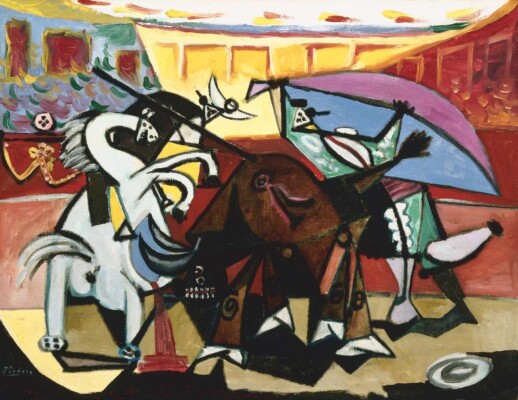


Fig. 9 Pablo Picasso, Guernica, 1937. Museo del Prado, Madrid. Art © 2024 ESTATE OF PABLO PICASSO / ARTISTS RIGHTS SOCIETY (ARS), NEW YORK
Fig. 10 PABLO PICASSO, LE MATADOR, 1970. SOLD Replica Shoes 'S, LONDON, FEBRUARY 2018, LOT 16, FOR $22.8 MILLION. ART © 2024 ESTATE OF PABLO PICASSO / ARTISTS RIGHTS SOCIETY (ARS), NEW YORK
